 Andiamo Places

Tuscany itinerary: 5, 7 or 10 days
Tuscany in 5, 7 or 10 days: Renaissance Florence, the towers of San Gimignano, Siena's shell-shaped Piazza del Campo and the rolling hills of the Val d'Orcia — and in the longer plans Pisa, Lucca and Volterra. Every day comes from our checked guides, with the drive between them.
How long do you have?
Map: 10 days
Tuscany in 5 days
Day 1
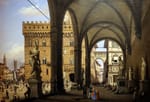
Loggia dei Lanzi Must see
An open-air gallery of Renaissance and ancient sculpture on Piazza della Signoria, including Cellini's Perseus.
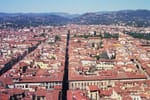
Giotto's Campanile Must see
The Duomo's slender bell tower in white, green and pink marble; 414 steps to one of the best views of the dome.
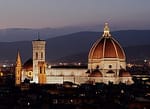
Florence Cathedral Must see
Santa Maria del Fiore, crowned by Brunelleschi's dome; free to enter, with a ticketed climb to the top of the dome.
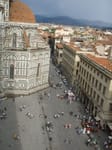
Piazza del Duomo, Florence Must see
The square around the cathedral, baptistery and bell tower, the religious heart of the city.
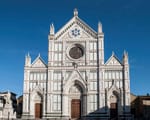
Santa Croce, Florence
Franciscan basilica where Michelangelo, Galileo and Machiavelli are buried, with frescoes by Giotto in its side chapels.

Piazzale Michelangelo
Hilltop terrace across the Arno with the classic view over Florence's domes, towers and bridges, and a bronze copy of David.
Day 2
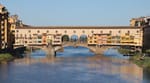
Ponte Vecchio Must see
Medieval bridge over the Arno lined with jewellers' shops, the Vasari Corridor above, the only bridge in Florence spared in 1944.
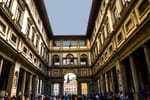
Uffizi Gallery Must see
One of the world's great art museums: Botticelli's Birth of Venus, Leonardo, Michelangelo and Caravaggio in the Medici's old offices.
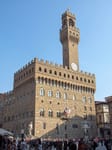
Palazzo Vecchio Must see
The fortress-like town hall, still in use, with the vast Hall of the Five Hundred and a tower you can climb.

David Must see
Michelangelo's David, carved from a single block of marble, the reason most people visit the Accademia.
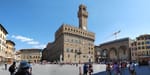
Piazza della Signoria Must see
Florence's main civic square, an outdoor museum of statues in front of Palazzo Vecchio.
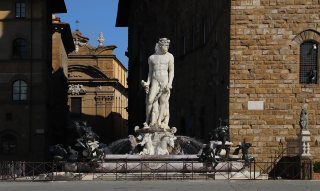
Fountain of Neptune, Florence Must see
Ammannati's marble Neptune, ringed by bronze sea gods, at the corner of Piazza della Signoria.
Day 3

Sant'Agostino
Large Gothic church at the north end of town, with Benozzo Gozzoli's fresco cycle of the life of Saint Augustine.

Rocca di Montestaffoli
Ruins of a 14th-century fortress, now a garden with olive trees and views over the towers and the countryside.

Historic centre of San Gimignano
A walk past the surviving medieval towers, along Via San Giovanni to Piazza della Cisterna with its well and gelato shops.

Collegiata and Piazza del Duomo
Romanesque collegiate church covered with Old and New Testament frescoes, on the square ringed by towers and palaces.

Piazza della Cisterna
San Gimignano's triangular square around its old well, ringed by towers and palaces, and a good place for an ice cream.

Palazzo Comunale and Torre Grossa
Medieval town hall with a civic museum and picture gallery, and the Torre Grossa, the tallest tower, open to climb.

Monteriggioni walled village
Tiny hilltop village near Siena ringed by a complete medieval wall with towers, mentioned by Dante; walk the ramparts.
Day 4

Piazza del Campo
Siena's shell-shaped main square, sloping down to the Palazzo Pubblico, with the Fonte Gaia fountain; the Palio horse race is run around it.

Torre del Mangia
The slender 14th-century bell tower of the Palazzo Pubblico, climbed for views over the Campo, the rooftops and the Tuscan hills.

Palazzo Pubblico (Museo Civico)
Gothic town hall on the Campo whose Museo Civico holds Simone Martini's Maestà and Lorenzetti's frescoes of Good and Bad Government.

Baptistery of San Giovanni
The baptistery under the Cathedral's apse, with frescoed vaults and a font with bronze panels by Donatello, Ghiberti and Jacopo della Quercia.

Museo dell'Opera del Duomo and Facciatone
The Cathedral museum, home to Duccio's Maestà, with a climb to the Facciatone, the unfinished new cathedral's wall, for a view over Siena.

Siena Cathedral and Piccolomini Library
Striped marble Gothic cathedral with an inlaid marble floor, Pisano's pulpit and the brightly frescoed Piccolomini Library by Pinturicchio.

Basilica of San Domenico
The church holding the tomb of Saint Dominic, with small statues carved by a young Michelangelo.

Santa Maria della Scala
One of Europe's oldest hospitals, opposite the Cathedral, now a museum with frescoed wards, chapels and underground archaeology rooms.
Day 5

Historic centre of Pienza
Renaissance hill town rebuilt by Pope Pius II as an ideal city; the walk shows its main square, lanes and wall-top views.

Pienza Cathedral
Bright Renaissance cathedral of the Assumption, with altarpieces by Sienese masters; the ground drops away behind it, and the apse leans slightly.

Palazzo Piccolomini
Pius II's family palace beside the cathedral, with period rooms and a hanging garden and loggia looking over the Val d'Orcia.

Cappella della Madonna di Vitaleta
A small chapel alone on a hill among cypresses in the Val d'Orcia, a classic Tuscan photo, best in the late afternoon.
Horti Leonini
Sixteenth-century Italian garden in San Quirico d'Orcia, with box hedges, holm oaks and a statue of Cosimo III de' Medici.

Historic centre of San Quirico d'Orcia
Walled village on the old Via Francigena; the walk shows the Romanesque Collegiata, the Palazzo Chigi and quiet stone streets.

Bagno Vignoni
A hamlet whose main square is a steaming Renaissance thermal pool, with a short walk to ruined mills and hot waterfalls below.

Fortezza di Montalcino
Fourteenth-century fortress above the hill town of Montalcino, with walkable ramparts, valley views and a wine bar for Brunello.

Historic centre of Montalcino
A hilltop town of stone lanes and a medieval fortress, famous for Brunello wine; a good place to finish the day with a glass.
Open this 5-day plan, freeChange this trip in the Trip BuilderChange it in the app
Tuscany in 7 days
Day 1
Loggia dei Lanzi Must see
An open-air gallery of Renaissance and ancient sculpture on Piazza della Signoria, including Cellini's Perseus.
Giotto's Campanile Must see
The Duomo's slender bell tower in white, green and pink marble; 414 steps to one of the best views of the dome.
Florence Cathedral Must see
Santa Maria del Fiore, crowned by Brunelleschi's dome; free to enter, with a ticketed climb to the top of the dome.
Piazza del Duomo, Florence Must see
The square around the cathedral, baptistery and bell tower, the religious heart of the city.
Santa Croce, Florence
Franciscan basilica where Michelangelo, Galileo and Machiavelli are buried, with frescoes by Giotto in its side chapels.
Piazzale Michelangelo
Hilltop terrace across the Arno with the classic view over Florence's domes, towers and bridges, and a bronze copy of David.
Day 2
Ponte Vecchio Must see
Medieval bridge over the Arno lined with jewellers' shops, the Vasari Corridor above, the only bridge in Florence spared in 1944.
Uffizi Gallery Must see
One of the world's great art museums: Botticelli's Birth of Venus, Leonardo, Michelangelo and Caravaggio in the Medici's old offices.
Palazzo Vecchio Must see
The fortress-like town hall, still in use, with the vast Hall of the Five Hundred and a tower you can climb.
David Must see
Michelangelo's David, carved from a single block of marble, the reason most people visit the Accademia.
Piazza della Signoria Must see
Florence's main civic square, an outdoor museum of statues in front of Palazzo Vecchio.
Fountain of Neptune, Florence Must see
Ammannati's marble Neptune, ringed by bronze sea gods, at the corner of Piazza della Signoria.
Day 3
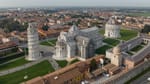
Leaning Tower of Pisa Must see
The cathedral's free-standing bell tower, begun in 1173 and leaning since its construction; timed climbs to the top.

Pisa Cathedral
The Romanesque cathedral on the Piazza dei Miracoli, beside the Leaning Tower, with a marble facade and a carved pulpit by Giovanni Pisano.
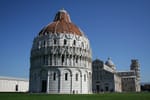
Pisa Baptistery Must see
Italy's largest baptistery, with a pulpit by Nicola Pisano and an echo that staff demonstrate by singing.
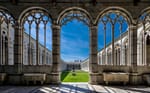
Camposanto Monumentale Must see
Monumental cemetery around a long cloister, with frescoes such as the Triumph of Death restored after wartime damage in 1944.
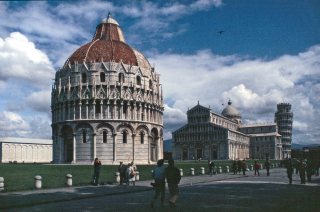
Piazza dei Miracoli Must see
Walled lawn holding the cathedral, baptistery, tower and Camposanto, a UNESCO World Heritage Site.
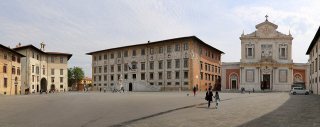
Knights' Square Must see
Square remodelled by Giorgio Vasari for the Knights of St Stephen, once the political centre of medieval Pisa.

Borgo Stretto
Pisa's long arcaded street of old shops, cafés and pasticcerie, running from Piazza Garibaldi towards the market square.

Palazzo Blu
A former aristocratic palace on the Arno, now hosting temporary art exhibitions and cultural events.
Day 4

Walls of Lucca
Complete Renaissance ramparts around the old town, topped by a tree-lined path for walking or cycling the whole circuit.

Basilica of San Frediano
Romanesque church with a large gilded mosaic on its facade, a carved font and the preserved body of Saint Zita.

Piazza dell'Anfiteatro
Oval square of houses built on the outline of the Roman amphitheatre, now lined with cafes and restaurants.

Guinigi Tower
Medieval tower of a merchant family, famous for the holm oak trees growing on its roof, with views over the red rooftops.

San Michele in Foro
Romanesque church on the site of the Roman forum, with a tall arcaded facade topped by a statue of the archangel Michael.

Piazza Napoleone
Lucca's large plane-tree square beside the Palazzo Ducale, a favourite meeting place for locals.

Lucca Cathedral
Cathedral of San Martino with a Romanesque arcaded front, the Volto Santo wooden crucifix and the tomb of Ilaria del Carretto.

Via Fillungo
Lucca's main shopping street, a narrow medieval lane with old shopfronts and cafes running through the heart of the old town.

Palazzo Pfanner
Seventeenth-century palace with a grand outdoor staircase and a formal garden of statues, seen in several films.
Day 5
Sant'Agostino
Large Gothic church at the north end of town, with Benozzo Gozzoli's fresco cycle of the life of Saint Augustine.
Rocca di Montestaffoli
Ruins of a 14th-century fortress, now a garden with olive trees and views over the towers and the countryside.
Historic centre of San Gimignano
A walk past the surviving medieval towers, along Via San Giovanni to Piazza della Cisterna with its well and gelato shops.
Collegiata and Piazza del Duomo
Romanesque collegiate church covered with Old and New Testament frescoes, on the square ringed by towers and palaces.
Piazza della Cisterna
San Gimignano's triangular square around its old well, ringed by towers and palaces, and a good place for an ice cream.
Palazzo Comunale and Torre Grossa
Medieval town hall with a civic museum and picture gallery, and the Torre Grossa, the tallest tower, open to climb.
Monteriggioni walled village
Tiny hilltop village near Siena ringed by a complete medieval wall with towers, mentioned by Dante; walk the ramparts.
Day 6
Piazza del Campo
Siena's shell-shaped main square, sloping down to the Palazzo Pubblico, with the Fonte Gaia fountain; the Palio horse race is run around it.
Torre del Mangia
The slender 14th-century bell tower of the Palazzo Pubblico, climbed for views over the Campo, the rooftops and the Tuscan hills.
Palazzo Pubblico (Museo Civico)
Gothic town hall on the Campo whose Museo Civico holds Simone Martini's Maestà and Lorenzetti's frescoes of Good and Bad Government.
Baptistery of San Giovanni
The baptistery under the Cathedral's apse, with frescoed vaults and a font with bronze panels by Donatello, Ghiberti and Jacopo della Quercia.
Museo dell'Opera del Duomo and Facciatone
The Cathedral museum, home to Duccio's Maestà, with a climb to the Facciatone, the unfinished new cathedral's wall, for a view over Siena.
Siena Cathedral and Piccolomini Library
Striped marble Gothic cathedral with an inlaid marble floor, Pisano's pulpit and the brightly frescoed Piccolomini Library by Pinturicchio.
Basilica of San Domenico
The church holding the tomb of Saint Dominic, with small statues carved by a young Michelangelo.
Santa Maria della Scala
One of Europe's oldest hospitals, opposite the Cathedral, now a museum with frescoed wards, chapels and underground archaeology rooms.
Day 7
Historic centre of Pienza
Renaissance hill town rebuilt by Pope Pius II as an ideal city; the walk shows its main square, lanes and wall-top views.
Pienza Cathedral
Bright Renaissance cathedral of the Assumption, with altarpieces by Sienese masters; the ground drops away behind it, and the apse leans slightly.
Palazzo Piccolomini
Pius II's family palace beside the cathedral, with period rooms and a hanging garden and loggia looking over the Val d'Orcia.
Cappella della Madonna di Vitaleta
A small chapel alone on a hill among cypresses in the Val d'Orcia, a classic Tuscan photo, best in the late afternoon.
Horti Leonini
Sixteenth-century Italian garden in San Quirico d'Orcia, with box hedges, holm oaks and a statue of Cosimo III de' Medici.
Historic centre of San Quirico d'Orcia
Walled village on the old Via Francigena; the walk shows the Romanesque Collegiata, the Palazzo Chigi and quiet stone streets.
Bagno Vignoni
A hamlet whose main square is a steaming Renaissance thermal pool, with a short walk to ruined mills and hot waterfalls below.
Fortezza di Montalcino
Fourteenth-century fortress above the hill town of Montalcino, with walkable ramparts, valley views and a wine bar for Brunello.
Historic centre of Montalcino
A hilltop town of stone lanes and a medieval fortress, famous for Brunello wine; a good place to finish the day with a glass.
Open this 7-day plan, freeChange this trip in the Trip BuilderChange it in the app
Tuscany in 10 days
Day 1
Uffizi Gallery Must see
One of the world's great art museums: Botticelli's Birth of Venus, Leonardo, Michelangelo and Caravaggio in the Medici's old offices.
Giotto's Campanile Must see
The Duomo's slender bell tower in white, green and pink marble; 414 steps to one of the best views of the dome.
Florence Cathedral Must see
Santa Maria del Fiore, crowned by Brunelleschi's dome; free to enter, with a ticketed climb to the top of the dome.
Piazza del Duomo, Florence Must see
The square around the cathedral, baptistery and bell tower, the religious heart of the city.
Day 2
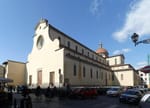
Santo Spirito, Florence Must see
Brunelleschi's last church, plain outside and serene within, on a lively Oltrarno square.
Ponte Vecchio Must see
Medieval bridge over the Arno lined with jewellers' shops, the Vasari Corridor above, the only bridge in Florence spared in 1944.
Loggia dei Lanzi Must see
An open-air gallery of Renaissance and ancient sculpture on Piazza della Signoria, including Cellini's Perseus.
Palazzo Vecchio Must see
The fortress-like town hall, still in use, with the vast Hall of the Five Hundred and a tower you can climb.
Fountain of Neptune, Florence Must see
Ammannati's marble Neptune, ringed by bronze sea gods, at the corner of Piazza della Signoria.
Piazza della Signoria Must see
Florence's main civic square, an outdoor museum of statues in front of Palazzo Vecchio.
Day 3
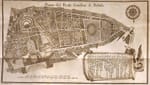
Boboli Gardens
The Medici's huge formal garden behind Palazzo Pitti, with grottoes, fountains and statues.
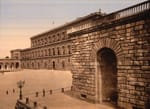
Palazzo Pitti Must see
The Medici's grand palace across the river, now several museums including the Palatine Gallery.
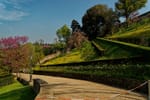
Giardino Bardini Must see
A terraced garden above the Arno with a wisteria tunnel and one of the finest views of the city.

San Miniato al Monte
Romanesque church with a green-and-white marble facade above Piazzale Michelangelo, reopening mid-afternoon, with one of the best views of Florence.
Piazzale Michelangelo
Hilltop terrace across the Arno with the classic view over Florence's domes, towers and bridges, and a bronze copy of David.
Day 4
Leaning Tower of Pisa Must see
The cathedral's free-standing bell tower, begun in 1173 and leaning since its construction; timed climbs to the top.
Pisa Cathedral
The Romanesque cathedral on the Piazza dei Miracoli, beside the Leaning Tower, with a marble facade and a carved pulpit by Giovanni Pisano.
Pisa Baptistery Must see
Italy's largest baptistery, with a pulpit by Nicola Pisano and an echo that staff demonstrate by singing.
Camposanto Monumentale Must see
Monumental cemetery around a long cloister, with frescoes such as the Triumph of Death restored after wartime damage in 1944.
Piazza dei Miracoli Must see
Walled lawn holding the cathedral, baptistery, tower and Camposanto, a UNESCO World Heritage Site.
Knights' Square Must see
Square remodelled by Giorgio Vasari for the Knights of St Stephen, once the political centre of medieval Pisa.
Borgo Stretto
Pisa's long arcaded street of old shops, cafés and pasticcerie, running from Piazza Garibaldi towards the market square.
Palazzo Blu
A former aristocratic palace on the Arno, now hosting temporary art exhibitions and cultural events.
Day 5
Walls of Lucca
Complete Renaissance ramparts around the old town, topped by a tree-lined path for walking or cycling the whole circuit.
Basilica of San Frediano
Romanesque church with a large gilded mosaic on its facade, a carved font and the preserved body of Saint Zita.
Piazza dell'Anfiteatro
Oval square of houses built on the outline of the Roman amphitheatre, now lined with cafes and restaurants.
Guinigi Tower
Medieval tower of a merchant family, famous for the holm oak trees growing on its roof, with views over the red rooftops.
San Michele in Foro
Romanesque church on the site of the Roman forum, with a tall arcaded facade topped by a statue of the archangel Michael.
Piazza Napoleone
Lucca's large plane-tree square beside the Palazzo Ducale, a favourite meeting place for locals.
Lucca Cathedral
Cathedral of San Martino with a Romanesque arcaded front, the Volto Santo wooden crucifix and the tomb of Ilaria del Carretto.
Via Fillungo
Lucca's main shopping street, a narrow medieval lane with old shopfronts and cafes running through the heart of the old town.
Palazzo Pfanner
Seventeenth-century palace with a grand outdoor staircase and a formal garden of statues, seen in several films.
Day 6

Porta all'Arco (Etruscan gate)
An Etruscan arched gate of the 4th century BC with three worn stone heads, still in use, saved by townspeople in 1944.

Volterra Cathedral and Baptistery
Romanesque cathedral with a coffered ceiling and a wooden Deposition group, facing an octagonal baptistery with striped stone bands.

Palazzo dei Priori
Gothic town hall on Perugia's Corso Vannucci, housing the Sala dei Notari, the Collegio del Cambio and the National Gallery of Umbria.

Historic centre of Volterra (Piazza dei Priori)
The town's stern medieval main square, framed by stone palaces, at the heart of narrow lanes that lead out to the walls.

Pinacoteca e Museo Civico di Volterra
The town's art gallery in a Renaissance palace, best known for Rosso Fiorentino's Deposition from the Cross, a key work of early Mannerism.

Ecomuseo dell'Alabastro (alabaster workshops)
A small museum on Volterra's alabaster craft from Etruscan times to now, with working artisans' shops in the streets nearby.

Roman Theatre of Volterra
A Roman theatre of the 1st century BC below the walls, with seating and columns of the stage; also seen from Via Lungo le Mura.
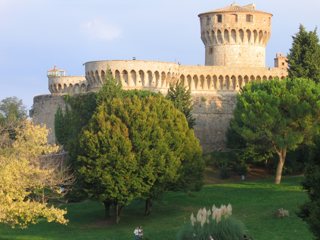
Parco Archeologico Enrico Fiumi
A shady park on the town's highest ground with remains of the Etruscan acropolis, a picnic lawn and views.

Fortezza Medicea (outside)
The Medici fortress crowning the town, still in use as a prison, so seen only from outside and from the park.

Guarnacci Etruscan Museum
One of Italy's oldest public museums, with hundreds of carved Etruscan urns and the long, thin bronze figure known as the Ombra della Sera.

Le Balze viewpoint
Eroded cliffs at the town's north-western edge that have swallowed churches and Etruscan walls over the centuries, best in late light.
Day 7
Sant'Agostino
Large Gothic church at the north end of town, with Benozzo Gozzoli's fresco cycle of the life of Saint Augustine.
Rocca di Montestaffoli
Ruins of a 14th-century fortress, now a garden with olive trees and views over the towers and the countryside.
Historic centre of San Gimignano
A walk past the surviving medieval towers, along Via San Giovanni to Piazza della Cisterna with its well and gelato shops.
Collegiata and Piazza del Duomo
Romanesque collegiate church covered with Old and New Testament frescoes, on the square ringed by towers and palaces.
Piazza della Cisterna
San Gimignano's triangular square around its old well, ringed by towers and palaces, and a good place for an ice cream.
Palazzo Comunale and Torre Grossa
Medieval town hall with a civic museum and picture gallery, and the Torre Grossa, the tallest tower, open to climb.
Monteriggioni walled village
Tiny hilltop village near Siena ringed by a complete medieval wall with towers, mentioned by Dante; walk the ramparts.
Day 8
Piazza del Campo
Siena's shell-shaped main square, sloping down to the Palazzo Pubblico, with the Fonte Gaia fountain; the Palio horse race is run around it.

Santa Maria dei Servi
Hilltop church in the south-east of the old town with medieval Sienese paintings and a quiet view back over the city.
Palazzo Pubblico (Museo Civico)
Gothic town hall on the Campo whose Museo Civico holds Simone Martini's Maestà and Lorenzetti's frescoes of Good and Bad Government.
Torre del Mangia
The slender 14th-century bell tower of the Palazzo Pubblico, climbed for views over the Campo, the rooftops and the Tuscan hills.

Pinacoteca Nazionale
Siena's national picture gallery, in two Gothic palaces, with the city's school of gold-ground painting from the 13th to 16th centuries.
Museo dell'Opera del Duomo and Facciatone
The Cathedral museum, home to Duccio's Maestà, with a climb to the Facciatone, the unfinished new cathedral's wall, for a view over Siena.
Baptistery of San Giovanni
The baptistery under the Cathedral's apse, with frescoed vaults and a font with bronze panels by Donatello, Ghiberti and Jacopo della Quercia.
Santa Maria della Scala
One of Europe's oldest hospitals, opposite the Cathedral, now a museum with frescoed wards, chapels and underground archaeology rooms.
Day 9
Basilica of San Domenico
The church holding the tomb of Saint Dominic, with small statues carved by a young Michelangelo.

Fortezza Medicea
16th-century Medici fortress whose broad brick walls are now a public park with walks, views and the regional wine shop.
Siena Cathedral and Piccolomini Library
Striped marble Gothic cathedral with an inlaid marble floor, Pisano's pulpit and the brightly frescoed Piccolomini Library by Pinturicchio.

Palazzo Salimbeni
Gothic palace on Piazza Salimbeni, long the headquarters of the Monte dei Paschi bank, one of the world's oldest banks; seen from the square.

Basilica of San Francesco
Large Franciscan church on the east edge of the old town, with frescoes by the Lorenzetti brothers and a cloister.

Sanctuary of Saint Catherine
The house where Catherine of Siena grew up, now a sanctuary of chapels, a cloister and a loggia with views of the city.

Fontebranda
Siena's grandest medieval fountain, with Gothic arches at the foot of the old tanners' quarter below the cathedral.
Day 10
Historic centre of Pienza
Renaissance hill town rebuilt by Pope Pius II as an ideal city; the walk shows its main square, lanes and wall-top views.
Pienza Cathedral
Bright Renaissance cathedral of the Assumption, with altarpieces by Sienese masters; the ground drops away behind it, and the apse leans slightly.
Palazzo Piccolomini
Pius II's family palace beside the cathedral, with period rooms and a hanging garden and loggia looking over the Val d'Orcia.
Cappella della Madonna di Vitaleta
A small chapel alone on a hill among cypresses in the Val d'Orcia, a classic Tuscan photo, best in the late afternoon.
Horti Leonini
Sixteenth-century Italian garden in San Quirico d'Orcia, with box hedges, holm oaks and a statue of Cosimo III de' Medici.
Historic centre of San Quirico d'Orcia
Walled village on the old Via Francigena; the walk shows the Romanesque Collegiata, the Palazzo Chigi and quiet stone streets.
Bagno Vignoni
A hamlet whose main square is a steaming Renaissance thermal pool, with a short walk to ruined mills and hot waterfalls below.
Fortezza di Montalcino
Fourteenth-century fortress above the hill town of Montalcino, with walkable ramparts, valley views and a wine bar for Brunello.
Historic centre of Montalcino
A hilltop town of stone lanes and a medieval fortress, famous for Brunello wine; a good place to finish the day with a glass.
Open this 10-day plan, freeChange this trip in the Trip BuilderChange it in the app
When to go to Tuscany
April to June and September to October are the best months, with the grape and olive harvests in autumn. July and August are hot and busy; Siena's Palio horse race runs on 2 July and 16 August. Winter is quiet and cheaper, with short days for the countryside.
Plan the rest of your trip
- Where to stay: hotels in Tuscany on Booking.com or Trip.com
- Skip-the-line tickets: museums and sights in Tuscany on Tiqets
- Tours and day trips: things to do in Tuscany on GetYourGuide or on Viator
- Data on arrival: an eSIM for Italy from Airalo
Some of these are affiliate links: we may earn a small commission at no extra cost to you.
Tips for Tuscany
- Book the Uffizi and the Accademia (Michelangelo's David) ahead.
- Historic centres are limited traffic zones (ZTL) watched by cameras: park outside the walls and walk in.
- Churches ask for shoulders and knees covered.
- Many restaurants add a cover charge (coperto) per person; tipping is not expected — rounding up is enough.
- Every place here has its own ready-made guide with more days, if you want to stay longer in one place.
Make it your own
Open the guide in Andiamo Places to see every stop on a map with walking directions, move places between days, check opening hours for your dates, and add your own finds. After the trip, your photos become a journal and, if you like, a printed photo book.



Guides are made with the help of AI and public sources such as Wikipedia, and may contain errors. Opening hours and prices change, so check before you go. Spotted a wrong photo, a pin in the wrong place, a missing stop or a better one? Write to hello@andiamoplaces.com: the e-mail opens with this guide filled in.
Photo credits
- Bagno Vignoni: sconosciuto, Copyrighted free use
- Baptistery of San Giovanni: gaspa, CC BY 2.0
- Basilica of San Domenico: Gryffindor, CC BY-SA 3.0
- Basilica of San Francesco: Gryffindor stitched by Marku1988 This image was created with Hugin., CC BY-SA 3.0
- Basilica of San Frediano: Myrabella, edited by MenkinAlRire, CC BY-SA 3.0
- Boboli Gardens: unknown author, Public domain
- Borgo Stretto: Nikolai Karaneschev, CC BY 3.0
- Camposanto Monumentale: Bernd Thaller from Graz, Austria, CC BY 2.0
- Cappella della Madonna di Vitaleta: Vignaccia76, CC BY-SA 3.0
- Collegiata and Piazza del Duomo: Fiat 500e, CC BY 4.0
- David: Jörg Bittner Unna, CC BY 3.0
- Ecomuseo dell'Alabastro (alabaster workshops): Fabio Poggi, CC BY 3.0
- Florence Cathedral: Petar Milošević, CC BY-SA 4.0
- Fontebranda: MarkusMark, Public domain
- Fortezza Medicea: Sailko, CC BY 3.0
- Fortezza Medicea (outside): LigaDue, CC BY-SA 4.0
- Fortezza di Montalcino: Type17 at English Wikipedia, CC BY 2.5
- Fountain of Neptune, Florence: Francesco Bini, CC BY-SA 4.0
- Giardino Bardini: Txllxt TxllxT, CC BY-SA 4.0
- Giotto's Campanile: Thermos, CC BY-SA 2.5
- Guarnacci Etruscan Museum: Davide Papalini, CC BY-SA 3.0
- Guinigi Tower: H005, Public domain
- Historic centre of Montalcino: Marco Usan, CC BY 3.0
- Historic centre of Pienza: https://www.flickr.com/people/sherseydc/, CC BY-SA 2.0
- Historic centre of San Gimignano: Chensiyuan, CC BY-SA 4.0
- Historic centre of San Quirico d'Orcia: LigaDue, CC BY 3.0
- Historic centre of Volterra (Piazza dei Priori): BobTanGo, CC BY 4.0
- Knights' Square: Sailko, CC BY 3.0
- Le Balze viewpoint: Sergio Spolti, CC BY-SA 4.0
- Leaning Tower of Pisa: Arne Müseler, CC BY-SA 3.0 de
- Loggia dei Lanzi: Carolo Canella, CC BY 4.0
- Lucca Cathedral: Mongolo1984, edited by MenkinAlRire, CC BY-SA 4.0
- Monteriggioni walled village: Carsten Steger, CC BY-SA 4.0
- Museo dell'Opera del Duomo and Facciatone: Miguel Hermoso Cuesta, CC BY-SA 4.0
- Palazzo Blu: LoneWolf1976, CC BY-SA 3.0
- Palazzo Comunale and Torre Grossa: MarkusMark, CC BY-SA 3.0
- Palazzo Pfanner: Sailko, CC BY 3.0
- Palazzo Piccolomini: Pierreci, Public domain
- Palazzo Pitti: Unknown author Unknown author, Public domain
- Palazzo Pubblico (Museo Civico): MarkusMark, Public domain
- Palazzo Salimbeni: . Ray in Manila, CC BY 2.0
- Palazzo Vecchio: JoJan, CC BY-SA 3.0
- Palazzo dei Priori: StefanoCari, CC BY-SA 3.0
- Piazza Napoleone: Chabe01, CC BY-SA 4.0
- Piazza dei Miracoli: Gerd Eichmann, CC BY-SA 4.0
- Piazza del Campo: Ricardo André Frantz (User:Tetraktys), CC BY-SA 3.0
- Piazza del Duomo, Florence: sailko, CC BY 2.5
- Piazza dell'Anfiteatro: Kasa Fue, CC BY-SA 4.0
- Piazza della Cisterna: Deror avi, CC BY-SA 3.0
- Piazza della Signoria: Zolli, CC BY-SA 3.0
- Piazzale Michelangelo: Michael Wittwer, CC BY-SA 4.0
- Pienza Cathedral: Beckstet, CC BY-SA 3.0
- Pinacoteca Nazionale: Matteo Tani, Public domain
- Pinacoteca e Museo Civico di Volterra: Davide Papalini, CC BY-SA 3.0
- Pisa Baptistery: Massimo Catarinella, CC BY-SA 3.0
- Pisa Cathedral: PaestumPaestum, CC BY 4.0
- Ponte Vecchio: Ingo Mehling, CC BY-SA 4.0
- Porta all'Arco (Etruscan gate): Alex2015Genova, CC BY-SA 4.0
- Rocca di Montestaffoli: sailko, CC BY 2.5
- Roman Theatre of Volterra: Jean-Christophe BENOIST, CC BY 2.5
- San Michele in Foro: Spike, CC BY-SA 4.0
- San Miniato al Monte: Benjamín Núñez González, CC BY-SA 4.0
- Sanctuary of Saint Catherine: Of the individual pictures, Gryffindor, of the panorama, Roland Geider (Ogre), Public domain
- Sant'Agostino: sailko, CC BY 2.5
- Santa Croce, Florence: Diana Ringo, CC BY-SA 4.0
- Santa Maria dei Servi: Myrabella, CC BY-SA 3.0
- Santa Maria della Scala: Jastrow, Public domain
- Santo Spirito, Florence: Lucarelli, CC BY-SA 3.0
- Siena Cathedral and Piccolomini Library: Raimond Spekking, CC BY-SA 4.0
- Torre del Mangia: David McSpadden from Daly City, United States, CC BY 2.0
- Uffizi Gallery: Michelle Maria, CC BY 3.0
- Via Fillungo: Luca Aless, CC BY-SA 4.0
- Volterra Cathedral and Baptistery: Davide Papalini, CC BY-SA 3.0
- Walls of Lucca: No machine-readable author provided. JoJan assumed (based on copyright claims)., CC BY-SA 3.0
Opening hours change; check before you go. Map data © OpenStreetMap contributors.