 Andiamo Places

Southern Italy itinerary: 7, 10 or 14 days
Southern Italy in 7, 10 or 14 days: Naples and Vesuvius, the ruins of Pompeii, Capri from Sorrento, Positano, Amalfi and Ravello on the Amalfi Coast — and in the longer plans the cave town of Matera, the trulli of Alberobello, Polignano a Mare and baroque Lecce. Every day comes from our checked city guides, with the journey between them.
How long do you have?
Map: 14 days
Southern Italy in 7 days
Day 1
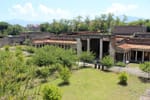
Villa Poppaea
A Roman seaside villa at Oplontis in Torre Annunziata, with well-preserved wall paintings, linked to Nero's wife Poppaea.
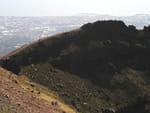
Mount Vesuvius Must see
Active volcano above the Bay of Naples; a gravel path climbs from the car park to the rim of the crater.
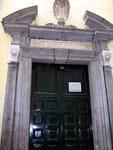
Cappella Sansevero Must see
Baroque chapel in Naples' historic centre with Giuseppe Sanmartino's marble Veiled Christ and the anatomical machines.
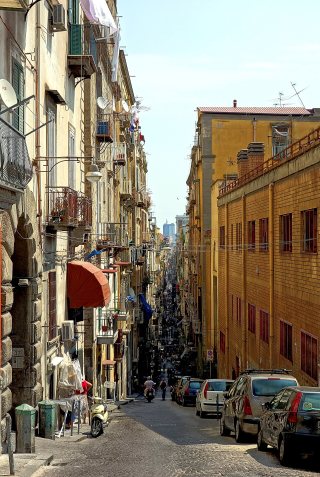
Spaccanapoli Must see
The straight, narrow street that cuts through the historic centre, lined with churches, palaces and shops.
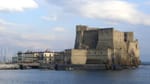
Castel dell'Ovo Must see
The city's oldest castle, on a small island joined to the seafront, with free terraces over the bay.
Day 2
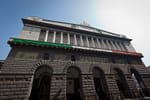
Teatro di San Carlo Must see
Naples' opera house, opened in 1737 and the oldest in continuous use in Europe; guided tours of the red and gold hall.
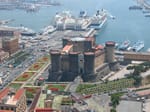
Castel Nuovo Must see
Medieval castle by the Naples port, also called Maschio Angioino, with a marble Renaissance triumphal arch and the civic museum.
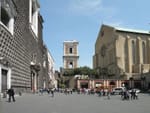
Santa Chiara, Naples Must see
A Gothic church and monastery complex with a cloister decorated with colourful majolica tiles.
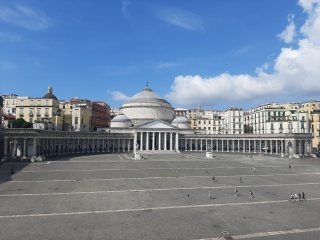
Piazza del Plebiscito Must see
Naples' largest square, between the Royal Palace and the domed church of San Francesco di Paola.
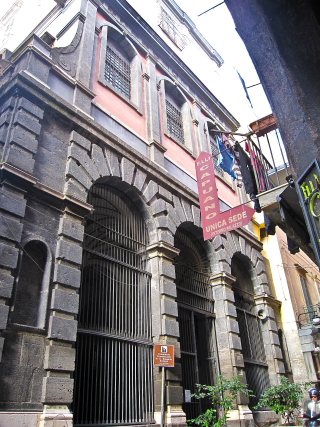
San Gregorio Armeno Must see
A Baroque church and convent on the street famous for its workshops making nativity figures.
Day 3

Large Theatre of Pompeii
Greek-style theatre built into a hillside for about 5,000 spectators, next to the smaller covered Odeon and the gladiators' barracks.

Stabian Baths
The oldest and largest of Pompeii's public baths, with changing rooms, hot and cold rooms and fine stucco ceilings.

Lupanar
Ancient Roman brothel with small stone beds and erotic wall paintings, one of the most visited buildings in Pompeii.

Forum of Pompeii
The city's main square, lined with temples, the basilica and market buildings, with Vesuvius rising behind it.

Temple of Apollo (Pompeii)
Sanctuary of Apollo beside the Forum, one of Pompeii's oldest temples, with copies of the bronze statues of Apollo and Diana.

House of the Faun
One of the largest houses in Pompeii, named after its bronze dancing faun, where the Alexander Mosaic was found.

House of the Vettii
Wealthy merchants' house with some of Pompeii's finest wall paintings, restored and reopened in 2023.

Villa of the Mysteries
Suburban villa just outside the walls, famous for a cycle of red-ground frescoes showing a mysterious rite.

Garden of the Fugitives
Orchard in the east of the city with plaster casts of thirteen people who died there during the eruption of 79 AD.

Amphitheatre of Pompeii
The oldest surviving stone Roman amphitheatre, built around 70 BC, beside the large palaestra exercise ground.

Shrine of the Virgin of the Rosary of Pompei
Large 19th-century basilica and pilgrimage church in the centre of modern Pompei, a short walk from the ruins.
Day 4
Blue Grotto Must see
Sea cave on the island's north-west coast, entered lying down in a small rowing boat, where sunlight turns the water bright blue.
Villa San Michele Must see
The Anacapri villa and garden built by the Swedish doctor and writer Axel Munthe, with Roman fragments and a sphinx over the bay.

Gardens of Augustus
Terraced gardens laid out by Friedrich Krupp above Capri town, with flower beds and the classic view of the Faraglioni rocks and Via Krupp.
Faraglioni Must see
Three towering limestone sea stacks off Capri's coast, best viewed from the Belvedere di Tragara along Via Tragara.

Piazzetta (Piazza Umberto I), Capri
Capri's famous little square beneath the clock tower, lined with café tables and the place to watch island life go by.

Piazza Tasso, Sorrento
The main square of Sorrento, named after the poet Torquato Tasso, lined with cafes and a good place to watch town life.

Day 5

Via Positanesi d'America
A footpath along the cliff between Spiaggia Grande and Fornillo, with views back over the town and the sea.
MAR Roman Villa
The archaeological museum under the church, showing rooms of a Roman villa buried by Vesuvius, with painted walls.

Church of Santa Maria Assunta Must see
The parish church by the beach, with its green and yellow majolica dome and a Byzantine icon of the Virgin.

Spiaggia Grande Must see
Positano's main pebble beach below the coloured houses, with beach clubs, boats to Capri and the town's classic view.

Path of the Gods Must see
Cliff-top footpath from Bomerano to Nocelle, high above the sea, with long views along the coast to Capri.

Nocelle
A tiny village high above Positano at the end of the Path of the Gods, with a viewpoint and a few cafes.
Day 6

Atrani
A tiny fishing village just east of Amalfi, with a small square, a beach and white houses packed between cliffs.

Amalfi Cathedral Must see
The cathedral of Saint Andrew, up a wide flight of steps, with a striped facade, bronze doors and the apostle's relics.
Cloister of Paradise
A 13th-century cloister beside the cathedral with white interlaced Arab-style arches around a garden of palms.

Paper Museum (Museo della Carta) Must see
A museum in a medieval paper mill showing how Amalfi's handmade paper was made, with working machinery.

Valle delle Ferriere walk
A half-day walk from the top of Amalfi up the Valle dei Mulini past ruined paper mills to the waterfalls.
Arsenal of the Republic of Amalfi
The vaulted medieval shipyard of the old maritime republic, now a museum on Amalfi's history at sea.
Day 7

Villa Cimbrone (Terrace of Infinity) Must see
A villa with romantic gardens ending at the Terrace of Infinity, a balcony of marble busts high above the sea.
Church of San Francesco
A church and small cloister on the lane to Villa Cimbrone, founded according to tradition by Saint Francis.

Villa Rufolo Must see
A 13th-century villa by the cathedral square with a Moorish cloister, a tower and terraced gardens over the coast.

San Giovanni del Toro
A quiet medieval church in the upper town with a mosaic pulpit and old frescoes, and a belvedere nearby.

Oscar Niemeyer Auditorium
Oscar Niemeyer's white curved concert hall below the town, a modern contrast to Ravello's medieval buildings.

Ravello Cathedral
The 11th-century cathedral on Piazza Duomo, with bronze doors and two mosaic pulpits, and a small museum.
Open this 7-day plan, freeChange this trip in the Trip BuilderChange it in the app
Southern Italy in 10 days
Day 1
Castel dell'Ovo Must see
The city's oldest castle, on a small island joined to the seafront, with free terraces over the bay.
Mount Vesuvius Must see
Active volcano above the Bay of Naples; a gravel path climbs from the car park to the rim of the crater.
Castel Nuovo Must see
Medieval castle by the Naples port, also called Maschio Angioino, with a marble Renaissance triumphal arch and the civic museum.
Spaccanapoli Must see
The straight, narrow street that cuts through the historic centre, lined with churches, palaces and shops.
Day 2
Villa Poppaea
A Roman seaside villa at Oplontis in Torre Annunziata, with well-preserved wall paintings, linked to Nero's wife Poppaea.
Piazza del Plebiscito Must see
Naples' largest square, between the Royal Palace and the domed church of San Francesco di Paola.
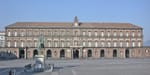
Biblioteca Nazionale Vittorio Emanuele III Must see
Italy's largest library in the south, occupying a wing of the Royal Palace, with papyri from Herculaneum.
Teatro di San Carlo Must see
Naples' opera house, opened in 1737 and the oldest in continuous use in Europe; guided tours of the red and gold hall.
Cappella Sansevero Must see
Baroque chapel in Naples' historic centre with Giuseppe Sanmartino's marble Veiled Christ and the anatomical machines.
Day 3
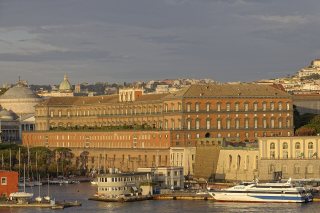
Royal Palace of Naples Must see
The palace of the Spanish viceroys and Bourbon kings on Piazza del Plebiscito, with a grand staircase and royal apartments.
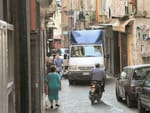
Quartieri Spagnoli Must see
A grid of narrow streets laid out for Spanish troops in the 16th century, full of everyday Neapolitan life and murals.
Santa Chiara, Naples Must see
A Gothic church and monastery complex with a cloister decorated with colourful majolica tiles.
San Gregorio Armeno Must see
A Baroque church and convent on the street famous for its workshops making nativity figures.
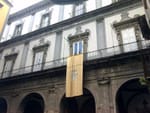
Pio Monte della Misericordia
A charitable institution's church holding Caravaggio's Seven Works of Mercy above the main altar.
Day 4
Large Theatre of Pompeii
Greek-style theatre built into a hillside for about 5,000 spectators, next to the smaller covered Odeon and the gladiators' barracks.
Stabian Baths
The oldest and largest of Pompeii's public baths, with changing rooms, hot and cold rooms and fine stucco ceilings.
Lupanar
Ancient Roman brothel with small stone beds and erotic wall paintings, one of the most visited buildings in Pompeii.
Forum of Pompeii
The city's main square, lined with temples, the basilica and market buildings, with Vesuvius rising behind it.
Temple of Apollo (Pompeii)
Sanctuary of Apollo beside the Forum, one of Pompeii's oldest temples, with copies of the bronze statues of Apollo and Diana.
House of the Faun
One of the largest houses in Pompeii, named after its bronze dancing faun, where the Alexander Mosaic was found.
House of the Vettii
Wealthy merchants' house with some of Pompeii's finest wall paintings, restored and reopened in 2023.
Villa of the Mysteries
Suburban villa just outside the walls, famous for a cycle of red-ground frescoes showing a mysterious rite.
Garden of the Fugitives
Orchard in the east of the city with plaster casts of thirteen people who died there during the eruption of 79 AD.
Amphitheatre of Pompeii
The oldest surviving stone Roman amphitheatre, built around 70 BC, beside the large palaestra exercise ground.
Shrine of the Virgin of the Rosary of Pompei
Large 19th-century basilica and pilgrimage church in the centre of modern Pompei, a short walk from the ruins.
Day 5
Blue Grotto Must see
Sea cave on the island's north-west coast, entered lying down in a small rowing boat, where sunlight turns the water bright blue.
Villa San Michele Must see
The Anacapri villa and garden built by the Swedish doctor and writer Axel Munthe, with Roman fragments and a sphinx over the bay.
Gardens of Augustus
Terraced gardens laid out by Friedrich Krupp above Capri town, with flower beds and the classic view of the Faraglioni rocks and Via Krupp.
Faraglioni Must see
Three towering limestone sea stacks off Capri's coast, best viewed from the Belvedere di Tragara along Via Tragara.
Piazzetta (Piazza Umberto I), Capri
Capri's famous little square beneath the clock tower, lined with café tables and the place to watch island life go by.
Piazza Tasso, Sorrento
The main square of Sorrento, named after the poet Torquato Tasso, lined with cafes and a good place to watch town life.
Day 6
Via Positanesi d'America
A footpath along the cliff between Spiaggia Grande and Fornillo, with views back over the town and the sea.
MAR Roman Villa
The archaeological museum under the church, showing rooms of a Roman villa buried by Vesuvius, with painted walls.
Church of Santa Maria Assunta Must see
The parish church by the beach, with its green and yellow majolica dome and a Byzantine icon of the Virgin.
Spiaggia Grande Must see
Positano's main pebble beach below the coloured houses, with beach clubs, boats to Capri and the town's classic view.
Path of the Gods Must see
Cliff-top footpath from Bomerano to Nocelle, high above the sea, with long views along the coast to Capri.
Nocelle
A tiny village high above Positano at the end of the Path of the Gods, with a viewpoint and a few cafes.
Day 7
Atrani
A tiny fishing village just east of Amalfi, with a small square, a beach and white houses packed between cliffs.
Amalfi Cathedral Must see
The cathedral of Saint Andrew, up a wide flight of steps, with a striped facade, bronze doors and the apostle's relics.
Cloister of Paradise
A 13th-century cloister beside the cathedral with white interlaced Arab-style arches around a garden of palms.
Paper Museum (Museo della Carta) Must see
A museum in a medieval paper mill showing how Amalfi's handmade paper was made, with working machinery.
Valle delle Ferriere walk
A half-day walk from the top of Amalfi up the Valle dei Mulini past ruined paper mills to the waterfalls.
Arsenal of the Republic of Amalfi
The vaulted medieval shipyard of the old maritime republic, now a museum on Amalfi's history at sea.
Day 8

Belvedere Murgia Timone
Viewpoint on the plateau across the ravine, facing the whole of the Sassi, with prehistoric caves and rock churches nearby.

San Pietro Caveoso
17th-century church on a square at the edge of the ravine, below the rock of Santa Maria de Idris.

Santa Maria de Idris
Rock church at the top of the Monterrone crag, with medieval frescoes and views over the Sasso Caveoso.

Casa Grotta di Vico Solitario
A furnished cave house showing how families and their animals lived in the Sassi before the 1950s evacuation.

Santa Lucia alle Malve
One of the oldest rock churches in Matera, once a Benedictine convent, with Byzantine-style frescoes.

Palazzo Lanfranchi
17th-century seminary housing a museum of medieval and modern art, including Carlo Levi's large painting of Lucania.
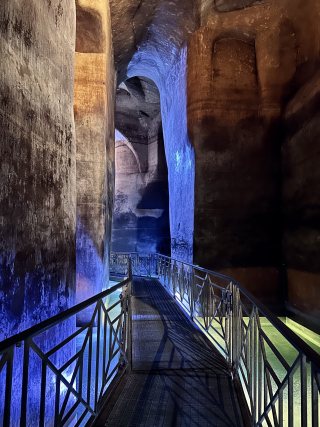
Palombaro Lungo
Huge underground water cistern beneath Piazza Vittorio Veneto, carved into the rock and shown on guided tours.

Sasso Caveoso
The southern of Matera's two cave districts, with cave houses and rock churches stacked along the edge of the ravine.

San Pietro Barisano
The largest rock church in the Sassi, with an underground crypt where the dead were once drained in niches.
Day 9
Sasso Barisano
The northern cave district, with carved facades, rock churches and many cave houses now restored as hotels and restaurants.

Matera Cathedral
Apulian-Romanesque cathedral of the 13th century on the ridge between the two Sassi, with a rose window and Baroque interior.

MUSMA
Museum of contemporary sculpture set in caves and halls of Palazzo Pomarici in the Sasso Caveoso.
Crypt of Original Sin
A cave church outside Matera with 8th-9th century frescoes, often called the Sistine Chapel of rock churches; visits are guided.

Piazza Vittorio Veneto (Matera)
Matera's main square and evening passeggiata place, with views down into the Sassi.
Day 10

Trullo Sovrano
The only two-storey trullo in Alberobello, an 18th-century house with a small museum showing how a family lived inside.

Basilica of Saints Cosmas and Damian
The town's main church, a neoclassical basilica with twin bell towers at the top of the main street.

Historic centre of Alberobello (Rione Monti trulli)
A walk through the hillside lanes of Rione Monti, packed with over a thousand whitewashed trulli with conical stone roofs, a UNESCO World Heritage site.

Church of Sant'Antonio (trullo church)
A church in Alberobello built in the shape of a trullo, with a conical stone roof like the houses around it.
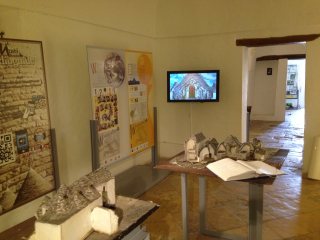
Museo del Territorio (Casa Pezzolla)
Local history museum in a group of linked trulli, explaining how the dry-stone houses were built and lived in.

Rione Aia Piccola
The quieter trulli quarter of Alberobello where people still live; narrow lanes of whitewashed cones with fewer crowds than Rione Monti.
Belvedere Santa Lucia
The classic viewpoint over the conical trulli roofs of Rione Monti, particularly good in late-afternoon light.

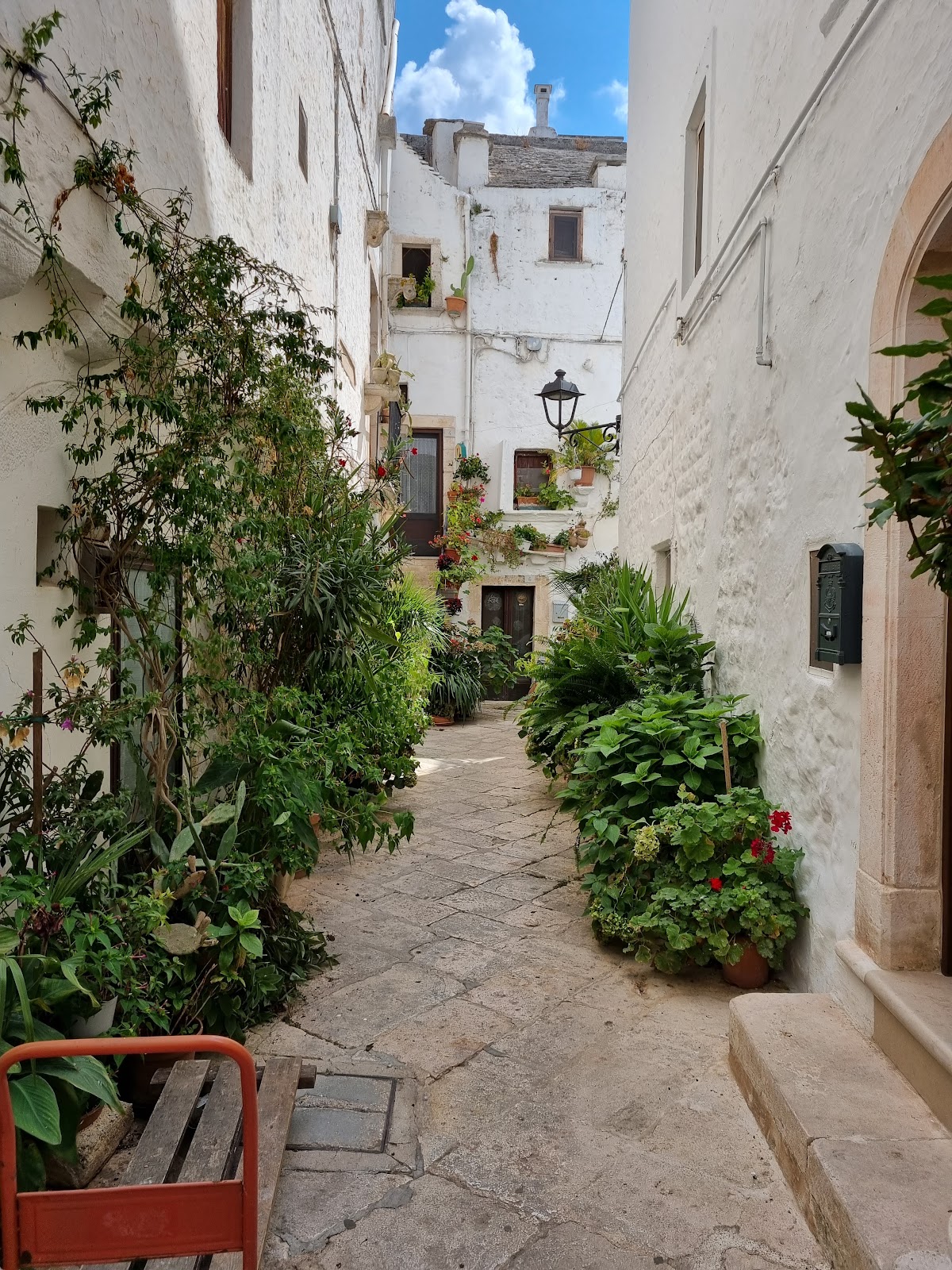
Historic centre of Locorotondo
Round old town of whitewashed lanes, flower-filled balconies and steep-roofed houses on a hill above the valley, one of Italy's most beautiful villages.
Chiesa Madre di San Giorgio (Locorotondo)
Large neoclassical mother church at the top of Locorotondo's old town, with a dome visible across the valley.
Open this 10-day plan, freeChange this trip in the Trip BuilderChange it in the app
Southern Italy in 14 days
Day 1
Castel dell'Ovo Must see
The city's oldest castle, on a small island joined to the seafront, with free terraces over the bay.
Mount Vesuvius Must see
Active volcano above the Bay of Naples; a gravel path climbs from the car park to the rim of the crater.
Castel Nuovo Must see
Medieval castle by the Naples port, also called Maschio Angioino, with a marble Renaissance triumphal arch and the civic museum.
Spaccanapoli Must see
The straight, narrow street that cuts through the historic centre, lined with churches, palaces and shops.
Day 2
Villa Poppaea
A Roman seaside villa at Oplontis in Torre Annunziata, with well-preserved wall paintings, linked to Nero's wife Poppaea.
Piazza del Plebiscito Must see
Naples' largest square, between the Royal Palace and the domed church of San Francesco di Paola.
Biblioteca Nazionale Vittorio Emanuele III Must see
Italy's largest library in the south, occupying a wing of the Royal Palace, with papyri from Herculaneum.
Teatro di San Carlo Must see
Naples' opera house, opened in 1737 and the oldest in continuous use in Europe; guided tours of the red and gold hall.
Cappella Sansevero Must see
Baroque chapel in Naples' historic centre with Giuseppe Sanmartino's marble Veiled Christ and the anatomical machines.
Day 3
Royal Palace of Naples Must see
The palace of the Spanish viceroys and Bourbon kings on Piazza del Plebiscito, with a grand staircase and royal apartments.
Quartieri Spagnoli Must see
A grid of narrow streets laid out for Spanish troops in the 16th century, full of everyday Neapolitan life and murals.
Santa Chiara, Naples Must see
A Gothic church and monastery complex with a cloister decorated with colourful majolica tiles.
San Gregorio Armeno Must see
A Baroque church and convent on the street famous for its workshops making nativity figures.
Pio Monte della Misericordia
A charitable institution's church holding Caravaggio's Seven Works of Mercy above the main altar.
Day 4
Large Theatre of Pompeii
Greek-style theatre built into a hillside for about 5,000 spectators, next to the smaller covered Odeon and the gladiators' barracks.
Stabian Baths
The oldest and largest of Pompeii's public baths, with changing rooms, hot and cold rooms and fine stucco ceilings.
Lupanar
Ancient Roman brothel with small stone beds and erotic wall paintings, one of the most visited buildings in Pompeii.
Forum of Pompeii
The city's main square, lined with temples, the basilica and market buildings, with Vesuvius rising behind it.
Temple of Apollo (Pompeii)
Sanctuary of Apollo beside the Forum, one of Pompeii's oldest temples, with copies of the bronze statues of Apollo and Diana.
House of the Faun
One of the largest houses in Pompeii, named after its bronze dancing faun, where the Alexander Mosaic was found.
House of the Vettii
Wealthy merchants' house with some of Pompeii's finest wall paintings, restored and reopened in 2023.
Villa of the Mysteries
Suburban villa just outside the walls, famous for a cycle of red-ground frescoes showing a mysterious rite.
Garden of the Fugitives
Orchard in the east of the city with plaster casts of thirteen people who died there during the eruption of 79 AD.
Amphitheatre of Pompeii
The oldest surviving stone Roman amphitheatre, built around 70 BC, beside the large palaestra exercise ground.
Shrine of the Virgin of the Rosary of Pompei
Large 19th-century basilica and pilgrimage church in the centre of modern Pompei, a short walk from the ruins.
Day 5
Blue Grotto Must see
Sea cave on the island's north-west coast, entered lying down in a small rowing boat, where sunlight turns the water bright blue.
Villa San Michele Must see
The Anacapri villa and garden built by the Swedish doctor and writer Axel Munthe, with Roman fragments and a sphinx over the bay.
Gardens of Augustus
Terraced gardens laid out by Friedrich Krupp above Capri town, with flower beds and the classic view of the Faraglioni rocks and Via Krupp.
Faraglioni Must see
Three towering limestone sea stacks off Capri's coast, best viewed from the Belvedere di Tragara along Via Tragara.
Piazzetta (Piazza Umberto I), Capri
Capri's famous little square beneath the clock tower, lined with café tables and the place to watch island life go by.
Piazza Tasso, Sorrento
The main square of Sorrento, named after the poet Torquato Tasso, lined with cafes and a good place to watch town life.
Day 6
Via Positanesi d'America
A footpath along the cliff between Spiaggia Grande and Fornillo, with views back over the town and the sea.
MAR Roman Villa
The archaeological museum under the church, showing rooms of a Roman villa buried by Vesuvius, with painted walls.
Church of Santa Maria Assunta Must see
The parish church by the beach, with its green and yellow majolica dome and a Byzantine icon of the Virgin.
Spiaggia Grande Must see
Positano's main pebble beach below the coloured houses, with beach clubs, boats to Capri and the town's classic view.
Path of the Gods Must see
Cliff-top footpath from Bomerano to Nocelle, high above the sea, with long views along the coast to Capri.
Nocelle
A tiny village high above Positano at the end of the Path of the Gods, with a viewpoint and a few cafes.
Day 7
Atrani
A tiny fishing village just east of Amalfi, with a small square, a beach and white houses packed between cliffs.
Amalfi Cathedral Must see
The cathedral of Saint Andrew, up a wide flight of steps, with a striped facade, bronze doors and the apostle's relics.
Cloister of Paradise
A 13th-century cloister beside the cathedral with white interlaced Arab-style arches around a garden of palms.
Paper Museum (Museo della Carta) Must see
A museum in a medieval paper mill showing how Amalfi's handmade paper was made, with working machinery.
Valle delle Ferriere walk
A half-day walk from the top of Amalfi up the Valle dei Mulini past ruined paper mills to the waterfalls.
Arsenal of the Republic of Amalfi
The vaulted medieval shipyard of the old maritime republic, now a museum on Amalfi's history at sea.
Day 8
Villa Cimbrone (Terrace of Infinity) Must see
A villa with romantic gardens ending at the Terrace of Infinity, a balcony of marble busts high above the sea.
Church of San Francesco
A church and small cloister on the lane to Villa Cimbrone, founded according to tradition by Saint Francis.
Villa Rufolo Must see
A 13th-century villa by the cathedral square with a Moorish cloister, a tower and terraced gardens over the coast.
San Giovanni del Toro
A quiet medieval church in the upper town with a mosaic pulpit and old frescoes, and a belvedere nearby.
Oscar Niemeyer Auditorium
Oscar Niemeyer's white curved concert hall below the town, a modern contrast to Ravello's medieval buildings.
Ravello Cathedral
The 11th-century cathedral on Piazza Duomo, with bronze doors and two mosaic pulpits, and a small museum.
Day 9
Belvedere Murgia Timone
Viewpoint on the plateau across the ravine, facing the whole of the Sassi, with prehistoric caves and rock churches nearby.
San Pietro Caveoso
17th-century church on a square at the edge of the ravine, below the rock of Santa Maria de Idris.
Santa Maria de Idris
Rock church at the top of the Monterrone crag, with medieval frescoes and views over the Sasso Caveoso.
Casa Grotta di Vico Solitario
A furnished cave house showing how families and their animals lived in the Sassi before the 1950s evacuation.
Santa Lucia alle Malve
One of the oldest rock churches in Matera, once a Benedictine convent, with Byzantine-style frescoes.
Palazzo Lanfranchi
17th-century seminary housing a museum of medieval and modern art, including Carlo Levi's large painting of Lucania.
Palombaro Lungo
Huge underground water cistern beneath Piazza Vittorio Veneto, carved into the rock and shown on guided tours.
Sasso Caveoso
The southern of Matera's two cave districts, with cave houses and rock churches stacked along the edge of the ravine.
San Pietro Barisano
The largest rock church in the Sassi, with an underground crypt where the dead were once drained in niches.
Day 10
Sasso Barisano
The northern cave district, with carved facades, rock churches and many cave houses now restored as hotels and restaurants.
Matera Cathedral
Apulian-Romanesque cathedral of the 13th century on the ridge between the two Sassi, with a rose window and Baroque interior.
MUSMA
Museum of contemporary sculpture set in caves and halls of Palazzo Pomarici in the Sasso Caveoso.
Crypt of Original Sin
A cave church outside Matera with 8th-9th century frescoes, often called the Sistine Chapel of rock churches; visits are guided.
Piazza Vittorio Veneto (Matera)
Matera's main square and evening passeggiata place, with views down into the Sassi.
Day 11
Trullo Sovrano
The only two-storey trullo in Alberobello, an 18th-century house with a small museum showing how a family lived inside.
Basilica of Saints Cosmas and Damian
The town's main church, a neoclassical basilica with twin bell towers at the top of the main street.
Historic centre of Alberobello (Rione Monti trulli)
A walk through the hillside lanes of Rione Monti, packed with over a thousand whitewashed trulli with conical stone roofs, a UNESCO World Heritage site.
Church of Sant'Antonio (trullo church)
A church in Alberobello built in the shape of a trullo, with a conical stone roof like the houses around it.
Museo del Territorio (Casa Pezzolla)
Local history museum in a group of linked trulli, explaining how the dry-stone houses were built and lived in.
Rione Aia Piccola
The quieter trulli quarter of Alberobello where people still live; narrow lanes of whitewashed cones with fewer crowds than Rione Monti.
Belvedere Santa Lucia
The classic viewpoint over the conical trulli roofs of Rione Monti, particularly good in late-afternoon light.
Historic centre of Locorotondo
Round old town of whitewashed lanes, flower-filled balconies and steep-roofed houses on a hill above the valley, one of Italy's most beautiful villages.
Chiesa Madre di San Giorgio (Locorotondo)
Large neoclassical mother church at the top of Locorotondo's old town, with a dome visible across the valley.
Day 12

Monopoli Cathedral
Baroque cathedral of the Madonna della Madia in Monopoli's old town, with a rich marble interior and paintings.

Castle of Charles V (Monopoli)
16th-century seafront castle on the edge of Monopoli's old town, used for exhibitions, with walls rising from the rocks.
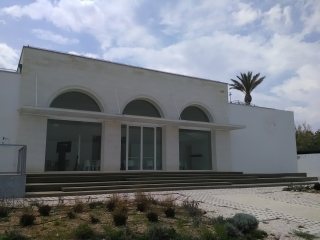
Pino Pascali Museum
Contemporary art museum on the cliff in Polignano, named after the local artist Pino Pascali, with changing exhibitions and a sea view.

Historic centre of Polignano a Mare
A walk through whitewashed lanes to terraces on the cliff edge, the Matrice church and the statue of the singer Domenico Modugno.

Lama Monachile
Small pebble cove between high limestone cliffs at the foot of the old town, used for swimming and sometimes cliff-diving events.

Ponte Borbonico viewpoint
The 19th-century bridge over Lama Monachile, giving the classic view down into the cove and up to the old town on the cliffs.

Statue of Domenico Modugno
A bronze statue of the singer of 'Volare', born in Polignano, standing with arms flung wide towards the sea.
Cala Paura
A tiny fishermen's cove at Polignano with boats pulled up on the rocks, where locals swim from the rocks.

Old town and old port of Monopoli
A walk through Monopoli's white old town, along its sea walls to the old port with its blue fishing boats.
Day 13

Church of Santi Niccolò e Cataldo
Norman church of 1180 outside the walls, with a Baroque facade and a Romanesque portal, inside Lecce's monumental cemetery.

Porta Napoli
Triumphal arch of 1548 raised in honour of Emperor Charles V, on the road to Naples at the north edge of the old town.

Palazzo dei Celestini
Former Celestine monastery next to Santa Croce, with a long carved Baroque facade, now the seat of the provincial government.

Basilica of Santa Croce
Lecce's showpiece Baroque church, its facade carved in soft local stone with animals, figures and a large rose window.

Castle of Charles V
16th-century fortress built for Emperor Charles V around an older castle, with courtyards, halls and exhibitions.

Roman amphitheatre of Lecce
Partly excavated 2nd-century Roman amphitheatre, sunk below Piazza Sant'Oronzo and seen from the square above.

Piazza Sant'Oronzo
The main square of Lecce, with a column topped by the city's patron saint and part of the Roman amphitheatre below street level.

Church of Santa Chiara
Church by Rosario Gagliardi with an oval interior; its convent terrace gives one of the best views over the Corso.

Roman theatre of Lecce
Small Roman theatre found among the old town houses, with a museum of finds next to it.

Church of San Matteo
Baroque church with an unusual facade, convex in its lower part and concave above.

Museo Faggiano
A private house where works on the plumbing uncovered layers of history, from Messapian tombs to medieval rooms below the floors.

Porta San Biagio
One of the three surviving city gates, rebuilt in 1774, opening onto Piazza d'Italia at the southern edge of the old town.

Museo Sigismondo Castromediano
Provincial museum of archaeology and art, with Messapian and Roman finds, painted vases and a picture gallery.
Day 14

Lecce Cathedral and Piazza del Duomo
Enclosed square entered through an archway, with the cathedral, its tall bell tower, the bishop's palace and the seminary.

Basilica of San Giovanni Battista al Rosario
A Lecce Baroque church begun by Giuseppe Zimbalo, with an elaborately carved facade and tall altars inside.

Porta Rudiae
The oldest of Lecce's city gates, a Baroque arch topped by the statue of St Oronzo, on the road to ancient Rudiae.

Church of Sant'Irene
A 17th-century Theatine church in Lecce with a plain facade, an ornate altar-filled interior and a tall cupola.

MUST - Museo Storico della Città di Lecce
The city's history museum in the former Poor Clares' convent beside the Roman theatre, with views over the ruins and changing exhibitions.

Villa Comunale (public gardens)
Lecce's shady public gardens near the old centre, with paths, fountains and benches for a quiet break.

San Cataldo beach
Lecce's own seaside, about 20 minutes away by car or bus, with a sandy beach, an old lighthouse and seafood restaurants.
Open this 14-day plan, freeChange this trip in the Trip Builder
When to go to Southern Italy
May, June, September and early October are the best months: warm sea, open ferries and fewer crowds than in summer. July and August are hot and very busy on the Amalfi Coast and Capri. In winter many coast hotels and ferries close, but Naples, Matera and Lecce are quiet and pleasant.
Plan the rest of your trip
- Where to stay: hotels in Southern Italy on Booking.com or Trip.com
- Skip-the-line tickets: museums and sights in Southern Italy on Tiqets
- Tours and day trips: things to do in Southern Italy on GetYourGuide or on Viator
- Data on arrival: an eSIM for Italy from Airalo
Some of these are affiliate links: we may earn a small commission at no extra cost to you.
Tips for Southern Italy
- North or south? The south has Naples, Pompeii, the Amalfi Coast, Matera and Puglia; the north has Milan, the lakes, Venice and the Dolomites — our Italy 7-14 days guide covers Venice, Florence and Rome.
- Book Pompeii, the Blue Grotto boats and Amalfi Coast ferries ahead in summer.
- Don't drive into the Amalfi Coast towns in summer: parking is scarce, and the SITA bus and ferries are easier.
- Churches ask for shoulders and knees covered.
- Every place here has its own ready-made guide with more days, if you want to stay longer in one place.
Make it your own
Open the guide in Andiamo Places to see every stop on a map with walking directions, move places between days, check opening hours for your dates, and add your own finds. After the trip, your photos become a journal and, if you like, a printed photo book.



Guides are made with the help of AI and public sources such as Wikipedia, and may contain errors. Opening hours and prices change, so check before you go. Spotted a wrong photo, a pin in the wrong place, a missing stop or a better one? Write to hello@andiamoplaces.com: the e-mail opens with this guide filled in.
Photo credits
- Amalfi Cathedral: Berthold Werner, CC BY-SA 3.0
- Amphitheatre of Pompeii: No machine-readable author provided. Buckeye~commonswiki assumed (based on copyright claims)., CC BY-SA 3.0
- Atrani: Donar Reiskoffer, CC BY 3.0
- Basilica of Saints Cosmas and Damian: Alisa58, CC BY-SA 4.0
- Basilica of San Giovanni Battista al Rosario: Chabe01, CC BY-SA 4.0
- Basilica of Santa Croce: Benjamin Smith, CC BY-SA 4.0
- Belvedere Murgia Timone: Mattis, CC BY-SA 3.0
- Belvedere Santa Lucia: ParisTaras, CC BY-SA 4.0
- Biblioteca Nazionale Vittorio Emanuele III: MM, Public domain
- Blue Grotto: Frédéric de Goldschmidt www.frederic.net, CC BY 3.0
- Cala Paura: Luca Margheriti, CC BY-SA 3.0
- Cappella Sansevero: Hohenloh at English Wikipedia, Public domain
- Casa Grotta di Vico Solitario: Davide Mauro, CC BY-SA 4.0
- Castel Nuovo: Little john at Italian Wikipedia, Public domain
- Castel dell'Ovo: currybet, CC BY-SA 2.0
- Castle of Charles V: Velvet, CC BY-SA 3.0
- Castle of Charles V (Monopoli): Jules Verne Times Two, CC BY-SA 4.0
- Church of San Matteo: Angel de los Rios, CC BY-SA 2.0
- Church of Sant'Antonio (trullo church): Alisa58, CC BY-SA 4.0
- Church of Sant'Irene: Albarubescens, CC BY-SA 4.0
- Church of Santa Chiara: Bernard Gagnon, CC0
- Church of Santa Maria Assunta: Simon Burchell, CC BY-SA 4.0
- Church of Santi Niccolò e Cataldo: Anton&Anton, CC BY-SA 4.0
- Forum of Pompeii: Diego Delso, CC BY-SA 4.0
- Garden of the Fugitives: Lordwigg, CC BY-SA 3.0
- Gardens of Augustus: Mentnafunangann, CC BY-SA 4.0
- Historic centre of Alberobello (Rione Monti trulli): ParisTaras, CC BY-SA 4.0
- Historic centre of Locorotondo: Livioandronico2013, CC BY-SA 4.0
- Historic centre of Polignano a Mare: Luca Margheriti, CC BY-SA 3.0
- House of the Faun: NikonZ7II, CC BY-SA 4.0
- House of the Vettii: Diego Delso, CC BY-SA 4.0
- Lama Monachile: Calogero77, CC BY-SA 4.0
- Large Theatre of Pompeii: William Henry Goodyear, Public domain
- Lecce Cathedral and Piazza del Duomo: Benjamin Smith, CC BY-SA 4.0
- Lupanar: General Cucombre from New York, USA, CC BY 2.0
- MUSMA: Velvet, CC BY-SA 4.0
- MUST - Museo Storico della Città di Lecce: Decan, CC BY-SA 3.0
- Matera Cathedral: Benjamin Smith, CC BY-SA 4.0
- Monopoli Cathedral: Hagai Agmon-Snir حچاي اچمون-سنير חגי אגמון-שניר, CC BY-SA 4.0
- Mount Vesuvius: A Outra Voz (The original uploader was ChrisO at English Wikipedia .), Public domain
- Museo Faggiano: Tommasopaiano, CC BY-SA 4.0
- Museo Sigismondo Castromediano: Davide Mauro, CC BY-SA 4.0
- Nocelle: Ugeorge, CC BY-SA 3.0
- Old town and old port of Monopoli: The original uploader was Monopoli91 at Italian Wikipedia., CC BY 3.0
- Oscar Niemeyer Auditorium: Greymouser, CC BY-SA 4.0
- Palazzo Lanfranchi: Acquario51, CC BY-SA 4.0
- Palazzo dei Celestini: Istvánka, CC BY-SA 3.0
- Paper Museum (Museo della Carta): Parisma62, CC BY-SA 4.0
- Path of the Gods: Jules Verne Times Two, CC BY-SA 4.0
- Piazza Sant'Oronzo: Sailko, CC BY-SA 4.0
- Piazza Tasso, Sorrento: Berthold Werner, CC BY-SA 3.0
- Piazza Vittorio Veneto (Matera): DimiTalen, CC0
- Piazza del Plebiscito: Baku, CC BY-SA 4.0
- Piazzetta (Piazza Umberto I), Capri: Elenagm, CC BY 3.0
- Pio Monte della Misericordia: IlSistemone, CC BY-SA 3.0
- Ponte Borbonico viewpoint: Lucamato, CC BY-SA 4.0
- Porta Napoli: Bernard Gagnon, CC0
- Porta Rudiae: Bernard Gagnon, CC0
- Porta San Biagio: Fabrizio Garrisi, CC BY-SA 4.0
- Quartieri Spagnoli: User:Stephen Sommerhalter, CC BY 3.0
- Ravello Cathedral: Derbrauni, CC BY-SA 4.0
- Rione Aia Piccola: Benjamin Smith, CC BY-SA 4.0
- Roman amphitheatre of Lecce: Bernard Gagnon, CC0
- Roman theatre of Lecce: Bernard Gagnon, CC0
- Royal Palace of Naples: © Ra Boe / Wikipedia, CC BY-SA 3.0 de
- San Cataldo beach: Michael Paraskevas, CC BY-SA 3.0
- San Giovanni del Toro: Jensens, Public domain
- San Gregorio Armeno: Armando Mancini, CC BY-SA 2.0
- San Pietro Barisano: Sailko, CC BY 3.0
- San Pietro Caveoso: Luca Aless, CC BY-SA 4.0
- Santa Chiara, Naples: Vitold Muratov, CC BY-SA 4.0
- Santa Lucia alle Malve: Diego Baglieri, CC BY-SA 4.0
- Santa Maria de Idris: Ilaria Giuliodori, CC BY-SA 4.0
- Sasso Barisano: Bönisch, CC BY-SA 2.0 de
- Sasso Caveoso: Bönisch, CC BY-SA 2.0 de
- Shrine of the Virgin of the Rosary of Pompei: Velvet, CC BY-SA 3.0
- Spaccanapoli: Velvet, CC BY-SA 3.0
- Spiaggia Grande: renato agostini, CC BY-SA 3.0
- Stabian Baths: Mentnafunangann, CC BY-SA 3.0
- Statue of Domenico Modugno: Unknown authorUnknown author, Public domain
- Teatro di San Carlo: Jimmy G, CC BY 2.0
- Temple of Apollo (Pompeii): Wknight94, CC BY-SA 3.0
- Trullo Sovrano: Istvánka, CC BY-SA 3.0
- Valle delle Ferriere walk: ElviraMerca, CC BY-SA 4.0
- Via Positanesi d'America: villlamania, CC BY 3.0
- Villa Cimbrone (Terrace of Infinity): Jensens, Public domain
- Villa Comunale (public gardens): Alfonso Piccarreta, CC BY-SA 4.0
- Villa Poppaea: Miguel Hermoso Cuesta, CC BY-SA 4.0
- Villa Rufolo: Istvánka, CC BY-SA 3.0
- Villa San Michele: Berthold Werner, CC BY-SA 3.0
- Villa of the Mysteries: ElfQrin, CC BY-SA 4.0
Opening hours change; check before you go. Map data © OpenStreetMap contributors.