 Andiamo Places
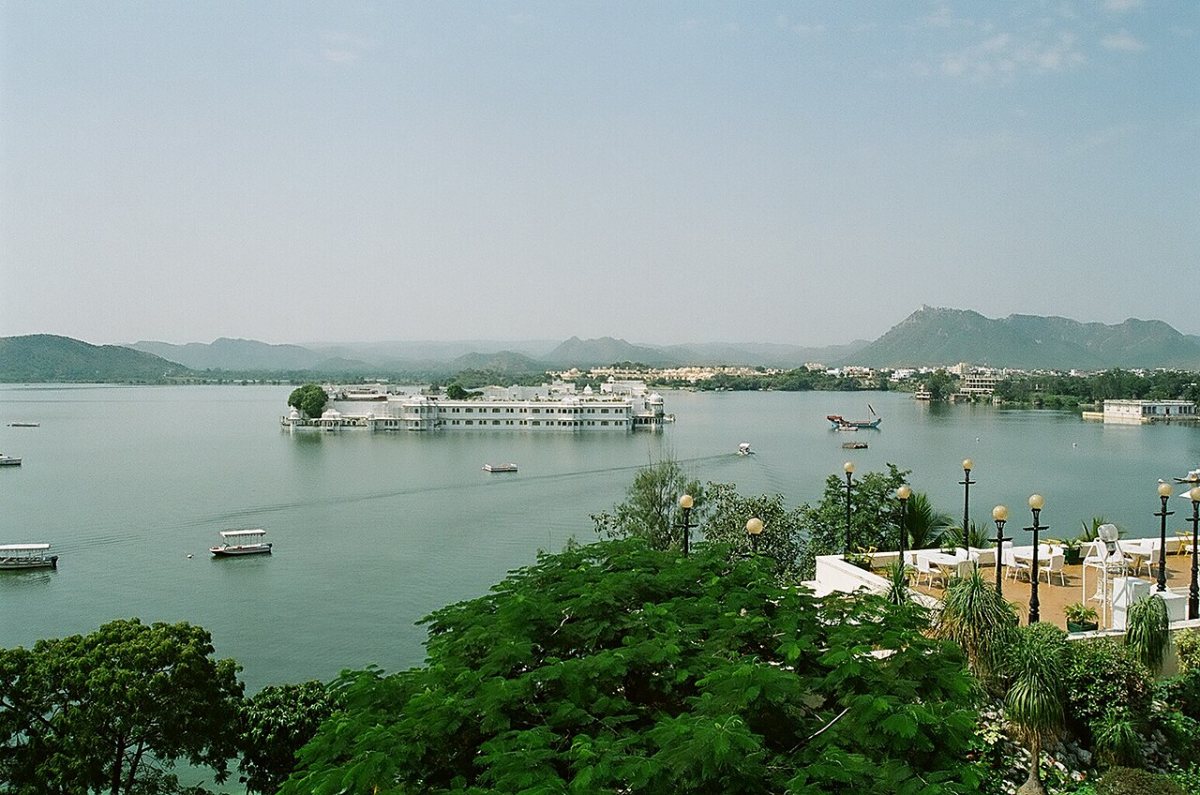
Rajasthan itinerary: 10 or 14 days
Delhi, the Taj Mahal and Rajasthan in 10 or 14 days: Jaipur's palaces and the Amber Fort, the blue city of Jodhpur under Mehrangarh Fort, the lakes and palaces of Udaipur — and in the 14-day plan the golden desert fort of Jaisalmer. Every day comes from our checked guides, with the journey between them.
How long do you have?
Map: 14 days
Rajasthan in 10 days
Day 1
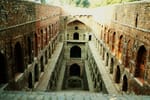
Agrasen ki Baoli
Medieval stepwell of 108 steps hidden among Connaught Place office towers, a cool and quiet spot.
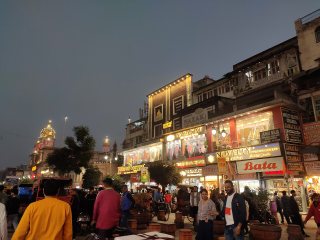
Chandni Chowk
Old Delhi's main bazaar street from the 17th century, packed with shops, street food and religious buildings.
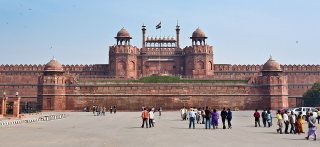
Red Fort
Shah Jahan's red sandstone Mughal palace-fort from the 1640s, a UNESCO site where the Prime Minister speaks on Independence Day.

Raj Ghat
A quiet memorial park with a black marble platform marking the spot where Mahatma Gandhi was cremated in 1948.
Day 2
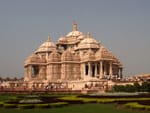
Akshardham
Vast modern Hindu temple complex of carved pink sandstone and marble with exhibitions and an evening water show.

Humayun's Tomb
A 16th-century Mughal garden tomb of red sandstone and marble, a forerunner of the Taj Mahal and a UNESCO site.
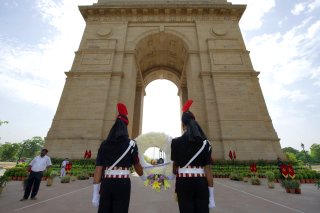
India Gate
42-metre war memorial arch on Kartavya Path honouring Indian soldiers, beside the National War Memorial; lively in the evening.
Day 3
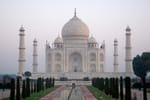
Taj Mahal
White marble mausoleum built by Shah Jahan for his wife Mumtaz Mahal, completed around 1653, set in formal gardens on the Yamuna.
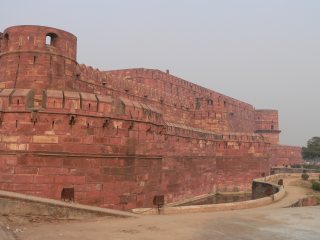
Agra Fort
Red sandstone Mughal fort rebuilt by Akbar from 1565, with marble palaces, audience halls and views down the river to the Taj Mahal.
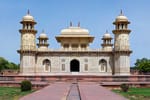
Tomb of ItimadudDaulah
The "Baby Taj", a 1620s marble tomb covered in inlaid stonework, built by Nur Jahan for her father on the Yamuna's east bank.
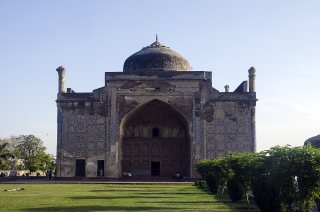
Chini Ka Rauza
Tomb of Afzal Khan Shirazi, poet and minister of Shah Jahan, notable for the remains of its glazed tile decoration.
Day 4
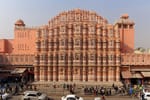
Hawa Mahal
Palace of the Winds, a five-storey pink sandstone facade of 953 small windows built for royal women to watch street life.

Johari Bazaar
Jaipur's jewellery market, with gem and silver shops and sweet stalls along the old city's main street.
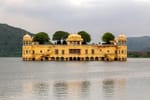
Jal Mahal
Palace in the middle of Man Sagar Lake on the road to Amer, seen from the shore; the interior is closed.
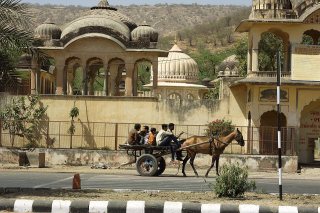
Kanak Vrindavan
Landscaped gardens and temples in a valley below Nahargarh, on the road to Amer.
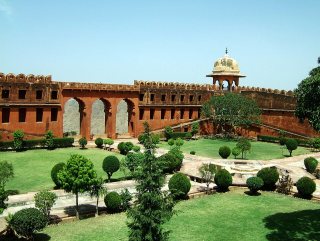
Jaigarh Fort
18th-century fort above Amer holding Jaivana, one of the largest wheeled cannons in the world.
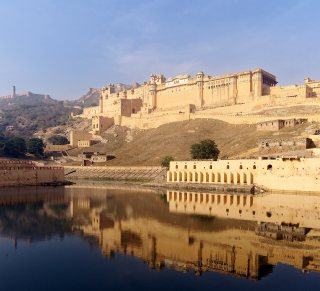
Amer Fort
Hilltop palace-fort of red sandstone and marble above Maota Lake, with the Mirror Palace, a UNESCO site.

Panna Meena ka Kund
A 16th-century stepwell near Amber Fort, its criss-crossing stairs forming a striking geometric pattern.
Day 5
Ram Niwas Garden
19th-century public park around the Albert Hall Museum, with lawns, a zoo and a bird park.
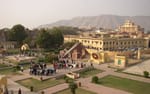
Jantar Mantar
UNESCO-listed observatory of 19 masonry instruments, including the world's largest stone sundial, beside the City Palace.
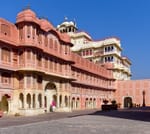
City Palace, Jaipur
Royal palace complex in the heart of the old city, still partly home to the royal family, with museums and courtyards.
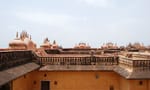
Nahargarh Fort
Fort on the ridge above the city with palace apartments and the best sunset view over Jaipur.
Day 6
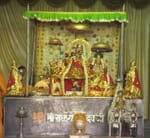
Govind Dev Ji Temple
Krishna temple in the City Palace grounds, very busy at its seven daily darshan times.
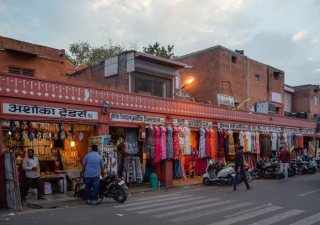
Bapu Bazaar
A pink-fronted market street selling textiles, block prints, mojari slippers and souvenirs; bargaining is expected.
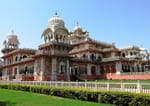
Albert Hall Museum
Rajasthan's oldest museum in an Indo-Saracenic building, with an Egyptian mummy, carpets and arms.
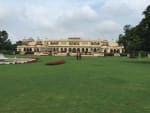
Rambagh Palace
Former residence of the Maharaja of Jaipur, now a luxury Taj hotel; non-guests can visit the restaurants.
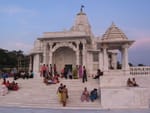
Birla Mandir, Jaipur
White marble Lakshmi Narayan temple from 1988, carved with Hindu deities and lit up in the evening.
Day 7

Mehrangarh Fort
Massive 15th-century fort on a cliff above Jodhpur, with carved palaces, a museum of royal treasures and views over the Blue City.

Clock Tower and Sardar Market
The old city's busy bazaar around a colonial clock tower, selling spices, textiles, bangles and street food.

Toorji ka Jhalra
A restored 1740s stepwell of carved red sandstone steps in the old city, with cafes around it, lovely at sunset.
Day 8

Umaid Bhawan Palace
Art Deco palace of the 1940s on a hill, partly a royal home and hotel, with a museum of vintage cars and royal life.

Mandore Gardens
Gardens north of Jodhpur in the old capital Mandore, with red sandstone cenotaphs of the Marwar rulers, temples and monkeys.

Blue City lanes (Brahmpuri)
Maze of narrow lanes below the fort where houses are painted blue, with doorways, rooftops and everyday old-city life.
Day 9
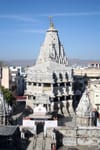
Jagdish Temple, Udaipur
Large Vishnu temple of 1651 near the City Palace, with richly carved walls reached by a steep flight of steps.
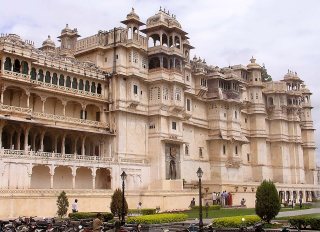
City Palace, Udaipur
Rajasthan's largest palace complex, built over four centuries above Lake Pichola, with a museum of courtyards, mirror rooms and miniature paintings.
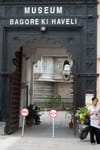
Bagore-ki-Haveli
18th-century mansion on Gangaur Ghat, now a museum of rooms and costumes, with an evening folk dance show.
Day 10
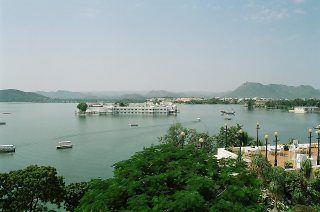
Lake Pichola
Artificial lake from the 14th century, lined with ghats, palaces and hills; boat rides leave from the City Palace jetty.
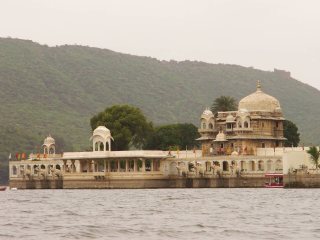
Jag Mandir
17th-century island palace on Lake Pichola reached by boat, with gardens, stone elephants and a lakeside restaurant.
Gulab Bagh and Zoo
Large rose garden and park laid out by Maharana Sajjan Singh, with a small zoo, a library and a toy train.
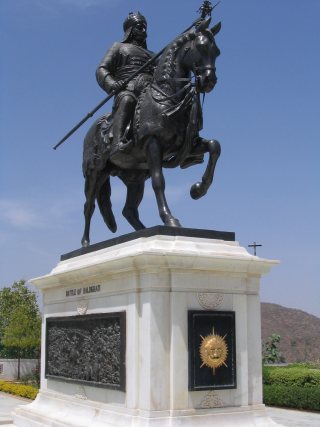
Moti Magri
Pearl Hill above Fateh Sagar Lake, with a memorial garden and bronze statue of Maharana Pratap on his horse Chetak.
Fateh Sagar Lake
The city's second lake, to the north, with a lakeside promenade, boats to Nehru Park and evening snack stalls.
Open this 10-day plan, freeChange this trip in the Trip BuilderChange it in the app
Rajasthan in 14 days
Day 1
Agrasen ki Baoli
Medieval stepwell of 108 steps hidden among Connaught Place office towers, a cool and quiet spot.
Chandni Chowk
Old Delhi's main bazaar street from the 17th century, packed with shops, street food and religious buildings.
Akshardham
Vast modern Hindu temple complex of carved pink sandstone and marble with exhibitions and an evening water show.
Day 2
Red Fort
Shah Jahan's red sandstone Mughal palace-fort from the 1640s, a UNESCO site where the Prime Minister speaks on Independence Day.
Raj Ghat
A quiet memorial park with a black marble platform marking the spot where Mahatma Gandhi was cremated in 1948.
India Gate
42-metre war memorial arch on Kartavya Path honouring Indian soldiers, beside the National War Memorial; lively in the evening.

Purana Qila
The old fort of Delhi, with massive gateways, a mosque and ongoing excavations, beside a boating lake.
Humayun's Tomb
A 16th-century Mughal garden tomb of red sandstone and marble, a forerunner of the Taj Mahal and a UNESCO site.
Day 3
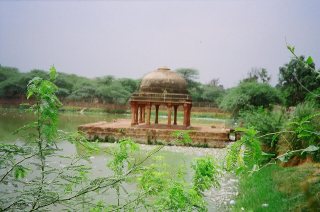
Hauz-i-Shamsi
13th-century reservoir built by Sultan Iltutmish in Mehrauli, with a small pavilion said to mark the Prophet's horse's hoofprint.
Mehrauli Archaeological Park
Park beside the Qutub Minar with over 100 monuments, including the tomb of Balban and the Jamali Kamali mosque.
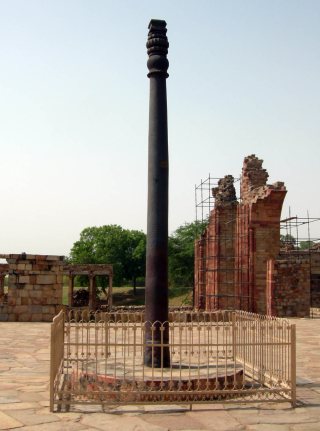
Qutb complex
UNESCO site of the earliest Delhi Sultanate monuments, with the Qutub Minar, Alai Darwaza and the iron pillar.
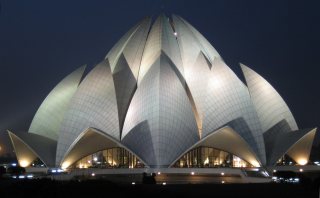
Lotus Temple
Bahá'í House of Worship shaped like a lotus flower, open to people of all faiths for silent prayer.
Day 4
Taj Mahal
White marble mausoleum built by Shah Jahan for his wife Mumtaz Mahal, completed around 1653, set in formal gardens on the Yamuna.
Agra Fort
Red sandstone Mughal fort rebuilt by Akbar from 1565, with marble palaces, audience halls and views down the river to the Taj Mahal.
Tomb of ItimadudDaulah
The "Baby Taj", a 1620s marble tomb covered in inlaid stonework, built by Nur Jahan for her father on the Yamuna's east bank.
Chini Ka Rauza
Tomb of Afzal Khan Shirazi, poet and minister of Shah Jahan, notable for the remains of its glazed tile decoration.
Day 5
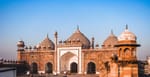
Jama Mosque Agra
Congregational mosque of 1648 built by Jahanara Begum, Shah Jahan's daughter, in the old city near Agra Fort and Kinari Bazaar.
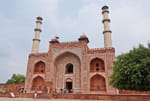
Tomb of Akbar the Great
Akbar's mausoleum at Sikandra, completed in 1613, with a huge marble-inlaid gateway and gardens where deer graze.
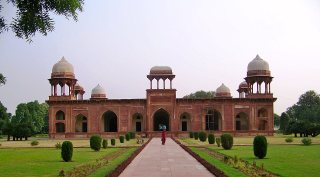
Tomb of MariamuzZamani
Red sandstone tomb of Akbar's wife Mariam-uz-Zamani near Sikandra, quiet and rarely crowded.
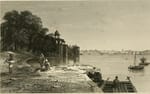
Ram Bagh
Aram Bagh, thought to be the oldest Mughal garden in India, laid out by Babur around 1528 on the Yamuna's east bank.
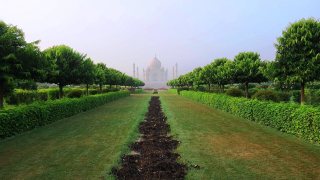
Mehtab Bagh
Mughal "Moonlight Garden" on the far bank of the Yamuna, with a direct view across the river to the Taj Mahal.
Day 6
Hawa Mahal
Palace of the Winds, a five-storey pink sandstone facade of 953 small windows built for royal women to watch street life.
Johari Bazaar
Jaipur's jewellery market, with gem and silver shops and sweet stalls along the old city's main street.
Jal Mahal
Palace in the middle of Man Sagar Lake on the road to Amer, seen from the shore; the interior is closed.
Kanak Vrindavan
Landscaped gardens and temples in a valley below Nahargarh, on the road to Amer.
Jaigarh Fort
18th-century fort above Amer holding Jaivana, one of the largest wheeled cannons in the world.
Amer Fort
Hilltop palace-fort of red sandstone and marble above Maota Lake, with the Mirror Palace, a UNESCO site.
Panna Meena ka Kund
A 16th-century stepwell near Amber Fort, its criss-crossing stairs forming a striking geometric pattern.
Day 7
Ram Niwas Garden
19th-century public park around the Albert Hall Museum, with lawns, a zoo and a bird park.
Jantar Mantar
UNESCO-listed observatory of 19 masonry instruments, including the world's largest stone sundial, beside the City Palace.
City Palace, Jaipur
Royal palace complex in the heart of the old city, still partly home to the royal family, with museums and courtyards.
Nahargarh Fort
Fort on the ridge above the city with palace apartments and the best sunset view over Jaipur.
Day 8
Govind Dev Ji Temple
Krishna temple in the City Palace grounds, very busy at its seven daily darshan times.
Bapu Bazaar
A pink-fronted market street selling textiles, block prints, mojari slippers and souvenirs; bargaining is expected.
Albert Hall Museum
Rajasthan's oldest museum in an Indo-Saracenic building, with an Egyptian mummy, carpets and arms.
Rambagh Palace
Former residence of the Maharaja of Jaipur, now a luxury Taj hotel; non-guests can visit the restaurants.
Birla Mandir, Jaipur
White marble Lakshmi Narayan temple from 1988, carved with Hindu deities and lit up in the evening.
Day 9

Gadisar Lake
Old reservoir of the city, dug in the 12th century, with stone ghats, small temples and pavilions on the water and the carved Tilon ki Pol gate.

Jaisalmer Fort
Golden sandstone fort of 1156 on a hill above the desert, still home to about a quarter of the old city, with the Raj Mahal palace museum.

Patwon ki Haveli
Group of five merchant mansions built from 1805 by the Patwa family, with richly carved sandstone balconies; one is a museum.

Salim Singh ki Haveli
Early 19th-century mansion of a prime minister of Jaisalmer, with a curved roof and carved balconies held up by peacock brackets.

Bada Bagh
Hillside of royal cenotaphs of Jaisalmer's Bhati rulers, carved domed pavilions north of town; finest in the warm light at sunset.
Day 10

Jain temples of Jaisalmer Fort
Seven linked Jain temples of the 12th to 16th centuries inside the fort, with intricately carved yellow sandstone pillars and ceilings.

Kuldhara
Village of Paliwal Brahmins abandoned in the 19th century, said to be cursed, with rows of roofless sandstone houses and a small temple.

Sam sand dunes
Rolling sand dunes in the Thar Desert west of town, with camel rides at sunset, folk music and overnight tent camps.
Day 11
Mehrangarh Fort
Massive 15th-century fort on a cliff above Jodhpur, with carved palaces, a museum of royal treasures and views over the Blue City.

Jaswant Thada
White marble royal cenotaph of 1899 below the fort, with fine carved screens, a small lake and quiet gardens.

Rao Jodha Desert Rock Park
Restored rocky desert park beneath the fort walls, with marked trails among volcanic rock, native plants and birds.
Clock Tower and Sardar Market
The old city's busy bazaar around a colonial clock tower, selling spices, textiles, bangles and street food.
Toorji ka Jhalra
A restored 1740s stepwell of carved red sandstone steps in the old city, with cafes around it, lovely at sunset.
Day 12
Umaid Bhawan Palace
Art Deco palace of the 1940s on a hill, partly a royal home and hotel, with a museum of vintage cars and royal life.
Mandore Gardens
Gardens north of Jodhpur in the old capital Mandore, with red sandstone cenotaphs of the Marwar rulers, temples and monkeys.
Blue City lanes (Brahmpuri)
Maze of narrow lanes below the fort where houses are painted blue, with doorways, rooftops and everyday old-city life.
Day 13
Jagdish Temple, Udaipur
Large Vishnu temple of 1651 near the City Palace, with richly carved walls reached by a steep flight of steps.
City Palace, Udaipur
Rajasthan's largest palace complex, built over four centuries above Lake Pichola, with a museum of courtyards, mirror rooms and miniature paintings.
Bagore-ki-Haveli
18th-century mansion on Gangaur Ghat, now a museum of rooms and costumes, with an evening folk dance show.
Day 14
Lake Pichola
Artificial lake from the 14th century, lined with ghats, palaces and hills; boat rides leave from the City Palace jetty.
Jag Mandir
17th-century island palace on Lake Pichola reached by boat, with gardens, stone elephants and a lakeside restaurant.
Gulab Bagh and Zoo
Large rose garden and park laid out by Maharana Sajjan Singh, with a small zoo, a library and a toy train.
Moti Magri
Pearl Hill above Fateh Sagar Lake, with a memorial garden and bronze statue of Maharana Pratap on his horse Chetak.
Fateh Sagar Lake
The city's second lake, to the north, with a lakeside promenade, boats to Nehru Park and evening snack stalls.
Open this 14-day plan, freeChange this trip in the Trip BuilderChange it in the app
When to go to Rajasthan
October to March is the best time: dry and mild. December and January nights are cold, and morning fog is common in Delhi and Agra. April to June is very hot, often above 40 °C, and the monsoon brings rain from July to September.
Plan the rest of your trip
- Where to stay: hotels in Rajasthan on Booking.com or Trip.com
- Tours and day trips: things to do in Rajasthan on Viator or on GetYourGuide
- Data on arrival: an eSIM for India from Airalo
Some of these are affiliate links: we may earn a small commission at no extra cost to you.
Tips for Rajasthan
- The Taj Mahal is closed on Fridays; go at sunrise for the light and the smallest crowds.
- Book the fast trains (Gatimaan or Shatabdi Express) ahead; winter fog can delay trains in Delhi and Agra.
- Dress modestly for temples, mosques and forts, and take off your shoes where asked.
- Drink bottled or filtered water only.
- Every place here has its own ready-made guide with more days, if you want to stay longer in one place.
Make it your own
Open the guide in Andiamo Places to see every stop on a map with walking directions, move places between days, check opening hours for your dates, and add your own finds. After the trip, your photos become a journal and, if you like, a printed photo book.



Guides are made with the help of AI and public sources such as Wikipedia, and may contain errors. Opening hours and prices change, so check before you go. Spotted a wrong photo, a pin in the wrong place, a missing stop or a better one? Write to hello@andiamoplaces.com: the e-mail opens with this guide filled in.
Photo credits
- Agra Fort: No machine-readable author provided. Faide~commonswiki assumed (based on copyright claims)., CC BY 2.5
- Agrasen ki Baoli: Supreet Sethi http://supreetsethi.net, CC BY-SA 3.0
- Akshardham: Swaminarayan Sanstha, CC BY-SA 3.0
- Albert Hall Museum: Ajit Kumar Majhi, CC BY-SA 4.0
- Amer Fort: Jakub Hałun, CC BY-SA 4.0
- Bada Bagh: Worldthrumaeyes, CC BY-SA 4.0
- Bagore-ki-Haveli: ashish v from bangalore, india, CC BY-SA 2.0
- Birla Mandir, Jaipur: User: (WT-shared) Abhishek b4u at wts wikivoyage, Public domain
- Blue City lanes (Brahmpuri): Dan Lundberg, CC BY-SA 2.0
- Chandni Chowk: Goutam1962, CC BY-SA 4.0
- Chini Ka Rauza: Rangan Datta Wiki, CC BY-SA 4.0
- City Palace, Jaipur: Jakub Hałun, CC BY-SA 4.0
- City Palace, Udaipur: Henrik Bennetsen, CC BY-SA 2.0
- Clock Tower and Sardar Market: Harshil s mehta, CC BY 4.0
- Fateh Sagar Lake: VikramSingh Valera, CC BY-SA 4.0
- Gadisar Lake: WikiPanti, CC BY-SA 4.0
- Govind Dev Ji Temple: Sameergoyal ( talk ), CC BY-SA 3.0
- Gulab Bagh and Zoo: Vishal0soni at English Wikipedia, CC BY 4.0
- Hauz-i-Shamsi: Nvvchar, CC BY-SA 3.0
- Hawa Mahal: Jakub Hałun, CC BY-SA 4.0
- Humayun's Tomb: Muhammad Mahdi Karim, GFDL 1.2
- India Gate: Erin A. Kirk-Cuomo, Public domain
- Jag Mandir: No machine-readable author provided. Philbrest assumed (based on copyright claims)., CC BY-SA 3.0
- Jagdish Temple, Udaipur: Ingo Mehling, CC BY-SA 3.0
- Jaigarh Fort: Acred99, CC BY-SA 3.0
- Jain temples of Jaisalmer Fort: jokertrekker, CC BY 3.0
- Jaisalmer Fort: Gérard Janot, CC BY-SA 3.0
- Jal Mahal: Firoze Edassery, CC BY-SA 3.0
- Jama Mosque Agra: Anupam Mukherjee, CC BY-SA 4.0
- Jantar Mantar: Knowledge Seeker, Public domain
- Jaswant Thada: Flying Pharmacist, CC BY-SA 3.0
- Johari Bazaar: Derek Blackadder from Cobourg, ON, Canada, CC BY-SA 2.0
- Kanak Vrindavan: ArishG, CC BY-SA 3.0
- Kuldhara: Dinesh Valke from Thane, India, CC BY-SA 2.0
- Lake Pichola: Uri Sittan Tripo, CC BY-SA 3.0
- Lotus Temple: Vandelizer, CC BY 2.0
- Mandore Gardens: Jon Connell from Cambridge, UK, CC BY 2.0
- Mehrangarh Fort: Sanhitasinha, CC BY-SA 4.0
- Mehrauli Archaeological Park: Hemant Arya, CC BY-SA 3.0
- Mehtab Bagh: g.kaustav, CC BY-SA 3.0
- Moti Magri: Ankur P, CC BY-SA 2.0
- Nahargarh Fort: Sanyam Bahga, CC BY-SA 3.0
- Panna Meena ka Kund: pradeep kumar chatte…, CC BY 3.0
- Patwon ki Haveli: Ashwin Kumar, CC BY-SA 2.0
- Purana Qila: Airknight at English Wikipedia, CC BY 3.0
- Qutb complex: Photograph taken by Mark A. Wilson (Department of Geology, The College of Wooster). [1], Public domain
- Raj Ghat: Humayunn Niaz Ahmed Peerzaada from Mumbai, India, CC BY-SA 2.0
- Ram Bagh: Internet Archive Book Images, No restrictions
- Ram Niwas Garden: Abhinav Soni, CC BY-SA 3.0
- Rambagh Palace: Sunnya343, CC BY-SA 4.0
- Rao Jodha Desert Rock Park: T. R. Shankar Raman, CC BY-SA 4.0
- Red Fort: PerSona77, CC BY-SA 3.0
- Salim Singh ki Haveli: PerSona77, CC BY-SA 3.0
- Sam sand dunes: This Photo was taken by Timothy A. Gonsalves. Feel free to use my photos, but please mention me as the author. I would much appreciate if you send me an email tagooty@yahoo.com or write on my talk page, for my information. Please contact me before commercial use. Please do not upload an edited image here without consulting me. I would like to make corrections only at my own source to ensure that the changes improve the image and are preserved.Otherwise you may upload an edited image with a new name. Please use one of the templates derivative or extract., CC BY-SA 4.0
- Taj Mahal: Kristian Bertel, CC BY-SA 4.0
- Tomb of Akbar the Great: Antoine Taveneaux, CC BY-SA 3.0
- Tomb of ItimadudDaulah: Muhammad Mahdi Karim, GFDL 1.2
- Tomb of MariamuzZamani: Sauravmitra, CC BY-SA 3.0
- Toorji ka Jhalra: Ramesh Deuba, CC BY-SA 3.0
- Umaid Bhawan Palace: Dan Lundberg, CC BY-SA 2.0
Opening hours change; check before you go. Map data © OpenStreetMap contributors.