 Andiamo Places
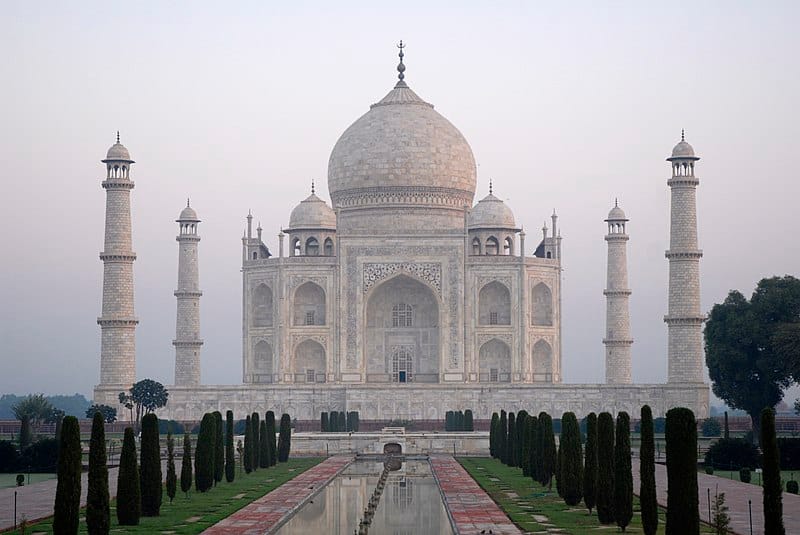
Golden Triangle itinerary: 5 or 7 days
India's Golden Triangle in 5 or 7 days: Old and New Delhi, the Taj Mahal and Agra Fort, and the pink city of Jaipur with the Amber Fort. Every day comes from our checked guides, with the journey between them.
How long do you have?
Map: 7 days
Golden Triangle in 5 days
Day 1
Agrasen ki Baoli
Medieval stepwell of 108 steps hidden among Connaught Place office towers, a cool and quiet spot.
Chandni Chowk
Old Delhi's main bazaar street from the 17th century, packed with shops, street food and religious buildings.
Red Fort
Shah Jahan's red sandstone Mughal palace-fort from the 1640s, a UNESCO site where the Prime Minister speaks on Independence Day.

Raj Ghat
A quiet memorial park with a black marble platform marking the spot where Mahatma Gandhi was cremated in 1948.
Day 2
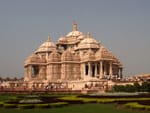
Akshardham
Vast modern Hindu temple complex of carved pink sandstone and marble with exhibitions and an evening water show.

Humayun's Tomb
A 16th-century Mughal garden tomb of red sandstone and marble, a forerunner of the Taj Mahal and a UNESCO site.
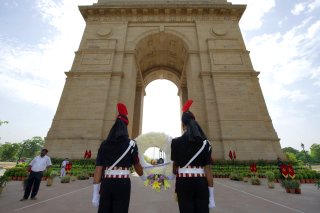
India Gate
42-metre war memorial arch on Kartavya Path honouring Indian soldiers, beside the National War Memorial; lively in the evening.
Day 3
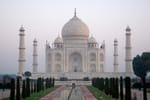
Taj Mahal
White marble mausoleum built by Shah Jahan for his wife Mumtaz Mahal, completed around 1653, set in formal gardens on the Yamuna.
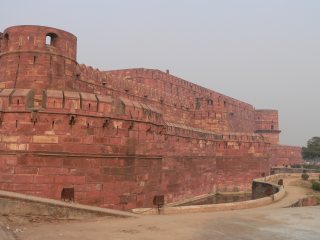
Agra Fort
Red sandstone Mughal fort rebuilt by Akbar from 1565, with marble palaces, audience halls and views down the river to the Taj Mahal.
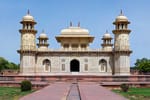
Tomb of ItimadudDaulah
The "Baby Taj", a 1620s marble tomb covered in inlaid stonework, built by Nur Jahan for her father on the Yamuna's east bank.
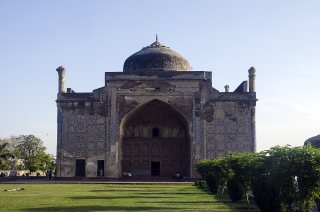
Chini Ka Rauza
Tomb of Afzal Khan Shirazi, poet and minister of Shah Jahan, notable for the remains of its glazed tile decoration.
Day 4
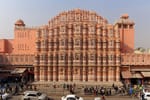
Hawa Mahal
Palace of the Winds, a five-storey pink sandstone facade of 953 small windows built for royal women to watch street life.

Johari Bazaar
Jaipur's jewellery market, with gem and silver shops and sweet stalls along the old city's main street.
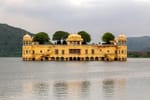
Jal Mahal
Palace in the middle of Man Sagar Lake on the road to Amer, seen from the shore; the interior is closed.
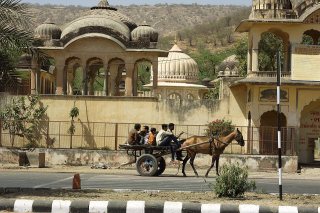
Kanak Vrindavan
Landscaped gardens and temples in a valley below Nahargarh, on the road to Amer.
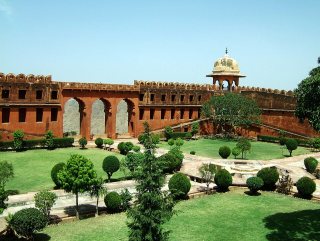
Jaigarh Fort
18th-century fort above Amer holding Jaivana, one of the largest wheeled cannons in the world.
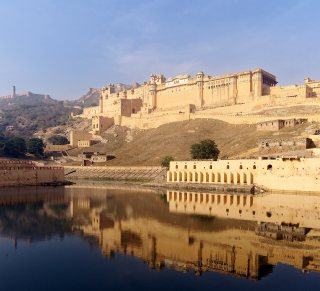
Amer Fort
Hilltop palace-fort of red sandstone and marble above Maota Lake, with the Mirror Palace, a UNESCO site.

Panna Meena ka Kund
A 16th-century stepwell near Amber Fort, its criss-crossing stairs forming a striking geometric pattern.
Day 5
Ram Niwas Garden
19th-century public park around the Albert Hall Museum, with lawns, a zoo and a bird park.
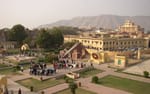
Jantar Mantar
UNESCO-listed observatory of 19 masonry instruments, including the world's largest stone sundial, beside the City Palace.
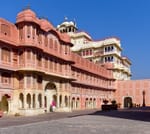
City Palace, Jaipur
Royal palace complex in the heart of the old city, still partly home to the royal family, with museums and courtyards.
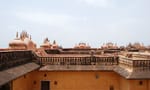
Nahargarh Fort
Fort on the ridge above the city with palace apartments and the best sunset view over Jaipur.
Open this 5-day plan, freeChange this trip in the Trip BuilderChange it in the app
Golden Triangle in 7 days
Day 1
Agrasen ki Baoli
Medieval stepwell of 108 steps hidden among Connaught Place office towers, a cool and quiet spot.
Chandni Chowk
Old Delhi's main bazaar street from the 17th century, packed with shops, street food and religious buildings.
Akshardham
Vast modern Hindu temple complex of carved pink sandstone and marble with exhibitions and an evening water show.
Day 2
Red Fort
Shah Jahan's red sandstone Mughal palace-fort from the 1640s, a UNESCO site where the Prime Minister speaks on Independence Day.
Raj Ghat
A quiet memorial park with a black marble platform marking the spot where Mahatma Gandhi was cremated in 1948.
India Gate
42-metre war memorial arch on Kartavya Path honouring Indian soldiers, beside the National War Memorial; lively in the evening.

Purana Qila
The old fort of Delhi, with massive gateways, a mosque and ongoing excavations, beside a boating lake.
Humayun's Tomb
A 16th-century Mughal garden tomb of red sandstone and marble, a forerunner of the Taj Mahal and a UNESCO site.
Day 3
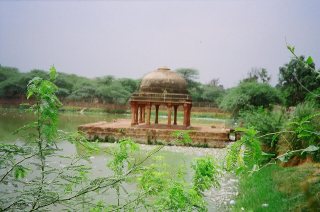
Hauz-i-Shamsi
13th-century reservoir built by Sultan Iltutmish in Mehrauli, with a small pavilion said to mark the Prophet's horse's hoofprint.
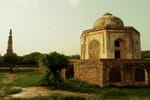
Mehrauli Archaeological Park
Park beside the Qutub Minar with over 100 monuments, including the tomb of Balban and the Jamali Kamali mosque.
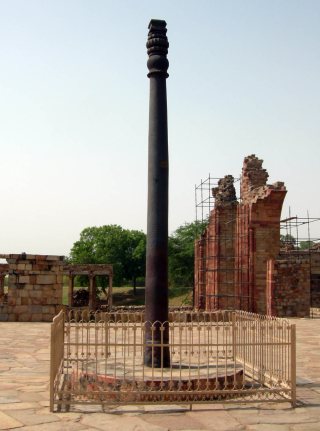
Qutb complex
UNESCO site of the earliest Delhi Sultanate monuments, with the Qutub Minar, Alai Darwaza and the iron pillar.
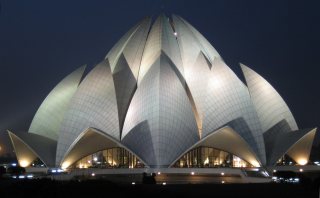
Lotus Temple
Bahá'í House of Worship shaped like a lotus flower, open to people of all faiths for silent prayer.
Day 4
Taj Mahal
White marble mausoleum built by Shah Jahan for his wife Mumtaz Mahal, completed around 1653, set in formal gardens on the Yamuna.
Agra Fort
Red sandstone Mughal fort rebuilt by Akbar from 1565, with marble palaces, audience halls and views down the river to the Taj Mahal.
Tomb of ItimadudDaulah
The "Baby Taj", a 1620s marble tomb covered in inlaid stonework, built by Nur Jahan for her father on the Yamuna's east bank.
Chini Ka Rauza
Tomb of Afzal Khan Shirazi, poet and minister of Shah Jahan, notable for the remains of its glazed tile decoration.
Day 5
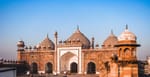
Jama Mosque Agra
Congregational mosque of 1648 built by Jahanara Begum, Shah Jahan's daughter, in the old city near Agra Fort and Kinari Bazaar.
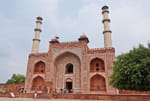
Tomb of Akbar the Great
Akbar's mausoleum at Sikandra, completed in 1613, with a huge marble-inlaid gateway and gardens where deer graze.
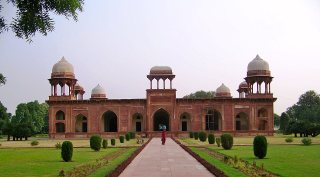
Tomb of MariamuzZamani
Red sandstone tomb of Akbar's wife Mariam-uz-Zamani near Sikandra, quiet and rarely crowded.
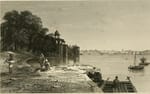
Ram Bagh
Aram Bagh, thought to be the oldest Mughal garden in India, laid out by Babur around 1528 on the Yamuna's east bank.
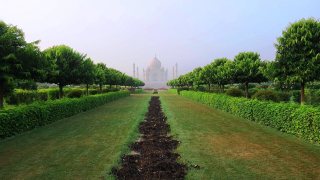
Mehtab Bagh
Mughal "Moonlight Garden" on the far bank of the Yamuna, with a direct view across the river to the Taj Mahal.
Day 6
Hawa Mahal
Palace of the Winds, a five-storey pink sandstone facade of 953 small windows built for royal women to watch street life.
Johari Bazaar
Jaipur's jewellery market, with gem and silver shops and sweet stalls along the old city's main street.
Jal Mahal
Palace in the middle of Man Sagar Lake on the road to Amer, seen from the shore; the interior is closed.
Kanak Vrindavan
Landscaped gardens and temples in a valley below Nahargarh, on the road to Amer.
Jaigarh Fort
18th-century fort above Amer holding Jaivana, one of the largest wheeled cannons in the world.
Amer Fort
Hilltop palace-fort of red sandstone and marble above Maota Lake, with the Mirror Palace, a UNESCO site.
Panna Meena ka Kund
A 16th-century stepwell near Amber Fort, its criss-crossing stairs forming a striking geometric pattern.
Day 7
Ram Niwas Garden
19th-century public park around the Albert Hall Museum, with lawns, a zoo and a bird park.
Jantar Mantar
UNESCO-listed observatory of 19 masonry instruments, including the world's largest stone sundial, beside the City Palace.
City Palace, Jaipur
Royal palace complex in the heart of the old city, still partly home to the royal family, with museums and courtyards.
Nahargarh Fort
Fort on the ridge above the city with palace apartments and the best sunset view over Jaipur.
Open this 7-day plan, freeChange this trip in the Trip BuilderChange it in the app
When to go to Golden Triangle
October to March is the best time: dry and mild. December and January nights are cold, and morning fog is common in Delhi and Agra. April to June is very hot, often above 40 °C, and the monsoon brings rain from July to September.
Plan the rest of your trip
- Where to stay: hotels in Golden Triangle on Booking.com or Trip.com
- Tours and day trips: things to do in Golden Triangle on Viator or on GetYourGuide
- Data on arrival: an eSIM for India from Airalo
Some of these are affiliate links: we may earn a small commission at no extra cost to you.
Tips for Golden Triangle
- The Taj Mahal is closed on Fridays; go at sunrise for the light and the smallest crowds.
- Book the fast trains (Gatimaan or Shatabdi Express) ahead; winter fog can delay trains in Delhi and Agra.
- Dress modestly for temples, mosques and forts, and take off your shoes where asked.
- Drink bottled or filtered water only.
- Every place here has its own ready-made guide with more days, if you want to stay longer in one place.
Make it your own
Open the guide in Andiamo Places to see every stop on a map with walking directions, move places between days, check opening hours for your dates, and add your own finds. After the trip, your photos become a journal and, if you like, a printed photo book.



Guides are made with the help of AI and public sources such as Wikipedia, and may contain errors. Opening hours and prices change, so check before you go. Spotted a wrong photo, a pin in the wrong place, a missing stop or a better one? Write to hello@andiamoplaces.com: the e-mail opens with this guide filled in.
Photo credits
- Agra Fort: No machine-readable author provided. Faide~commonswiki assumed (based on copyright claims)., CC BY 2.5
- Agrasen ki Baoli: Supreet Sethi http://supreetsethi.net, CC BY-SA 3.0
- Akshardham: Swaminarayan Sanstha, CC BY-SA 3.0
- Amer Fort: Jakub Hałun, CC BY-SA 4.0
- Chandni Chowk: Goutam1962, CC BY-SA 4.0
- Chini Ka Rauza: Rangan Datta Wiki, CC BY-SA 4.0
- City Palace, Jaipur: Jakub Hałun, CC BY-SA 4.0
- Hauz-i-Shamsi: Nvvchar, CC BY-SA 3.0
- Hawa Mahal: Jakub Hałun, CC BY-SA 4.0
- Humayun's Tomb: Muhammad Mahdi Karim, GFDL 1.2
- India Gate: Erin A. Kirk-Cuomo, Public domain
- Jaigarh Fort: Acred99, CC BY-SA 3.0
- Jal Mahal: Firoze Edassery, CC BY-SA 3.0
- Jama Mosque Agra: Anupam Mukherjee, CC BY-SA 4.0
- Jantar Mantar: Knowledge Seeker, Public domain
- Johari Bazaar: Derek Blackadder from Cobourg, ON, Canada, CC BY-SA 2.0
- Kanak Vrindavan: ArishG, CC BY-SA 3.0
- Lotus Temple: Vandelizer, CC BY 2.0
- Mehrauli Archaeological Park: Hemant Arya, CC BY-SA 3.0
- Mehtab Bagh: g.kaustav, CC BY-SA 3.0
- Nahargarh Fort: Sanyam Bahga, CC BY-SA 3.0
- Panna Meena ka Kund: pradeep kumar chatte…, CC BY 3.0
- Purana Qila: Airknight at English Wikipedia, CC BY 3.0
- Qutb complex: Photograph taken by Mark A. Wilson (Department of Geology, The College of Wooster). [1], Public domain
- Raj Ghat: Humayunn Niaz Ahmed Peerzaada from Mumbai, India, CC BY-SA 2.0
- Ram Bagh: Internet Archive Book Images, No restrictions
- Ram Niwas Garden: Abhinav Soni, CC BY-SA 3.0
- Red Fort: PerSona77, CC BY-SA 3.0
- Taj Mahal: Kristian Bertel, CC BY-SA 4.0
- Tomb of Akbar the Great: Antoine Taveneaux, CC BY-SA 3.0
- Tomb of ItimadudDaulah: Muhammad Mahdi Karim, GFDL 1.2
- Tomb of MariamuzZamani: Sauravmitra, CC BY-SA 3.0
Opening hours change; check before you go. Map data © OpenStreetMap contributors.