 Andiamo Places

France itinerary: 7, 10 or 14 days
France in 7, 10 or 14 days: Paris, then south by fast train to Avignon and the hill villages of the Luberon and on to Nice on the Riviera — and in the longer plans Mont-Saint-Michel, the châteaux of the Loire, Versailles, the Normandy coast and Lyon. Every day comes from our checked city guides, with the journey between them.
How long do you have?
Map: 14 days
France in 7 days
Day 1
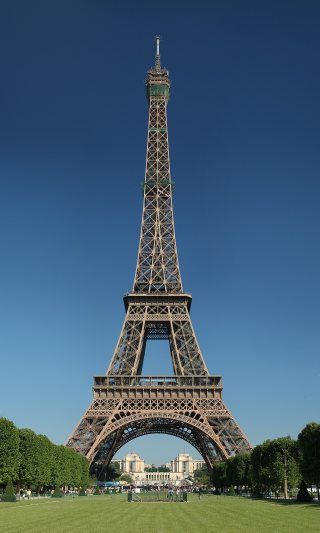
Eiffel Tower Must see
Paris's iron icon from 1889; go up to the second floor or the summit for the view.
Musée d'Orsay Must see
Impressionist masterpieces by Monet, Renoir, Degas and Van Gogh in a former railway station.

Saint-Germain-des-Prés
A Left Bank quarter of literary cafes such as Café de Flore and Les Deux Magots, art galleries, bookshops and the oldest church in Paris.

Le Bon Marché
Paris's first department store, opened in 1838 on the Left Bank, with a famous food hall, La Grande Épicerie, next door.

Vedettes du Pont Neuf
Hour-long Seine cruises from the tip of the Île de la Cité, passing the Louvre, the Eiffel Tower and Notre-Dame.
Day 2
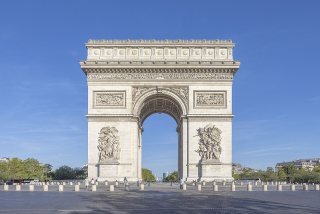
Arc de Triomphe Must see
Napoleon's triumphal arch; climb to the roof for the view down the Champs-Élysées.
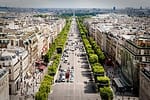
Champs-Élysées Must see
The famous avenue from Place de la Concorde to the Arc de Triomphe, lined with shops and cafés.
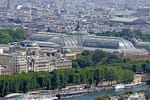
Grand Palais
The glass-roofed exhibition hall built for the 1900 World's Fair.
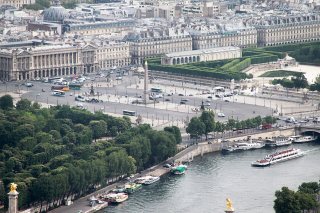
Place de la Concorde Must see
Paris's largest square, with the Luxor Obelisk, between the Tuileries and the Champs-Élysées.

Moulin Rouge
The cabaret at the foot of Montmartre, birthplace of the French cancan in 1889, with its red windmill lit up at night.
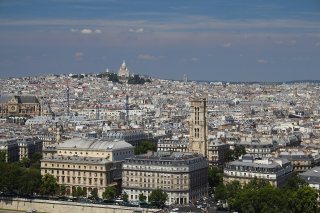
Montmartre Must see
The hilltop artists' village, with the Sacré-Cœur, Place du Tertre and views over Paris.
Day 3
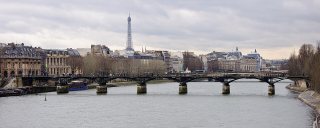
Pont des Arts
A footbridge between the Louvre and the Institut de France, with a classic river view.
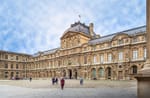
Louvre Palace Must see
The former royal palace that houses the Louvre, with I. M. Pei's glass pyramid in its courtyard.
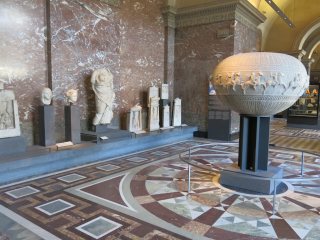
Louvre Must see
The world's most visited museum: the Mona Lisa, the Venus de Milo and the Winged Victory.
Day 4
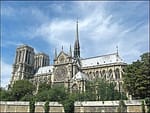
Notre-Dame de Paris Must see
The great Gothic cathedral on the Île de la Cité, reopened in 2024 after the fire.
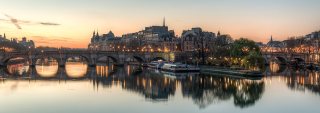
Île de la Cité Must see
The island where Paris began, home to Notre-Dame, Sainte-Chapelle and the Conciergerie.

Marché aux Fleurs Reine-Elizabeth-II
Flower and plant market in green iron pavilions on the Île de la Cité, open every day near Notre-Dame.
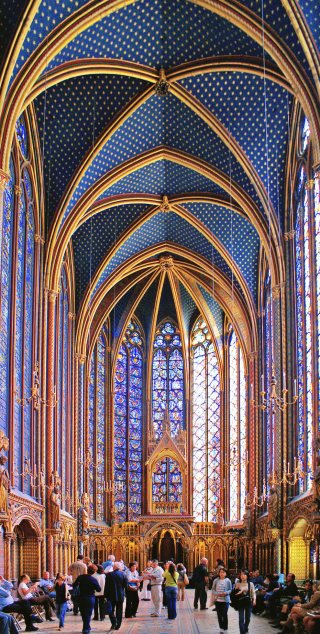
Sainte-Chapelle Must see
A royal chapel with walls of 13th-century stained glass, best on a sunny day.
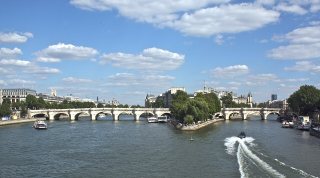
Pont Neuf Must see
Despite its name, the oldest standing bridge in Paris, crossing the tip of the Île de la Cité.
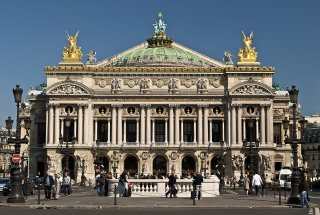
Palais Garnier Must see
The opulent 19th-century opera house that inspired The Phantom of the Opera.
Day 5

Lapidary Museum
Collection of Greek, Roman and Gallo-Roman sculpture and inscriptions displayed in a former Jesuit chapel.

Angladon Museum
Private collection in an 18th-century mansion, with works by Cézanne, Degas, Modigliani and Van Gogh and period rooms.

Walls of Avignon
The 14th-century ramparts that still ring the old town, with gates and towers along about four kilometres.
Palais des Papes Must see
The vast Gothic palace where the popes lived in the 14th century, the largest Gothic palace in Europe.
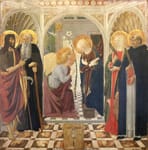
Musée du Petit Palais, Avignon Must see
Former archbishop's palace with a large collection of Italian Renaissance and medieval paintings, including Botticelli.
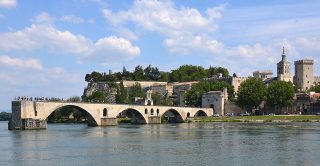
Pont Saint-Bénézet Must see
The famous half-bridge of the song, with four arches left reaching into the Rhône and a small chapel.
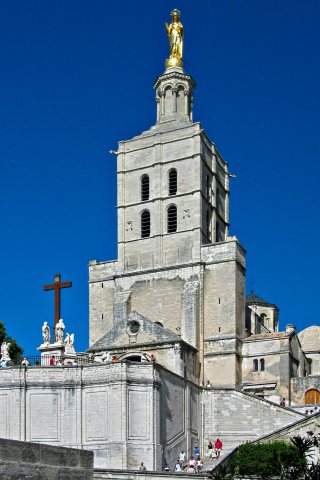
Avignon Cathedral Must see
Romanesque cathedral of Notre-Dame des Doms beside the Palais des Papes, topped by a gilded statue of the Virgin.

Rocher des Doms
Hilltop garden above the Palais des Papes and the cathedral, with views over the Rhône, the Pont Saint-Bénézet and Villeneuve-lès-Avignon.
Day 6

Sénanque Abbey
Twelfth-century Cistercian abbey in a narrow valley, still home to monks, with its rows of lavender in front in early summer.

Gordes village and castle
Stone village piled on a hill around its Renaissance castle, with steep lanes and a classic view of it from the road below.

Village des Bories
Restored hamlet of dry-stone huts on the plateau below Gordes, built and used by farmers, with a signed walk through it.

Historic centre of Roussillon
Hilltop village painted in every shade of ochre, from yellow to deep red, with cafés and views over the cliffs.
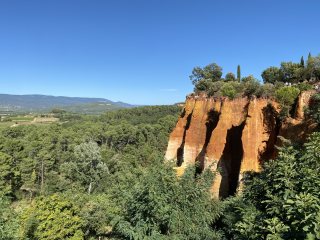
Sentier des Ocres
Short walk through old ochre quarries among red and orange cliffs and pines, just below Roussillon; it closes for part of winter.
Day 7
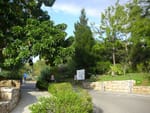
Jardin botanique de la Ville de Nice Must see
A 3.5-hectare municipal botanical garden on a hillside in the west of the city, with Mediterranean plants from around the world.
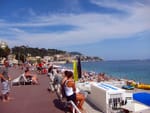
Promenade des Anglais Must see
The seafront promenade curving along the Baie des Anges, for walking, cycling and sea views.
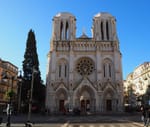
Notre-Dame de Nice Must see
A neo-Gothic basilica on Avenue Jean Médecin, the largest church in Nice, with two square towers and a rose window.
Open this 7-day plan, freeChange this trip in the Trip BuilderChange it in the app
France in 10 days
Day 1
Eiffel Tower Must see
Paris's iron icon from 1889; go up to the second floor or the summit for the view.
Musée d'Orsay Must see
Impressionist masterpieces by Monet, Renoir, Degas and Van Gogh in a former railway station.
Saint-Germain-des-Prés
A Left Bank quarter of literary cafes such as Café de Flore and Les Deux Magots, art galleries, bookshops and the oldest church in Paris.
Le Bon Marché
Paris's first department store, opened in 1838 on the Left Bank, with a famous food hall, La Grande Épicerie, next door.
Vedettes du Pont Neuf
Hour-long Seine cruises from the tip of the Île de la Cité, passing the Louvre, the Eiffel Tower and Notre-Dame.
Day 2
Arc de Triomphe Must see
Napoleon's triumphal arch; climb to the roof for the view down the Champs-Élysées.
Champs-Élysées Must see
The famous avenue from Place de la Concorde to the Arc de Triomphe, lined with shops and cafés.
Grand Palais
The glass-roofed exhibition hall built for the 1900 World's Fair.
Place de la Concorde Must see
Paris's largest square, with the Luxor Obelisk, between the Tuileries and the Champs-Élysées.
Moulin Rouge
The cabaret at the foot of Montmartre, birthplace of the French cancan in 1889, with its red windmill lit up at night.
Montmartre Must see
The hilltop artists' village, with the Sacré-Cœur, Place du Tertre and views over Paris.
Day 3
Pont des Arts
A footbridge between the Louvre and the Institut de France, with a classic river view.
Louvre Palace Must see
The former royal palace that houses the Louvre, with I. M. Pei's glass pyramid in its courtyard.
Louvre Must see
The world's most visited museum: the Mona Lisa, the Venus de Milo and the Winged Victory.
Day 4
Notre-Dame de Paris Must see
The great Gothic cathedral on the Île de la Cité, reopened in 2024 after the fire.
Île de la Cité Must see
The island where Paris began, home to Notre-Dame, Sainte-Chapelle and the Conciergerie.
Marché aux Fleurs Reine-Elizabeth-II
Flower and plant market in green iron pavilions on the Île de la Cité, open every day near Notre-Dame.
Sainte-Chapelle Must see
A royal chapel with walls of 13th-century stained glass, best on a sunny day.
Pont Neuf Must see
Despite its name, the oldest standing bridge in Paris, crossing the tip of the Île de la Cité.
Palais Garnier Must see
The opulent 19th-century opera house that inspired The Phantom of the Opera.
Day 5
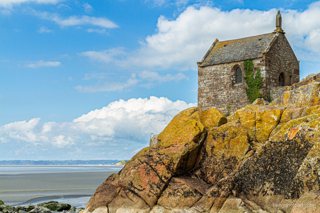
Chapelle Saint-Aubert
A tiny granite chapel on a rock at the foot of the mount, facing the bay, reached from the path below the ramparts.

Mont-Saint-Michel Abbey and cloister
The Benedictine abbey crowning the rock, with its Gothic Merveille buildings, a cloister hanging over the bay and the abbey church.

Grande Rue and the village
The single steep street of the medieval village, lined with old houses, shops, crêperies and the famous omelette restaurants.
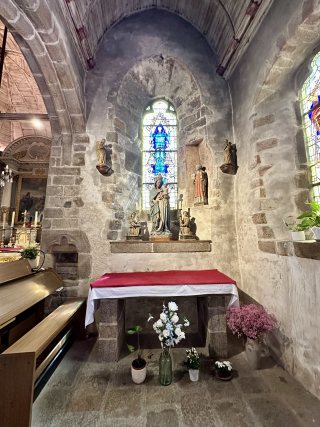
Church of Saint-Pierre
The small parish church on the Grande Rue, with a statue of Joan of Arc outside and a silver statue of Saint Michael.
Ramparts walk
A walk along the 15th-century walls and towers circling the village, with wide views over the sands and the sea.
Bay view from the footbridge
The view back to the mount from the footbridge, the best place to see the island rising from the bay, especially at sunset.
Day 6

Château de Chenonceau
Renaissance château built on arches across the river Cher, shaped by Diane de Poitiers and Catherine de' Medici, with formal gardens.

Château d'Amboise
Royal château on a rock above the Loire, home of French kings, with the chapel where Leonardo da Vinci is buried and river views.

Clos Lucé (Leonardo da Vinci's house)
Manor house in Amboise where Leonardo da Vinci spent his last years, with his rooms, models of his inventions and a park.
Day 7
Lapidary Museum
Collection of Greek, Roman and Gallo-Roman sculpture and inscriptions displayed in a former Jesuit chapel.
Angladon Museum
Private collection in an 18th-century mansion, with works by Cézanne, Degas, Modigliani and Van Gogh and period rooms.
Walls of Avignon
The 14th-century ramparts that still ring the old town, with gates and towers along about four kilometres.
Palais des Papes Must see
The vast Gothic palace where the popes lived in the 14th century, the largest Gothic palace in Europe.
Musée du Petit Palais, Avignon Must see
Former archbishop's palace with a large collection of Italian Renaissance and medieval paintings, including Botticelli.
Pont Saint-Bénézet Must see
The famous half-bridge of the song, with four arches left reaching into the Rhône and a small chapel.
Avignon Cathedral Must see
Romanesque cathedral of Notre-Dame des Doms beside the Palais des Papes, topped by a gilded statue of the Virgin.
Rocher des Doms
Hilltop garden above the Palais des Papes and the cathedral, with views over the Rhône, the Pont Saint-Bénézet and Villeneuve-lès-Avignon.
Day 8
Sénanque Abbey
Twelfth-century Cistercian abbey in a narrow valley, still home to monks, with its rows of lavender in front in early summer.
Gordes village and castle
Stone village piled on a hill around its Renaissance castle, with steep lanes and a classic view of it from the road below.
Village des Bories
Restored hamlet of dry-stone huts on the plateau below Gordes, built and used by farmers, with a signed walk through it.
Historic centre of Roussillon
Hilltop village painted in every shade of ochre, from yellow to deep red, with cafés and views over the cliffs.
Sentier des Ocres
Short walk through old ochre quarries among red and orange cliffs and pines, just below Roussillon; it closes for part of winter.
Day 9
Jardin botanique de la Ville de Nice Must see
A 3.5-hectare municipal botanical garden on a hillside in the west of the city, with Mediterranean plants from around the world.
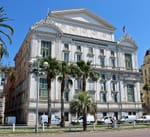
Opéra de Nice Must see
The city's 19th-century opera house at the edge of the old town, staging opera, ballet and concerts.
Notre-Dame de Nice Must see
A neo-Gothic basilica on Avenue Jean Médecin, the largest church in Nice, with two square towers and a rose window.
Day 10
Promenade des Anglais Must see
The seafront promenade curving along the Baie des Anges, for walking, cycling and sea views.
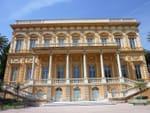
Musée des Beaux-Arts de Nice Must see
The city's fine arts museum, in a 19th-century villa built for a Russian princess, with paintings and sculpture.
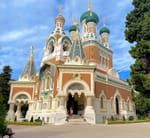
Russian Orthodox Cathedral, Nice Must see
St Nicholas Cathedral, opened in 1912, with onion domes and a richly decorated interior.
Open this 10-day plan, freeChange this trip in the Trip BuilderChange it in the app
France in 14 days
Day 1
Eiffel Tower Must see
Paris's iron icon from 1889; go up to the second floor or the summit for the view.
Musée d'Orsay Must see
Impressionist masterpieces by Monet, Renoir, Degas and Van Gogh in a former railway station.
Saint-Germain-des-Prés
A Left Bank quarter of literary cafes such as Café de Flore and Les Deux Magots, art galleries, bookshops and the oldest church in Paris.
Le Bon Marché
Paris's first department store, opened in 1838 on the Left Bank, with a famous food hall, La Grande Épicerie, next door.
Vedettes du Pont Neuf
Hour-long Seine cruises from the tip of the Île de la Cité, passing the Louvre, the Eiffel Tower and Notre-Dame.
Day 2
Arc de Triomphe Must see
Napoleon's triumphal arch; climb to the roof for the view down the Champs-Élysées.
Champs-Élysées Must see
The famous avenue from Place de la Concorde to the Arc de Triomphe, lined with shops and cafés.
Grand Palais
The glass-roofed exhibition hall built for the 1900 World's Fair.
Place de la Concorde Must see
Paris's largest square, with the Luxor Obelisk, between the Tuileries and the Champs-Élysées.
Moulin Rouge
The cabaret at the foot of Montmartre, birthplace of the French cancan in 1889, with its red windmill lit up at night.
Montmartre Must see
The hilltop artists' village, with the Sacré-Cœur, Place du Tertre and views over Paris.
Day 3
Pont des Arts
A footbridge between the Louvre and the Institut de France, with a classic river view.
Louvre Palace Must see
The former royal palace that houses the Louvre, with I. M. Pei's glass pyramid in its courtyard.
Louvre Must see
The world's most visited museum: the Mona Lisa, the Venus de Milo and the Winged Victory.
Day 4
Notre-Dame de Paris Must see
The great Gothic cathedral on the Île de la Cité, reopened in 2024 after the fire.
Île de la Cité Must see
The island where Paris began, home to Notre-Dame, Sainte-Chapelle and the Conciergerie.
Marché aux Fleurs Reine-Elizabeth-II
Flower and plant market in green iron pavilions on the Île de la Cité, open every day near Notre-Dame.
Sainte-Chapelle Must see
A royal chapel with walls of 13th-century stained glass, best on a sunny day.
Pont Neuf Must see
Despite its name, the oldest standing bridge in Paris, crossing the tip of the Île de la Cité.
Palais Garnier Must see
The opulent 19th-century opera house that inspired The Phantom of the Opera.
Day 5

Gardens of Versailles and fountains
Le Nôtre's formal gardens with terraces, groves, statues and the Grand Canal, with fountain shows set to music in season.

Petit Trianon
A small Neoclassical château in the estate's grounds, given to Marie Antoinette, with her gardens and the Queen's Hamlet nearby.

Palace of Versailles (State Apartments, Hall of Mirrors)
Louis XIV's royal palace, with the gilded State Apartments, the King's and Queen's rooms and the famous Hall of Mirrors.
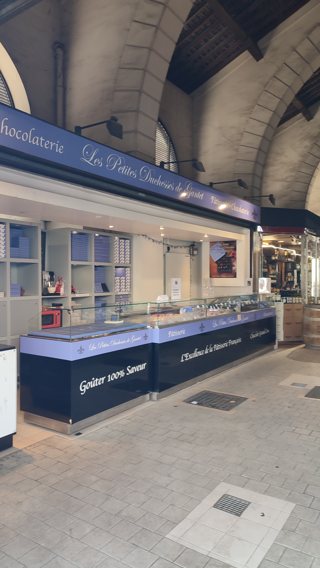
Marché Notre-Dame
Versailles' central market in the town, with covered halls of food stalls and outdoor stands on market mornings; good for a snack.
Day 6

Vieux Bassin (Old Harbour), Honfleur
Seventeenth-century harbour basin lined with tall, narrow slate-fronted houses and café terraces, painted by Boudin, Monet and many others.

St. Catherine's Church, Honfleur
France's largest wooden church, built by the town's shipwrights in the fifteenth century, with its bell tower standing apart across the square.

Eugène Boudin Museum
Museum of the Honfleur-born painter who taught the young Monet, with his beach scenes, other Normandy painters and local costumes.

Notre-Dame de Grâce Chapel (Côte de Grâce)
Sailors' chapel in the woods on the hill above Honfleur, hung with votive ship models, with views over the Seine estuary.

Étretat cliffs: Falaise d'Aval, Porte d'Aval and Manneporte walk
The cliff path west of Étretat beach past the Porte d'Aval arch and the Aiguille needle to the great Manneporte arch, chalk cliffs Monet painted.

Falaise d'Amont and Notre-Dame de la Garde Chapel
Cliff on the east side of Étretat beach, with a sailors' chapel, the memorial to the aviators of L'Oiseau Blanc and views of the arches.
Day 7

Mulberry Harbour and D-Day Museum, Arromanches
Arromanches, where the Allies built an artificial harbour after D-Day; its concrete caissons still stand in the sea, explained in the museum by the beach.

Longues-sur-Mer Battery
German coastal battery on the cliffs between Arromanches and Omaha, the only one in Normandy still with its original guns in their casemates.

Omaha Beach
Long sandy beach where American troops landed on D-Day and suffered the heaviest losses of the landings, now lined with memorials.

Normandy American Cemetery and Memorial
Cemetery on the bluff above Omaha Beach where nearly 9,400 Americans are buried, with a memorial, a chapel and a visitor centre.

Pointe du Hoc
Clifftop between Utah and Omaha beaches that US Rangers scaled on 6 June 1944, still pitted with bomb craters and German bunkers.
Day 8
Chapelle Saint-Aubert
A tiny granite chapel on a rock at the foot of the mount, facing the bay, reached from the path below the ramparts.
Mont-Saint-Michel Abbey and cloister
The Benedictine abbey crowning the rock, with its Gothic Merveille buildings, a cloister hanging over the bay and the abbey church.
Grande Rue and the village
The single steep street of the medieval village, lined with old houses, shops, crêperies and the famous omelette restaurants.
Church of Saint-Pierre
The small parish church on the Grande Rue, with a statue of Joan of Arc outside and a silver statue of Saint Michael.
Ramparts walk
A walk along the 15th-century walls and towers circling the village, with wide views over the sands and the sea.
Bay view from the footbridge
The view back to the mount from the footbridge, the best place to see the island rising from the bay, especially at sunset.
Day 9
Château de Chenonceau
Renaissance château built on arches across the river Cher, shaped by Diane de Poitiers and Catherine de' Medici, with formal gardens.
Château d'Amboise
Royal château on a rock above the Loire, home of French kings, with the chapel where Leonardo da Vinci is buried and river views.
Clos Lucé (Leonardo da Vinci's house)
Manor house in Amboise where Leonardo da Vinci spent his last years, with his rooms, models of his inventions and a park.
Day 10
Basilica of Notre-Dame de Fourvière Must see
Late-19th-century basilica above the old town, richly decorated with mosaics, with a terrace overlooking the whole city.
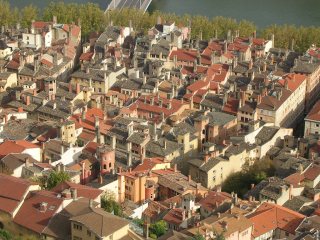
Vieux Lyon Must see
UNESCO-listed Renaissance quarter on the Saône with narrow streets, traboules and traditional bouchons.

Parc de la Tête d'Or Must see
Large urban park with a lake, rose gardens, a free zoo and the botanical garden, in the 6th arrondissement.
Day 11
Lapidary Museum
Collection of Greek, Roman and Gallo-Roman sculpture and inscriptions displayed in a former Jesuit chapel.
Angladon Museum
Private collection in an 18th-century mansion, with works by Cézanne, Degas, Modigliani and Van Gogh and period rooms.
Walls of Avignon
The 14th-century ramparts that still ring the old town, with gates and towers along about four kilometres.
Palais des Papes Must see
The vast Gothic palace where the popes lived in the 14th century, the largest Gothic palace in Europe.
Musée du Petit Palais, Avignon Must see
Former archbishop's palace with a large collection of Italian Renaissance and medieval paintings, including Botticelli.
Pont Saint-Bénézet Must see
The famous half-bridge of the song, with four arches left reaching into the Rhône and a small chapel.
Avignon Cathedral Must see
Romanesque cathedral of Notre-Dame des Doms beside the Palais des Papes, topped by a gilded statue of the Virgin.
Rocher des Doms
Hilltop garden above the Palais des Papes and the cathedral, with views over the Rhône, the Pont Saint-Bénézet and Villeneuve-lès-Avignon.
Day 12
Sénanque Abbey
Twelfth-century Cistercian abbey in a narrow valley, still home to monks, with its rows of lavender in front in early summer.
Gordes village and castle
Stone village piled on a hill around its Renaissance castle, with steep lanes and a classic view of it from the road below.
Village des Bories
Restored hamlet of dry-stone huts on the plateau below Gordes, built and used by farmers, with a signed walk through it.
Historic centre of Roussillon
Hilltop village painted in every shade of ochre, from yellow to deep red, with cafés and views over the cliffs.
Sentier des Ocres
Short walk through old ochre quarries among red and orange cliffs and pines, just below Roussillon; it closes for part of winter.
Day 13
Jardin botanique de la Ville de Nice Must see
A 3.5-hectare municipal botanical garden on a hillside in the west of the city, with Mediterranean plants from around the world.
Opéra de Nice Must see
The city's 19th-century opera house at the edge of the old town, staging opera, ballet and concerts.
Notre-Dame de Nice Must see
A neo-Gothic basilica on Avenue Jean Médecin, the largest church in Nice, with two square towers and a rose window.
Day 14
Promenade des Anglais Must see
The seafront promenade curving along the Baie des Anges, for walking, cycling and sea views.
Musée des Beaux-Arts de Nice Must see
The city's fine arts museum, in a 19th-century villa built for a Russian princess, with paintings and sculpture.
Russian Orthodox Cathedral, Nice Must see
St Nicholas Cathedral, opened in 1912, with onion domes and a richly decorated interior.
Open this 14-day plan, freeChange this trip in the Trip Builder
When to go to France
April to June and September to October are the best months: mild weather, long days and fewer crowds. July and August are hot in the south and busy everywhere, and many Parisians leave the city in August. Lavender in Provence is at its best from late June to late July.
Plan the rest of your trip
- Where to stay: hotels in France on Booking.com or Trip.com
- Skip-the-line tickets: museums and sights in France on Tiqets
- Tours and day trips: things to do in France on GetYourGuide or on Viator
- Data on arrival: an eSIM for France from Airalo
Some of these are affiliate links: we may earn a small commission at no extra cost to you.
Tips for France
- Book the Louvre, the Eiffel Tower and Versailles ahead online; many museums close one day a week (often Monday or Tuesday).
- TGV tickets are much cheaper booked weeks ahead.
- At Mont-Saint-Michel check the tide times — the big tides are spectacular.
- Shops in small towns often close at lunchtime and on Sundays.
- Every place here has its own ready-made guide with more days, if you want to stay longer in one place.
Make it your own
Open the guide in Andiamo Places to see every stop on a map with walking directions, move places between days, check opening hours for your dates, and add your own finds. After the trip, your photos become a journal and, if you like, a printed photo book.



Guides are made with the help of AI and public sources such as Wikipedia, and may contain errors. Opening hours and prices change, so check before you go. Spotted a wrong photo, a pin in the wrong place, a missing stop or a better one? Write to hello@andiamoplaces.com: the e-mail opens with this guide filled in.
Photo credits
- Angladon Museum: ell brown, CC BY 2.0
- Arc de Triomphe: ZeusUpsistos, CC BY-SA 4.0
- Avignon Cathedral: Rolf Süssbrich, CC BY-SA 3.0
- Basilica of Notre-Dame de Fourvière: User:Chris 73, CC BY-SA 3.0
- Champs-Élysées: Josh Hallett, CC BY-SA 2.0
- Château d'Amboise: Gzen92, CC BY-SA 4.0
- Château de Chenonceau: It is a derivative work of Ra-smit's photo., GFDL
- Clos Lucé (Leonardo da Vinci's house): Nadègevillain, CC BY-SA 3.0
- Eiffel Tower: Benh LIEU SONG, Public domain
- Eugène Boudin Museum: Derbrauni, CC BY 4.0
- Falaise d'Amont and Notre-Dame de la Garde Chapel: ThruTheseLines, CC BY 2.0
- Gardens of Versailles and fountains: ToucanWings, CC BY-SA 3.0
- Gordes village and castle: Chensiyuan, CC BY-SA 4.0
- Grand Palais: Dennis G. Jarvis, CC BY-SA 2.0
- Grande Rue and the village: Amaustan, CC BY-SA 4.0
- Historic centre of Roussillon: Hawobo at German Wikipedia, CC BY-SA 2.0 de
- Jardin botanique de la Ville de Nice: Gossipguy, CC BY-SA 4.0
- Lapidary Museum: Véronique PAGNIER, Public domain
- Longues-sur-Mer Battery: Jebulon, CC0
- Louvre: Tangopaso, Public domain
- Louvre Palace: Ali Sabbagh, CC0
- Marché aux Fleurs Reine-Elizabeth-II: Alexander Baranov from Montpellier, France, CC BY 2.0
- Mont-Saint-Michel Abbey and cloister: Ikmo-ned, CC BY-SA 3.0
- Montmartre: Navin75, CC BY-SA 2.0
- Moulin Rouge: unknown author, CC BY-SA 3.0
- Mulberry Harbour and D-Day Museum, Arromanches: Harrison (Sgt), No 5 Army Film & Photographic Unit, Public domain
- Musée d'Orsay: DXR, CC BY-SA 3.0
- Musée des Beaux-Arts de Nice: Miniwark, CC BY-SA 3.0
- Musée du Petit Palais, Avignon: Cosimo Rosselli, Public domain
- Normandy American Cemetery and Memorial: Hayden Soloviev, CC BY 4.0
- Notre-Dame de Grâce Chapel (Côte de Grâce): Stephanemartin, CC BY-SA 4.0
- Notre-Dame de Nice: Teresa Grau Ros from Barcelona, CC BY-SA 2.0
- Notre-Dame de Paris: Madhurantakam, Public domain
- Omaha Beach: Chief Photographer's Mate (CPHoM) Robert F. Sargent, Public domain
- Opéra de Nice: Alexander Migl, CC BY-SA 4.0
- Palace of Versailles (State Apartments, Hall of Mirrors): ToucanWings, CC BY-SA 3.0
- Palais Garnier: Peter Rivera, CC BY 2.0
- Palais des Papes: Jean-Marc Rosier (de/from http://www.cjrosier.com + http://www.gordes-immobilier.com ), CC BY-SA 3.0
- Parc de la Tête d'Or: Phinou, CC BY-SA 3.0
- Petit Trianon: Moonik, CC BY-SA 3.0
- Place de la Concorde: Cristian Bortes from Cluj-Napoca, Romania, CC BY 2.0
- Pointe du Hoc: unknown author, Public domain
- Pont Neuf: Rmrfstar, CC BY-SA 3.0
- Pont Saint-Bénézet: Henk Monster, CC BY 3.0
- Pont des Arts: Myrabella, CC BY-SA 3.0
- Promenade des Anglais: Staeiou, CC BY-SA 3.0
- Rocher des Doms: Véronique PAGNIER, CC BY-SA 3.0
- Russian Orthodox Cathedral, Nice: Amin, CC BY-SA 4.0
- Saint-Germain-des-Prés: DXR, CC BY-SA 3.0
- Sainte-Chapelle: Didier B ( Sam67fr ), CC BY-SA 2.5
- St. Catherine's Church, Honfleur: A19n, CC0
- Sénanque Abbey: Chris Down, CC BY 4.0
- Vedettes du Pont Neuf: Jean-noël Lafargue, FAL
- Vieux Bassin (Old Harbour), Honfleur: Gregory Deryckère, CC BY 2.5
- Vieux Lyon: Karldupart, CC BY-SA 3.0
- Village des Bories: Wolf Meusel, Public domain
- Walls of Avignon: Henk Monster, CC BY 3.0
- Étretat cliffs: Falaise d'Aval, Porte d'Aval and Manneporte walk: Jörg Braukmann, CC BY-SA 4.0
- Île de la Cité: DXR, CC BY-SA 3.0
Opening hours change; check before you go. Map data © OpenStreetMap contributors.