 Andiamo Places

Egypt itinerary: 7 or 10 days
Egypt in 7 or 10 days: the pyramids of Giza and old Cairo, the temples and Nile islands of Aswan, Luxor's Karnak and the Valley of the Kings — and in the longer plan the Red Sea at Hurghada. Every day comes from our checked guides, with the journey between them.
How long do you have?
Map: 10 days
Egypt in 7 days
Day 1
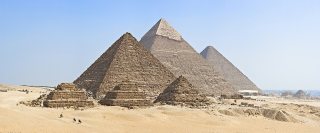
Giza pyramid complex Must see
The pyramids of Khufu, Khafre and Menkaure and the Great Sphinx; the Great Pyramid is the last surviving ancient wonder.
The Grand Egyptian Museum
The huge new museum beside the Giza plateau, home to Tutankhamun's treasures and the colossal statue of Ramesses II in its atrium.

Day 2
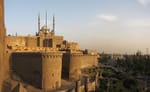
Cairo Citadel Must see
Saladin's 12th-century hilltop fortress, seat of Egypt's rulers for centuries, with mosques and museums inside.
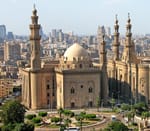
Mosque-Madrassa of Sultan Hassan Must see
A huge 14th-century Mamluk mosque and madrasa below the Citadel, with a soaring portal and four vaulted halls.
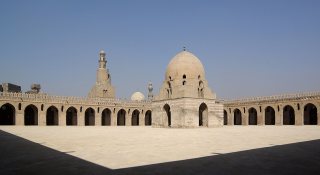
Mosque of Ibn Tulun Must see
A 9th-century mosque, one of the oldest in Cairo, with a vast courtyard and a minaret with an outer spiral stair.
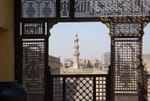
Gayer-Anderson Museum Must see
Two Ottoman-era houses beside the Mosque of Ibn Tulun, furnished with the collection of a British army doctor.
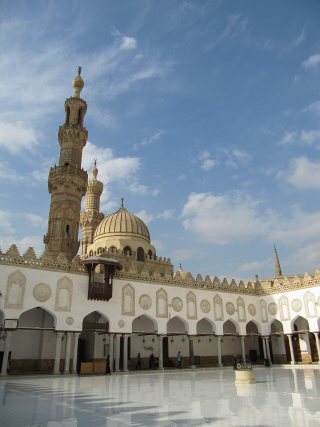
Al-Azhar Mosque Must see
A mosque founded by the Fatimids in 970, one of the oldest working mosques and the seat of Al-Azhar University.
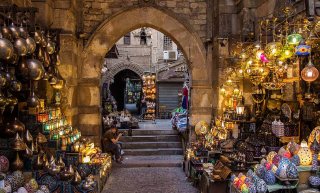
Khan el-Khalili
Cairo's historic bazaar, a maze of lanes with shops, workshops and old coffee houses.
Day 3
The Egyptian Museum in Cairo
The 1902 museum on Tahrir Square, still crowded with statues, sarcophagi and jewellery from three thousand years of pharaonic Egypt.
The National Museum of Egyptian Civilization
The museum at Fustat whose Royal Mummies Hall holds Ramesses II and other pharaohs, moved here from Tahrir Square in 2021.
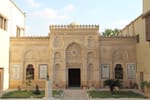
Coptic Museum Must see
The world's largest collection of Coptic Christian art, beside the Hanging Church in Coptic Cairo.
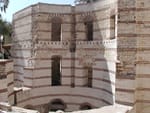
Babylon Fortress Must see
A Roman fortress at the heart of Coptic Cairo; its towers support the Hanging Church.


Day 4

Abu Simbel temples Must see
Two rock-cut temples of Ramesses II and Nefertari, moved above Lake Nasser in the 1960s, with four colossal seated statues of the king.
Day 5

Philae Must see
Island temple complex of Isis, rescued from the rising Nile and rebuilt on Agilkia Island, reached by a short motorboat ride.

Aswan High Dam
The huge 1960s embankment dam that created Lake Nasser, with views over the lake on one side and the Nile on the other.

Unfinished obelisk
The largest known ancient obelisk, cracked and abandoned while still being cut from the granite quarry, showing how obelisks were made.

Nubian Museum Must see
Modern museum of Nubian history and culture, from prehistory to the villages flooded by Lake Nasser, set in landscaped gardens.

Elephantine
Nile island facing the city, with the ruins of ancient Abu, the Aswan Museum, a Nilometer and colourful Nubian villages.

Aswan Botanical Garden
Shady gardens of tropical plants and trees covering Kitchener's Island in the Nile, reached by boat, good for a late-afternoon stroll.
Gharb Soheil
Nubian village on the Nile's west bank, reached by boat, with brightly painted houses, crafts, tea and sunset views.
Day 6

Karnak Temple
Vast temple complex of Amun built over two thousand years, with the Great Hypostyle Hall's forest of 134 columns and the sacred lake.

Avenue of Sphinxes
Processional way of about 2.7 km between Karnak and the Luxor Temple, lined with sphinxes, excavated and reopened in 2021.
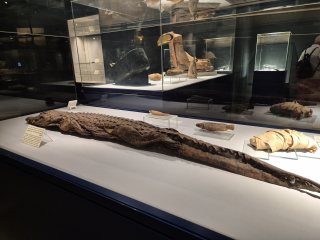
Mummification Museum
Small museum on the Corniche explaining how Egyptians mummified people and animals, with tools, coffins and a human mummy.

Luxor Temple
Temple of Amenhotep III and Ramesses II in the town centre, with an obelisk at its gate whose twin stands in Paris; lit after dark.
Day 7

Valley of the Kings
Desert valley where New Kingdom pharaohs were buried in over 60 rock-cut tombs, their corridors painted with gods and texts of the afterlife.

Mortuary Temple of Hatshepsut (Deir el-Bahari)
Terraced temple of the female pharaoh Hatshepsut set against the cliffs of Deir el-Bahari, with reliefs of the expedition to Punt.

Valley of the Queens
Burial valley of royal wives and children, with Nefertari's richly painted tomb and the colourful tombs of Ramesses III's sons.

Deir el-Medina
Village of the craftsmen who cut the royal tombs, with house foundations, a small Ptolemaic temple and their own vividly painted tombs.

Medinet Habu
Mortuary temple of Ramesses III, one of the best preserved on the West Bank, with deep-cut reliefs that still keep their colour.

Colossi of Memnon
Two huge seated statues of Amenhotep III, all that stands of his mortuary temple; a short roadside stop on the West Bank.
Open this 7-day plan, freeChange this trip in the Trip BuilderChange it in the app
Egypt in 10 days
Day 1
Giza pyramid complex Must see
The pyramids of Khufu, Khafre and Menkaure and the Great Sphinx; the Great Pyramid is the last surviving ancient wonder.
The Grand Egyptian Museum
The huge new museum beside the Giza plateau, home to Tutankhamun's treasures and the colossal statue of Ramesses II in its atrium.
Day 2
Cairo Citadel Must see
Saladin's 12th-century hilltop fortress, seat of Egypt's rulers for centuries, with mosques and museums inside.
Mosque-Madrassa of Sultan Hassan Must see
A huge 14th-century Mamluk mosque and madrasa below the Citadel, with a soaring portal and four vaulted halls.
Mosque of Ibn Tulun Must see
A 9th-century mosque, one of the oldest in Cairo, with a vast courtyard and a minaret with an outer spiral stair.
Gayer-Anderson Museum Must see
Two Ottoman-era houses beside the Mosque of Ibn Tulun, furnished with the collection of a British army doctor.
Al-Azhar Mosque Must see
A mosque founded by the Fatimids in 970, one of the oldest working mosques and the seat of Al-Azhar University.
Khan el-Khalili
Cairo's historic bazaar, a maze of lanes with shops, workshops and old coffee houses.
Day 3
The Egyptian Museum in Cairo
The 1902 museum on Tahrir Square, still crowded with statues, sarcophagi and jewellery from three thousand years of pharaonic Egypt.
The National Museum of Egyptian Civilization
The museum at Fustat whose Royal Mummies Hall holds Ramesses II and other pharaohs, moved here from Tahrir Square in 2021.
Coptic Museum Must see
The world's largest collection of Coptic Christian art, beside the Hanging Church in Coptic Cairo.
Babylon Fortress Must see
A Roman fortress at the heart of Coptic Cairo; its towers support the Hanging Church.
Day 4
Abu Simbel temples Must see
Two rock-cut temples of Ramesses II and Nefertari, moved above Lake Nasser in the 1960s, with four colossal seated statues of the king.
Day 5
Philae Must see
Island temple complex of Isis, rescued from the rising Nile and rebuilt on Agilkia Island, reached by a short motorboat ride.
Aswan High Dam
The huge 1960s embankment dam that created Lake Nasser, with views over the lake on one side and the Nile on the other.
Unfinished obelisk
The largest known ancient obelisk, cracked and abandoned while still being cut from the granite quarry, showing how obelisks were made.
Nubian Museum Must see
Modern museum of Nubian history and culture, from prehistory to the villages flooded by Lake Nasser, set in landscaped gardens.
Elephantine
Nile island facing the city, with the ruins of ancient Abu, the Aswan Museum, a Nilometer and colourful Nubian villages.
Aswan Botanical Garden
Shady gardens of tropical plants and trees covering Kitchener's Island in the Nile, reached by boat, good for a late-afternoon stroll.
Gharb Soheil
Nubian village on the Nile's west bank, reached by boat, with brightly painted houses, crafts, tea and sunset views.
Day 6
Valley of the Kings
Desert valley where New Kingdom pharaohs were buried in over 60 rock-cut tombs, their corridors painted with gods and texts of the afterlife.
Mortuary Temple of Hatshepsut (Deir el-Bahari)
Terraced temple of the female pharaoh Hatshepsut set against the cliffs of Deir el-Bahari, with reliefs of the expedition to Punt.

Tombs of the Nobles (Sheikh Abd el-Qurna)
Painted tombs of officials on the hillside with lively scenes of farming, banquets and daily life, and fewer visitors than the royal valleys.
Colossi of Memnon
Two huge seated statues of Amenhotep III, all that stands of his mortuary temple; a short roadside stop on the West Bank.

Nile Corniche and felucca at sunset
Riverside promenade in the town centre; a sail on a traditional felucca at sunset looks across to the West Bank hills.
Day 7
Karnak Temple
Vast temple complex of Amun built over two thousand years, with the Great Hypostyle Hall's forest of 134 columns and the sacred lake.
Avenue of Sphinxes
Processional way of about 2.7 km between Karnak and the Luxor Temple, lined with sphinxes, excavated and reopened in 2021.

Luxor Museum
Small, well-lit museum on the Corniche with fine statues from Theban temples, including those found in the Luxor Temple cachette.
Luxor Temple
Temple of Amenhotep III and Ramesses II in the town centre, with an obelisk at its gate whose twin stands in Paris; lit after dark.
Day 8
Valley of the Queens
Burial valley of royal wives and children, with Nefertari's richly painted tomb and the colourful tombs of Ramesses III's sons.
Deir el-Medina
Village of the craftsmen who cut the royal tombs, with house foundations, a small Ptolemaic temple and their own vividly painted tombs.
Medinet Habu
Mortuary temple of Ramesses III, one of the best preserved on the West Bank, with deep-cut reliefs that still keep their colour.

Ramesseum
Memorial temple of Ramesses II with the toppled granite colossus that inspired Shelley's poem Ozymandias.
Day 9
El Dahar old town
Hurghada's original town, with a busy souk, spice and fabric stalls, local cafés and the large Al Mina Mosque nearby.
St Shenouda Coptic Church
A Coptic Orthodox church in El Dahar with a painted interior, a glimpse of Egypt's Christian community.

Hurghada Grand Aquarium
Large aquarium and zoo south of the centre with Red Sea fish, sharks and rays, good for families and on windy days.

Hurghada Marina
Seafront promenade of yachts, cafés and restaurants, liveliest in the evening when the boats come back.
Day 10

Giftun Islands Must see
Desert islands in a national park reached by boat, with clear-water snorkelling on the reefs and white sand at Mahmya beach.

El Gouna Must see
Lagoon resort town north of Hurghada, built around canals and with an Italian-style downtown, beaches, bars and a marina for sunset.
Open this 10-day plan, freeChange this trip in the Trip BuilderChange it in the app
When to go to Egypt
October to April is the best time: warm days and cool nights. June to August is very hot, often above 40 °C in Luxor and Aswan, and spring can bring dusty khamsin winds. The Red Sea at Hurghada is good for swimming most of the year, warmest from summer to autumn.
Plan the rest of your trip
- Where to stay: hotels in Egypt on Booking.com or Trip.com
- Skip-the-line tickets: museums and sights in Egypt on Tiqets
- Tours and day trips: things to do in Egypt on GetYourGuide or on Viator
- Data on arrival: an eSIM for Egypt from Airalo
Some of these are affiliate links: we may earn a small commission at no extra cost to you.
Tips for Egypt
- Start temple and tomb visits early in the morning, before the heat and the crowds.
- Abu Simbel is a long day trip from Aswan, by road or a short flight.
- Dress modestly; in mosques, women cover their hair and everyone takes off their shoes.
- Tipping (baksheesh) is expected for small services, so carry small notes.
- Every place here has its own ready-made guide with more days, if you want to stay longer in one place.
Make it your own
Open the guide in Andiamo Places to see every stop on a map with walking directions, move places between days, check opening hours for your dates, and add your own finds. After the trip, your photos become a journal and, if you like, a printed photo book.



Guides are made with the help of AI and public sources such as Wikipedia, and may contain errors. Opening hours and prices change, so check before you go. Spotted a wrong photo, a pin in the wrong place, a missing stop or a better one? Write to hello@andiamoplaces.com: the e-mail opens with this guide filled in.
Photo credits
- Abu Simbel temples: youssef_alam, CC BY 3.0
- Al-Azhar Mosque: Wildoo78, CC BY-SA 4.0
- Aswan Botanical Garden: Olaf Tausch, CC BY 3.0
- Aswan High Dam: NASA, Public domain
- Avenue of Sphinxes: Holger Uwe Schmitt, CC BY-SA 4.0
- Babylon Fortress: Néfermaât, CC BY-SA 2.5
- Cairo Citadel: Ahmed Al.Badawy from Cairo, Egypt, CC BY-SA 2.0
- Colossi of Memnon: MusikAnimal, CC BY-SA 4.0
- Coptic Museum: Djehouty, CC BY-SA 4.0
- Deir el-Medina: Diego Delso, CC BY-SA 4.0
- El Gouna: Ahmed Eissa 424, CC BY-SA 4.0
- Elephantine: unknown author, CC BY-SA 2.0
- Gayer-Anderson Museum: Berthold Werner, CC BY 3.0
- Giftun Islands: user:vberger, Public domain
- Giza pyramid complex: KennyOMG, CC BY-SA 4.0
- Hurghada Grand Aquarium: Hatem Moushir, CC BY-SA 4.0
- Hurghada Marina: Amr F.Nagy, Public domain
- Karnak Temple: René Hourdry, CC BY-SA 4.0
- Khan el-Khalili: Heba otefy, CC BY-SA 4.0
- Luxor Museum: Charlesdrakew at English Wikipedia, Public domain
- Luxor Temple: Holger Uwe Schmitt, CC BY-SA 4.0
- Medinet Habu: Diego Delso, CC BY-SA 4.0
- Mortuary Temple of Hatshepsut (Deir el-Bahari): Diego Delso, CC BY-SA 4.0
- Mosque of Ibn Tulun: User:Berthold Werner, CC BY 3.0
- Mosque-Madrassa of Sultan Hassan: Dennis G. Jarvis, CC BY-SA 2.0
- Nile Corniche and felucca at sunset: F4.animesh, CC BY-SA 4.0
- Nubian Museum: Marc Ryckaert, CC BY 3.0
- Philae: Holger Uwe Schmitt, CC BY-SA 4.0
- Ramesseum: Steve F-E-Cameron, CC BY 3.0
- Tombs of the Nobles (Sheikh Abd el-Qurna): Raimond Spekking, CC BY-SA 4.0
- Unfinished obelisk: Diego Delso, CC BY-SA 4.0
- Valley of the Kings: Fotograf/Photographer: Peter J. Bubenik (1995), CC BY-SA 2.0
- Valley of the Queens: Zureks, CC BY-SA 3.0
Opening hours change; check before you go. Map data © OpenStreetMap contributors.