 Andiamo Places

Eastern Sicily itinerary: 5, 7 or 10 days
Eastern Sicily in 5, 7 or 10 days: Taormina above the sea and the craters of Mount Etna, Catania's markets and baroque streets, Ortigia in Siracusa with its Greek theatre — and in the longer plans the honey-coloured baroque towns of Noto, Modica and Ragusa. Every day comes from our checked city guides, with the drive between them.
How long do you have?
Map: 10 days
Eastern Sicily in 5 days
Day 1

Mount Etna (Rifugio Sapienza and Silvestri Craters)
Europe's highest active volcano; the Silvestri craters near Rifugio Sapienza are easy to walk, with cable car and 4x4 tours higher.

Castelmola
Small village on a crag above Taormina, with castle ruins, narrow lanes and wide views over the coast and Etna.
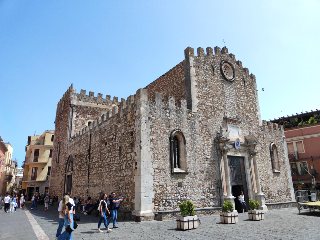
Taormina Cathedral
Fortress-like medieval cathedral of San Nicolò at the west end of Corso Umberto, with a Baroque fountain in its square.

Villa Comunale gardens
Public gardens laid out by an Englishwoman, Florence Trevelyan, with exotic plants, follies and terraces over the sea.
Day 2

Corso Umberto and Piazza IX Aprile
Taormina's main street of shops and palaces, opening onto a terrace square with views over the sea and Etna.

Palazzo Corvaja
A medieval palace in Taormina's centre with Arab, Gothic and Catalan details, now home to the tourist office and a puppet museum.

Ancient Theatre of Taormina
Greek theatre rebuilt by the Romans, set on a hillside with Etna and the sea as its backdrop, still used for performances.

Isola Bella
Small island nature reserve in a bay below Taormina, joined to the beach by a narrow strip of pebbles, with a villa and gardens.

Alcantara Gorges
A basalt-column canyon cut by an icy river inland from Taormina; visitors walk down into the narrow gorge.
Day 3

Ursino Castle
13th-century castle of Frederick II, once on the sea until lava surrounded it in 1669, now the civic museum.
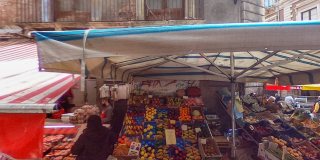
La Pescheria fish market
Catania's loud, lively morning fish market behind the cathedral, with swordfish, tuna and sea urchins and seafood stalls to eat at.

Catania Cathedral
Baroque cathedral of Saint Agatha, the city's patron, rebuilt after the 1693 earthquake, with the tomb of composer Vincenzo Bellini.

Piazza del Duomo and the Elephant Fountain
Catania's main square, with the lava-stone elephant carrying an Egyptian obelisk, the city's symbol, in the middle.

Roman Theatre
Ruins of a Roman theatre of lava stone, partly surrounded by later houses, with the smaller Odeon beside it.

Benedictine Monastery of San Nicolò l'Arena
One of Europe's largest Benedictine monasteries, now part of the university, with cloisters, gardens and Roman remains below.

Via Crociferi
Elegant 18th-century street lined with Baroque churches and convents, crossed by the arch of San Benedetto.
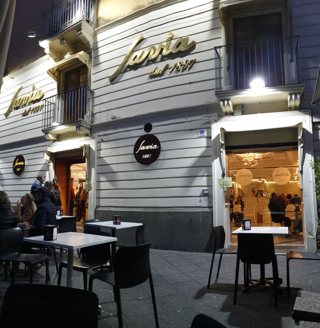
Pasticceria Savia
Historic pastry shop on Via Etnea, a favourite for arancini, cannoli and granita with brioche.
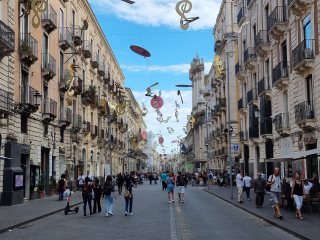
Via Etnea
Catania's main street, running straight up toward Mount Etna, lined with shops, cafés and Baroque palaces; busy for the evening stroll.

Roman Amphitheatre
Part of a huge Roman amphitheatre visible below street level in Piazza Stesicoro, once among the largest in Italy.
Day 4

Temple of Apollo
Ruins of a 6th-century BC Doric temple at the entrance to Ortigia, among the oldest Greek temples in Sicily.

Ortigia Market
Lively morning street market near the Temple of Apollo, with fish, produce, cheese and street food stalls.

Palazzo Montalto
Late 14th-century Gothic palace in Ortigia with fine pointed windows on its stone facade.
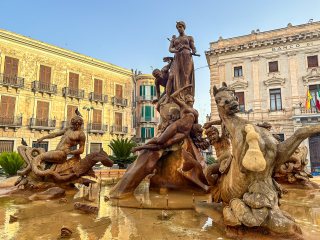
Fountain of Diana
Early 20th-century fountain on Piazza Archimede, Ortigia's main square, showing the goddess Diana and the nymph Arethusa.

Palazzo Beneventano del Bosco
Baroque palace on Piazza Duomo opposite the cathedral, with an elegant courtyard.

Cathedral of Syracuse
Cathedral built into a Greek Doric temple of Athena, whose columns still line the nave, behind a Baroque facade.

Santa Lucia alla Badia
Baroque church on Piazza Duomo, home to Caravaggio's Burial of Saint Lucy, painted for Siracusa in 1608.

Castello Maniace
13th-century castle of Frederick II at the southern tip of Ortigia, with a vaulted hall and sea views.

Bellomo Palace Regional Gallery
Art museum in a medieval palace in Ortigia, with Sicilian painting and sculpture including Antonello da Messina's Annunciation.
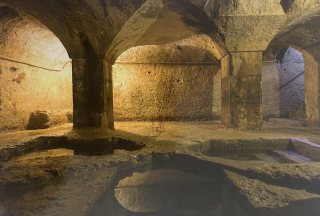
Jewish Ritual Bath (Mikveh)
Ancient Jewish ritual bath carved deep in the rock under a building in Ortigia's old Jewish quarter, shown on guided visits.

Church of San Filippo Apostolo
Church in Ortigia's old Jewish quarter, the Giudecca, with an underground ritual bath beneath it.

Fountain of Arethusa
Freshwater spring on Ortigia's seafront where papyrus grows in a pool, linked in Greek myth to the nymph Arethusa.
Day 5

Sanctuary of the Madonna delle Lacrime
Modern cone-shaped basilica built for an image of the Virgin said to have wept in 1953.

Catacombs of San Giovanni
Large early Christian catacombs beneath the ruined church of San Giovanni, seen on guided visits.

Paolo Orsi Archaeological Museum
One of Italy's leading archaeological museums, with Greek finds from Siracusa and eastern Sicily in a garden setting.

Ear of Dionysius
Tall, ear-shaped artificial cave in an ancient quarry of the Neapolis park, known for its echo.

Greek Theatre of Syracuse
Large 5th-century BC theatre cut into the rock of the Temenite hill, still used for classical plays each summer.

Roman Amphitheatre of Syracuse
Partly rock-cut Roman amphitheatre in the Neapolis park, once used for gladiator shows.

Church of San Martino
Small, very old church in Ortigia with a Gothic portal, near the southern end of the island.

Porta Marina
15th-century Gothic-Catalan gate on Ortigia's harbour side, leading to the seafront promenade.

Lungomare Alfeo
Ortigia's seafront promenade along the Ionian side, good for a walk by the old sea walls with views across the water.
Open this 5-day plan, freeChange this trip in the Trip BuilderChange it in the app
Eastern Sicily in 7 days
Day 1
Mount Etna (Rifugio Sapienza and Silvestri Craters)
Europe's highest active volcano; the Silvestri craters near Rifugio Sapienza are easy to walk, with cable car and 4x4 tours higher.
Castelmola
Small village on a crag above Taormina, with castle ruins, narrow lanes and wide views over the coast and Etna.
Taormina Cathedral
Fortress-like medieval cathedral of San Nicolò at the west end of Corso Umberto, with a Baroque fountain in its square.
Villa Comunale gardens
Public gardens laid out by an Englishwoman, Florence Trevelyan, with exotic plants, follies and terraces over the sea.
Day 2
Corso Umberto and Piazza IX Aprile
Taormina's main street of shops and palaces, opening onto a terrace square with views over the sea and Etna.
Palazzo Corvaja
A medieval palace in Taormina's centre with Arab, Gothic and Catalan details, now home to the tourist office and a puppet museum.
Ancient Theatre of Taormina
Greek theatre rebuilt by the Romans, set on a hillside with Etna and the sea as its backdrop, still used for performances.
Isola Bella
Small island nature reserve in a bay below Taormina, joined to the beach by a narrow strip of pebbles, with a villa and gardens.
Alcantara Gorges
A basalt-column canyon cut by an icy river inland from Taormina; visitors walk down into the narrow gorge.
Day 3
Ursino Castle
13th-century castle of Frederick II, once on the sea until lava surrounded it in 1669, now the civic museum.
La Pescheria fish market
Catania's loud, lively morning fish market behind the cathedral, with swordfish, tuna and sea urchins and seafood stalls to eat at.
Catania Cathedral
Baroque cathedral of Saint Agatha, the city's patron, rebuilt after the 1693 earthquake, with the tomb of composer Vincenzo Bellini.
Piazza del Duomo and the Elephant Fountain
Catania's main square, with the lava-stone elephant carrying an Egyptian obelisk, the city's symbol, in the middle.
Roman Theatre
Ruins of a Roman theatre of lava stone, partly surrounded by later houses, with the smaller Odeon beside it.
Benedictine Monastery of San Nicolò l'Arena
One of Europe's largest Benedictine monasteries, now part of the university, with cloisters, gardens and Roman remains below.
Via Crociferi
Elegant 18th-century street lined with Baroque churches and convents, crossed by the arch of San Benedetto.
Pasticceria Savia
Historic pastry shop on Via Etnea, a favourite for arancini, cannoli and granita with brioche.
Via Etnea
Catania's main street, running straight up toward Mount Etna, lined with shops, cafés and Baroque palaces; busy for the evening stroll.
Roman Amphitheatre
Part of a huge Roman amphitheatre visible below street level in Piazza Stesicoro, once among the largest in Italy.
Day 4
Temple of Apollo
Ruins of a 6th-century BC Doric temple at the entrance to Ortigia, among the oldest Greek temples in Sicily.
Ortigia Market
Lively morning street market near the Temple of Apollo, with fish, produce, cheese and street food stalls.
Palazzo Montalto
Late 14th-century Gothic palace in Ortigia with fine pointed windows on its stone facade.
Fountain of Diana
Early 20th-century fountain on Piazza Archimede, Ortigia's main square, showing the goddess Diana and the nymph Arethusa.
Palazzo Beneventano del Bosco
Baroque palace on Piazza Duomo opposite the cathedral, with an elegant courtyard.
Cathedral of Syracuse
Cathedral built into a Greek Doric temple of Athena, whose columns still line the nave, behind a Baroque facade.
Santa Lucia alla Badia
Baroque church on Piazza Duomo, home to Caravaggio's Burial of Saint Lucy, painted for Siracusa in 1608.
Castello Maniace
13th-century castle of Frederick II at the southern tip of Ortigia, with a vaulted hall and sea views.
Bellomo Palace Regional Gallery
Art museum in a medieval palace in Ortigia, with Sicilian painting and sculpture including Antonello da Messina's Annunciation.
Jewish Ritual Bath (Mikveh)
Ancient Jewish ritual bath carved deep in the rock under a building in Ortigia's old Jewish quarter, shown on guided visits.
Church of San Filippo Apostolo
Church in Ortigia's old Jewish quarter, the Giudecca, with an underground ritual bath beneath it.
Fountain of Arethusa
Freshwater spring on Ortigia's seafront where papyrus grows in a pool, linked in Greek myth to the nymph Arethusa.
Day 5
Sanctuary of the Madonna delle Lacrime
Modern cone-shaped basilica built for an image of the Virgin said to have wept in 1953.
Catacombs of San Giovanni
Large early Christian catacombs beneath the ruined church of San Giovanni, seen on guided visits.
Paolo Orsi Archaeological Museum
One of Italy's leading archaeological museums, with Greek finds from Siracusa and eastern Sicily in a garden setting.
Ear of Dionysius
Tall, ear-shaped artificial cave in an ancient quarry of the Neapolis park, known for its echo.
Greek Theatre of Syracuse
Large 5th-century BC theatre cut into the rock of the Temenite hill, still used for classical plays each summer.
Roman Amphitheatre of Syracuse
Partly rock-cut Roman amphitheatre in the Neapolis park, once used for gladiator shows.
Church of San Martino
Small, very old church in Ortigia with a Gothic portal, near the southern end of the island.
Porta Marina
15th-century Gothic-Catalan gate on Ortigia's harbour side, leading to the seafront promenade.
Lungomare Alfeo
Ortigia's seafront promenade along the Ionian side, good for a walk by the old sea walls with views across the water.
Day 6
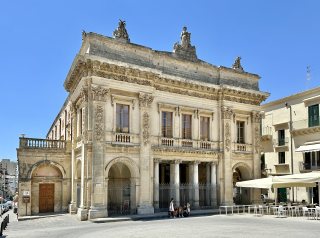
Teatro Tina Di Lorenzo
Noto's 19th-century municipal theatre on Piazza XVI Maggio, with a horseshoe auditorium of gilded boxes and a painted ceiling.

Church of San Domenico (Noto)
A Sicilian Baroque church and former Dominican convent on Noto's main street, with a curving facade by Rosario Gagliardi.

San Carlo al Corso
Baroque Jesuit church on the main street with a curved three-tier facade and a bell tower that can be climbed for views.

Palazzo Nicolaci di Villadorata
18th-century noble palace on Via Nicolaci, famous for balconies held up by carved horses, lions and grotesque figures; rooms open to visitors.

Noto Cathedral
Baroque cathedral of San Nicolò at the top of a wide staircase, rebuilt after its dome collapsed in 1996.

Porta Reale
Triumphal arch of 1838 at the east end of the main street, built for the visit of King Ferdinand II.

Church of Santa Chiara
Church by Rosario Gagliardi with an oval interior; its convent terrace gives one of the best views over the Corso.

Church of San Francesco all'Immacolata
Franciscan Baroque church at the top of a broad flight of steps on Corso Vittorio Emanuele, with a white stucco interior.

Palazzo Ducezio
Noto's town hall, a colonnaded 18th-century palace facing the cathedral, with a gilded Hall of Mirrors and a rooftop terrace.

Palazzo Castelluccio
Large 18th-century noble palace in the upper part of the old town, restored with its furnished period rooms and open for visits.

Vendicari Nature Reserve
A coastal reserve south of Noto with lagoons, migrating flamingos, sandy beaches and a ruined tuna fishery, reached on easy paths.
Day 7
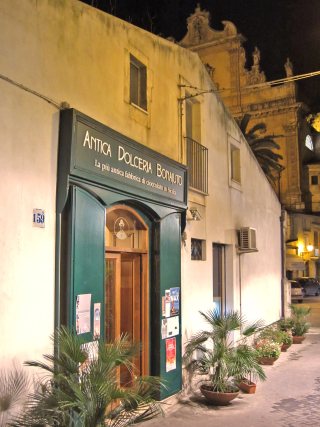
Antica Dolceria Bonajuto
Sicily's oldest chocolate maker, open since 1880 on Corso Umberto, known for its grainy Modica chocolate and tastings.
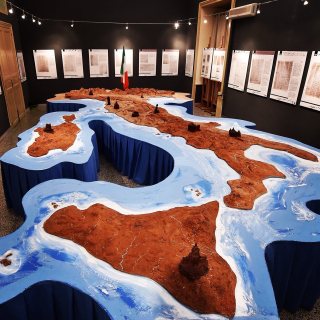
Museo del Cioccolato di Modica
Small museum on the history and making of Modica's chocolate, with sculptures made of chocolate.
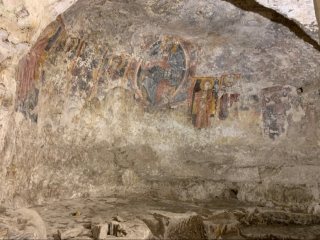
San Nicolò Inferiore Rock Church
Small cave church carved into the rock in the lower town, with medieval Byzantine-style frescoes.

Duomo di San Pietro
Baroque church on Corso Umberto with a wide stairway lined by statues of the twelve apostles.

Castello dei Conti
Remains of the counts' castle on a rocky spur above the lower town, with a clock tower and views.

San Giorgio Cathedral
Modica's grand Baroque mother church in the upper town, reached by a long stairway, with a tall tiered facade.

Palazzo Polara
18th-century noble palace next to San Giorgio, with views over the rooftops of Modica.

Church of San Giovanni Evangelista
Baroque church at the top of Modica Alta, with a terrace near the town's highest viewpoint.

Santa Maria del Gesù
15th-century Franciscan church and convent in the upper town, with a Gothic portal and cloister.
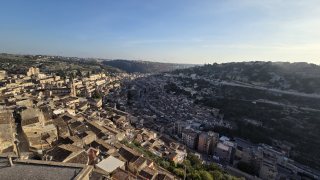
Pizzo Belvedere
Viewpoint in Modica Alta looking down over the lower town and the valleys, especially good near sunset.
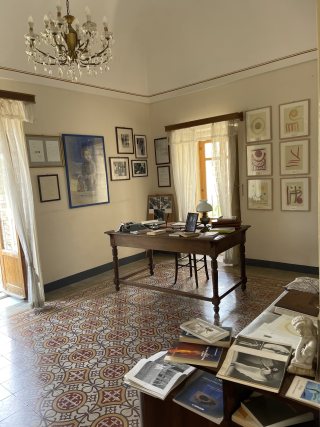
Salvatore Quasimodo Birthplace
Small house museum where the Nobel Prize-winning poet was born in 1901, with his furniture and study.

Santa Maria di Betlem
Church in the lower town known for its large Christmas nativity scene and a late-Gothic chapel.

Chiesa del Carmine
Church on Corso Umberto with a Gothic rose window and portal surviving from its medieval front.
Open this 7-day plan, freeChange this trip in the Trip BuilderChange it in the app
Eastern Sicily in 10 days
Day 1
Mount Etna (Rifugio Sapienza and Silvestri Craters)
Europe's highest active volcano; the Silvestri craters near Rifugio Sapienza are easy to walk, with cable car and 4x4 tours higher.
Castelmola
Small village on a crag above Taormina, with castle ruins, narrow lanes and wide views over the coast and Etna.
Taormina Cathedral
Fortress-like medieval cathedral of San Nicolò at the west end of Corso Umberto, with a Baroque fountain in its square.
Villa Comunale gardens
Public gardens laid out by an Englishwoman, Florence Trevelyan, with exotic plants, follies and terraces over the sea.
Day 2
Corso Umberto and Piazza IX Aprile
Taormina's main street of shops and palaces, opening onto a terrace square with views over the sea and Etna.
Palazzo Corvaja
A medieval palace in Taormina's centre with Arab, Gothic and Catalan details, now home to the tourist office and a puppet museum.
Ancient Theatre of Taormina
Greek theatre rebuilt by the Romans, set on a hillside with Etna and the sea as its backdrop, still used for performances.
Isola Bella
Small island nature reserve in a bay below Taormina, joined to the beach by a narrow strip of pebbles, with a villa and gardens.
Alcantara Gorges
A basalt-column canyon cut by an icy river inland from Taormina; visitors walk down into the narrow gorge.
Day 3

Piano Provenzana (Etna north side)
The north-side base of Etna at about 1,800 m, among pine woods and recent lava, where guided summit tours start and winter skiers come.

Historic centre of Linguaglossa
Small wine town at the foot of Etna's north slope, where the Mareneve road starts to Piano Provenzana; stop for lunch and Etna wine.

Historic centre of Randazzo
Medieval town of black lava stone on the northern slope of Etna, with old walls, Gothic windows and quiet lanes between its churches.

Basilica of Santa Maria, Randazzo
Randazzo's main church, a medieval basilica built of dark lava stone, at the heart of the old town.
Alcantara Gorges
A basalt-column canyon cut by an icy river inland from Taormina; visitors walk down into the narrow gorge.
Day 4

Bellini Garden (Villa Bellini)
Catania's oldest park, with terraces, palms, a floral clock and views towards Etna on clear days.
Roman Amphitheatre
Part of a huge Roman amphitheatre visible below street level in Piazza Stesicoro, once among the largest in Italy.
Via Etnea
Catania's main street, running straight up toward Mount Etna, lined with shops, cafés and Baroque palaces; busy for the evening stroll.
Via Crociferi
Elegant 18th-century street lined with Baroque churches and convents, crossed by the arch of San Benedetto.
Benedictine Monastery of San Nicolò l'Arena
One of Europe's largest Benedictine monasteries, now part of the university, with cloisters, gardens and Roman remains below.
Roman Theatre
Ruins of a Roman theatre of lava stone, partly surrounded by later houses, with the smaller Odeon beside it.
Ursino Castle
13th-century castle of Frederick II, once on the sea until lava surrounded it in 1669, now the civic museum.
Piazza del Duomo and the Elephant Fountain
Catania's main square, with the lava-stone elephant carrying an Egyptian obelisk, the city's symbol, in the middle.
Catania Cathedral
Baroque cathedral of Saint Agatha, the city's patron, rebuilt after the 1693 earthquake, with the tomb of composer Vincenzo Bellini.
Day 5
Pasticceria Savia
Historic pastry shop on Via Etnea, a favourite for arancini, cannoli and granita with brioche.
La Pescheria fish market
Catania's loud, lively morning fish market behind the cathedral, with swordfish, tuna and sea urchins and seafood stalls to eat at.

Badia di Sant'Agata (dome terrace)
Baroque church beside the cathedral whose dome terrace gives close views over Piazza del Duomo, the city and Etna.

Teatro Massimo Bellini
Grand 19th-century opera house named after Catania-born Vincenzo Bellini, shown on guided tours in the morning.
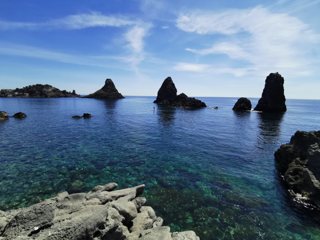
Faraglioni di Aci Trezza
Basalt sea stacks off the fishing village of Aci Trezza north of Catania, linked by legend to the Cyclops of the Odyssey.
Day 6
Temple of Apollo
Ruins of a 6th-century BC Doric temple at the entrance to Ortigia, among the oldest Greek temples in Sicily.
Ortigia Market
Lively morning street market near the Temple of Apollo, with fish, produce, cheese and street food stalls.
Palazzo Montalto
Late 14th-century Gothic palace in Ortigia with fine pointed windows on its stone facade.
Fountain of Diana
Early 20th-century fountain on Piazza Archimede, Ortigia's main square, showing the goddess Diana and the nymph Arethusa.
Palazzo Beneventano del Bosco
Baroque palace on Piazza Duomo opposite the cathedral, with an elegant courtyard.
Cathedral of Syracuse
Cathedral built into a Greek Doric temple of Athena, whose columns still line the nave, behind a Baroque facade.
Santa Lucia alla Badia
Baroque church on Piazza Duomo, home to Caravaggio's Burial of Saint Lucy, painted for Siracusa in 1608.
Castello Maniace
13th-century castle of Frederick II at the southern tip of Ortigia, with a vaulted hall and sea views.
Bellomo Palace Regional Gallery
Art museum in a medieval palace in Ortigia, with Sicilian painting and sculpture including Antonello da Messina's Annunciation.
Jewish Ritual Bath (Mikveh)
Ancient Jewish ritual bath carved deep in the rock under a building in Ortigia's old Jewish quarter, shown on guided visits.
Church of San Filippo Apostolo
Church in Ortigia's old Jewish quarter, the Giudecca, with an underground ritual bath beneath it.
Fountain of Arethusa
Freshwater spring on Ortigia's seafront where papyrus grows in a pool, linked in Greek myth to the nymph Arethusa.
Day 7
Sanctuary of the Madonna delle Lacrime
Modern cone-shaped basilica built for an image of the Virgin said to have wept in 1953.
Catacombs of San Giovanni
Large early Christian catacombs beneath the ruined church of San Giovanni, seen on guided visits.
Paolo Orsi Archaeological Museum
One of Italy's leading archaeological museums, with Greek finds from Siracusa and eastern Sicily in a garden setting.
Ear of Dionysius
Tall, ear-shaped artificial cave in an ancient quarry of the Neapolis park, known for its echo.
Greek Theatre of Syracuse
Large 5th-century BC theatre cut into the rock of the Temenite hill, still used for classical plays each summer.
Roman Amphitheatre of Syracuse
Partly rock-cut Roman amphitheatre in the Neapolis park, once used for gladiator shows.
Church of San Martino
Small, very old church in Ortigia with a Gothic portal, near the southern end of the island.
Porta Marina
15th-century Gothic-Catalan gate on Ortigia's harbour side, leading to the seafront promenade.
Lungomare Alfeo
Ortigia's seafront promenade along the Ionian side, good for a walk by the old sea walls with views across the water.
Day 8
Teatro Tina Di Lorenzo
Noto's 19th-century municipal theatre on Piazza XVI Maggio, with a horseshoe auditorium of gilded boxes and a painted ceiling.
Church of San Domenico (Noto)
A Sicilian Baroque church and former Dominican convent on Noto's main street, with a curving facade by Rosario Gagliardi.
San Carlo al Corso
Baroque Jesuit church on the main street with a curved three-tier facade and a bell tower that can be climbed for views.
Palazzo Nicolaci di Villadorata
18th-century noble palace on Via Nicolaci, famous for balconies held up by carved horses, lions and grotesque figures; rooms open to visitors.
Noto Cathedral
Baroque cathedral of San Nicolò at the top of a wide staircase, rebuilt after its dome collapsed in 1996.
Porta Reale
Triumphal arch of 1838 at the east end of the main street, built for the visit of King Ferdinand II.
Church of Santa Chiara
Church by Rosario Gagliardi with an oval interior; its convent terrace gives one of the best views over the Corso.
Church of San Francesco all'Immacolata
Franciscan Baroque church at the top of a broad flight of steps on Corso Vittorio Emanuele, with a white stucco interior.
Palazzo Ducezio
Noto's town hall, a colonnaded 18th-century palace facing the cathedral, with a gilded Hall of Mirrors and a rooftop terrace.
Palazzo Castelluccio
Large 18th-century noble palace in the upper part of the old town, restored with its furnished period rooms and open for visits.
Vendicari Nature Reserve
A coastal reserve south of Noto with lagoons, migrating flamingos, sandy beaches and a ruined tuna fishery, reached on easy paths.
Day 9
Antica Dolceria Bonajuto
Sicily's oldest chocolate maker, open since 1880 on Corso Umberto, known for its grainy Modica chocolate and tastings.
Museo del Cioccolato di Modica
Small museum on the history and making of Modica's chocolate, with sculptures made of chocolate.
San Nicolò Inferiore Rock Church
Small cave church carved into the rock in the lower town, with medieval Byzantine-style frescoes.
Duomo di San Pietro
Baroque church on Corso Umberto with a wide stairway lined by statues of the twelve apostles.
Castello dei Conti
Remains of the counts' castle on a rocky spur above the lower town, with a clock tower and views.
San Giorgio Cathedral
Modica's grand Baroque mother church in the upper town, reached by a long stairway, with a tall tiered facade.
Palazzo Polara
18th-century noble palace next to San Giorgio, with views over the rooftops of Modica.
Church of San Giovanni Evangelista
Baroque church at the top of Modica Alta, with a terrace near the town's highest viewpoint.
Santa Maria del Gesù
15th-century Franciscan church and convent in the upper town, with a Gothic portal and cloister.
Pizzo Belvedere
Viewpoint in Modica Alta looking down over the lower town and the valleys, especially good near sunset.
Salvatore Quasimodo Birthplace
Small house museum where the Nobel Prize-winning poet was born in 1901, with his furniture and study.
Santa Maria di Betlem
Church in the lower town known for its large Christmas nativity scene and a late-Gothic chapel.
Chiesa del Carmine
Church on Corso Umberto with a Gothic rose window and portal surviving from its medieval front.
Day 10

Giardino Ibleo
19th-century public garden at the eastern tip of Ibla, with palm-lined avenues, small churches and views over the Irminio valley.

Portale di San Giorgio
Gothic-Catalan doorway, all that survived of the old church of San Giorgio after the earthquake of 1693.

San Giuseppe
Baroque church on Piazza Pola with a tall facade of statues and an oval interior under a painted dome.

Palazzo Arezzo di Trifiletti
Noble palace beside Piazza Duomo, still owned by the family, with furnished rooms shown on guided visits.

Circolo di Conversazione
Ragusa's 19th-century gentlemen's club on Piazza Duomo, with a richly painted ballroom open to visitors.

Duomo of San Giorgio
Rosario Gagliardi's 18th-century church at the top of a stairway, with a three-tier facade and a neoclassical dome.

Santa Maria dell'Itria
Baroque church whose bell tower is topped by a dome covered in blue and yellow majolica tiles.

Santa Maria delle Scale
Church on the long stairway between the upper town and Ibla, with a terrace giving the classic view over Ibla.

Ragusa Cathedral
The Baroque cathedral of San Giovanni Battista in Ragusa Superiore, with a tall tiered facade rising at the top of a broad staircase.
Open this 10-day plan, freeChange this trip in the Trip BuilderChange it in the app
When to go to Eastern Sicily
April to June and September to October are the best months: warm, with the countryside green in spring and the sea still warm in autumn. July and August are very hot, especially in Catania and the baroque towns. Winter is mild on the coast, and Etna can have snow.
Plan the rest of your trip
- Where to stay: hotels in Eastern Sicily on Booking.com or Trip.com
- Skip-the-line tickets: museums and sights in Eastern Sicily on Tiqets
- Tours and day trips: things to do in Eastern Sicily on GetYourGuide or on Viator
- Data on arrival: an eSIM for Italy from Airalo
Some of these are affiliate links: we may earn a small commission at no extra cost to you.
Tips for Eastern Sicily
- West or east? The east has Etna, Taormina, Siracusa and the baroque towns; the west has Palermo, Segesta, Erice and the temples of Agrigento — our Sicily 7-14 days guide does both.
- Etna's summit area is reached by cable car and 4x4 from Rifugio Sapienza; bring warm clothes and good shoes even in summer.
- In Siracusa, stay on Ortigia, the old island: everything in the plan is a short walk or ride from there.
- Historic centres are limited traffic zones (ZTL) watched by cameras: park outside and walk in.
- Every place here has its own ready-made guide with more days, if you want to stay longer in one place.
Make it your own
Open the guide in Andiamo Places to see every stop on a map with walking directions, move places between days, check opening hours for your dates, and add your own finds. After the trip, your photos become a journal and, if you like, a printed photo book.



Guides are made with the help of AI and public sources such as Wikipedia, and may contain errors. Opening hours and prices change, so check before you go. Spotted a wrong photo, a pin in the wrong place, a missing stop or a better one? Write to hello@andiamoplaces.com: the e-mail opens with this guide filled in.
Photo credits
- Alcantara Gorges: pjt56 ---, CC BY-SA 3.0
- Ancient Theatre of Taormina: Derbrauni, CC BY 4.0
- Badia di Sant'Agata (dome terrace): Kamares, CC BY-SA 3.0
- Basilica of Santa Maria, Randazzo: trolvag, CC BY-SA 3.0
- Bellini Garden (Villa Bellini): Unukorno, CC BY 3.0
- Bellomo Palace Regional Gallery: sailko, CC BY 2.5
- Benedictine Monastery of San Nicolò l'Arena: Nicolò Arena, CC BY-SA 4.0
- Castello Maniace: Laurel Lodged, CC BY-SA 3.0
- Castello dei Conti: Davide Mauro, CC BY-SA 4.0
- Castelmola: Ruigeroeland, CC BY-SA 3.0
- Catacombs of San Giovanni: FJ78910, CC BY-SA 4.0
- Catania Cathedral: User:Matthias Süßen, CC BY-SA 4.0
- Cathedral of Syracuse: pjt56 ---, CC BY-SA 3.0
- Chiesa del Carmine: Николай Максимович, CC BY 3.0
- Church of San Domenico (Noto): Bernard Gagnon, CC BY 4.0
- Church of San Filippo Apostolo: Ivan Ruggiero, CC BY-SA 4.0
- Church of San Francesco all'Immacolata: trolvag, CC BY-SA 3.0
- Church of San Giovanni Evangelista: Davide Mauro, CC BY-SA 4.0
- Church of San Martino: trolvag, CC BY-SA 3.0
- Church of Santa Chiara: Juanje Orío from Logroño, España (Europa), CC BY-SA 4.0
- Circolo di Conversazione: L'Ibleo at the Italian Wikipedia project., Public domain
- Corso Umberto and Piazza IX Aprile: Carsten Steger, CC BY-SA 4.0
- Duomo di San Pietro: Gameworks, CC BY-SA 4.0
- Duomo of San Giorgio: Ludvig14, CC BY-SA 4.0
- Ear of Dionysius: Michael Wilson from York, United Kingdom, CC BY 2.0
- Fountain of Arethusa: Berthold Werner, CC BY-SA 3.0
- Giardino Ibleo: Gdiquattro, Public domain
- Greek Theatre of Syracuse: fotovideomike from Italia (Michele Ponzio, @michele_ponzio ), CC BY-SA 2.0
- Historic centre of Linguaglossa: gnuckx, CC BY 2.0
- Historic centre of Randazzo: Luca Sartoni from Vienna, Austria, CC BY-SA 2.0
- Isola Bella: Solomonn Levi, CC BY-SA 4.0
- Lungomare Alfeo: Ввласенко, CC BY-SA 3.0
- Mount Etna (Rifugio Sapienza and Silvestri Craters): BenAveling, CC BY-SA 4.0
- Noto Cathedral: Federico Alfio Maria Vinci, CC BY-SA 4.0
- Ortigia Market: kaempfe.ch, CC BY-SA 2.0
- Palazzo Arezzo di Trifiletti: Codas, CC BY-SA 4.0
- Palazzo Beneventano del Bosco: pjt56 ---, CC BY-SA 3.0
- Palazzo Castelluccio: Le Grand Tour 2018, CC BY-SA 4.0
- Palazzo Corvaja: User:Dantadd, CC BY-SA 2.5
- Palazzo Ducezio: Diego Delso, CC BY-SA 4.0
- Palazzo Montalto: sailko, CC BY 2.5
- Palazzo Nicolaci di Villadorata: Holger Uwe Schmitt, CC BY-SA 4.0
- Palazzo Polara: Mboesch, CC BY-SA 3.0
- Paolo Orsi Archaeological Museum: AbelDionis, CC0
- Piano Provenzana (Etna north side): Matteo Magnano di San Lio, CC BY-SA 4.0
- Piazza del Duomo and the Elephant Fountain: Luca Aless, CC BY-SA 4.0
- Porta Marina: Bernard Gagnon, CC BY 4.0
- Porta Reale: Effems, CC0
- Portale di San Giorgio: Ludvig14, CC BY-SA 4.0
- Ragusa Cathedral: L'Ibleo at the Italian Wikipedia project., Public domain
- Roman Amphitheatre: User:Matthias Süßen, CC BY-SA 4.0
- Roman Amphitheatre of Syracuse: trolvag, CC BY-SA 3.0
- Roman Theatre: User:Matthias Süßen, CC BY-SA 4.0
- San Carlo al Corso: poudou99, CC BY-SA 3.0
- San Giorgio Cathedral: Tango7174, CC BY-SA 4.0
- San Giuseppe: unknown author, CC BY-SA 3.0
- Sanctuary of the Madonna delle Lacrime: Simone Tinella, CC BY-SA 4.0
- Santa Lucia alla Badia: Giovanni Dall'Orto, Attribution
- Santa Maria del Gesù: Davide Mauro, CC BY-SA 4.0
- Santa Maria dell'Itria: poudou99, CC BY-SA 3.0
- Santa Maria delle Scale: Enrico Bracchitta, CC BY-SA 3.0
- Santa Maria di Betlem: Mboesch, CC BY-SA 3.0
- Teatro Massimo Bellini: Berthold Werner, CC BY-SA 3.0
- Temple of Apollo: AbelDionis, CC BY 4.0
- Ursino Castle: Luca Aless, CC BY-SA 4.0
- Vendicari Nature Reserve: Davide Mauro, CC BY 2.0 it
- Via Crociferi: The original uploader was Triquetra at Italian Wikipedia., CC BY-SA 2.5
- Villa Comunale gardens: Danysan1, CC BY-SA 4.0
Opening hours change; check before you go. Map data © OpenStreetMap contributors.