 Andiamo Places
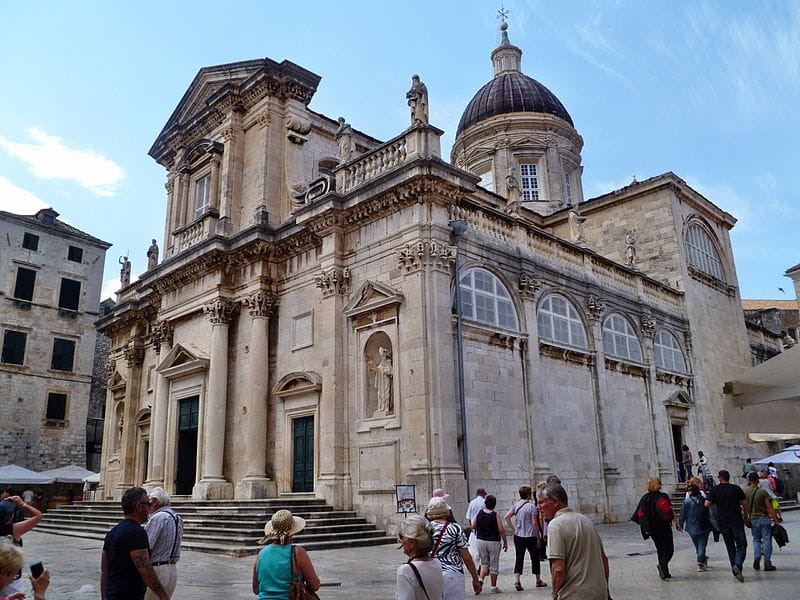
Croatia itinerary: 7 or 10 days
Croatia in 7 or 10 days: Zagreb's upper town, the waterfalls of Plitvice Lakes, Diocletian's Palace in Split and the walled city of Dubrovnik — and in the longer plan Zadar's sea organ and the island town of Korčula. Every day comes from our checked city guides, with the journey between them.
How long do you have?
Map: 10 days
Croatia in 7 days
Day 1

Mimara Museum
Art museum on Roosevelt Square displaying the varied collection of Ante Topić Mimara, from antiquities and glass to European paintings.
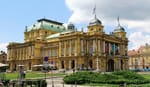
Croatian National Theatre in Zagreb Must see
Neo-baroque theatre of 1895 by Fellner and Helmer on Republic of Croatia Square, home to the national opera, ballet and drama.
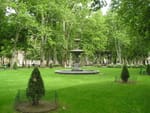
Nikola Šubic Zrinski Square Must see
Park square in the Lower Town with a music pavilion, fountains and plane trees, part of the green Lenuci Horseshoe.

Ban Jelačić Square
Zagreb's main square, with the equestrian statue of Ban Josip Jelačić, a meeting point between the Upper Town and the lower city.

Dolac Market
Main farmers' market of Zagreb above Ban Jelačić Square, with red-umbrella stalls of fruit and vegetables outside and a covered hall below.
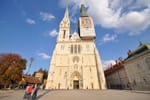
Zagreb Cathedral Must see
Gothic cathedral on Kaptol with twin spires, the tallest church building in Croatia and the seat of the archbishop of Zagreb.

Tkalčićeva Street
Lively pedestrian street running north from Ban Jelačić Square below the Upper Town, lined with cafes, bars and restaurants.

St. Mark's Church
Medieval parish church of the Upper Town, known for its colourful tiled roof showing the coats of arms of Croatia and Zagreb.

Lotrščak Tower and the funicular
13th-century tower that guarded the Gradec gate, where a cannon fires at noon, next to one of the shortest funiculars in the world.
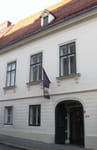
Museum of Broken Relationships Must see
Upper Town museum of objects donated by people around the world, each with the story of a relationship that ended.
Day 2

Plitvice Lakes Entrance 1
The northern entrance, near the Lower Lakes, with ticket office, car park and bus stop, and an early view down over the waterfalls.
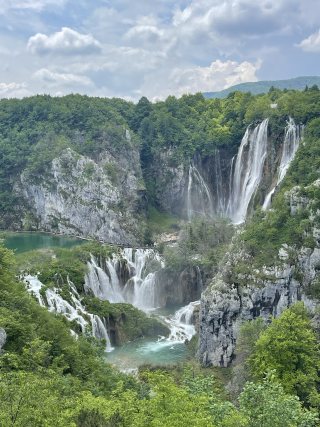
Veliki Slap (Great Waterfall)
The tallest waterfall in Croatia, dropping into the canyon at the end of the Lower Lakes, seen close up from a short path.
Lower Lakes boardwalks (Gavanovac and Kaluđerovac)
Wooden walkways running just above clear turquoise water in the canyon of the Lower Lakes, past small cascades and caves in the cliffs.
Electric boat across Kozjak Lake
Quiet ride on the park's electric boat across Kozjak, the largest of the lakes, linking the Lower and Upper Lakes.
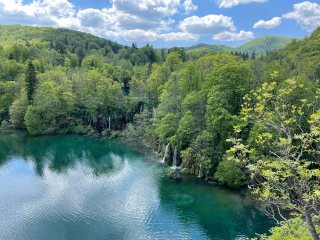
Upper Lakes and Galovac
Boardwalks climbing through beech woods past Galovac and a chain of terraced lakes joined by many small waterfalls.
Day 3
Šolta Must see
Quiet island about an hour by ferry from Split, with olive groves, small fishing villages and clear water for swimming.
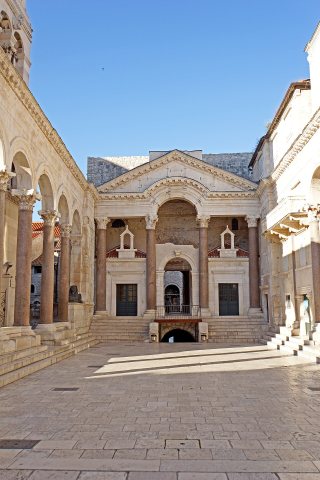
Diocletian's Palace Must see
Roman emperor Diocletian's palace from around 300 AD, now the living heart of Split's old town and a UNESCO site.

Peristyle
Columned central square of Diocletian's Palace, with the cathedral, an Egyptian sphinx and the entrance to the emperor's quarters.

Riva
Palm-lined waterfront promenade along the front of Diocletian's Palace, lined with cafes and the place for an evening stroll.
Day 4
Hvar Must see
Lavender-scented island with a Venetian old town, a hilltop fortress, lively harbour and the Pakleni islands offshore.
Day 5
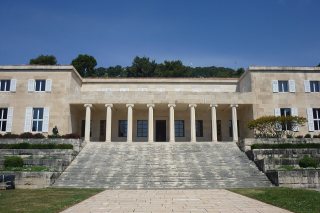
Ivan Meštrovic Gallery Must see
Villa built by sculptor Ivan Meštrović, now showing his marble, bronze and wood works in a seaside garden.
Split Science Museum and Zoo Must see
Small natural history museum and zoo on the slopes of Marjan hill, mainly of interest to families.
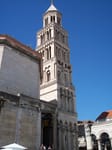
Cathedral of Saint Domnius Must see
Built in Diocletian's mausoleum, one of the oldest cathedrals in use, with a Romanesque bell tower to climb.

Bačvice
Sandy town beach a short walk from the old town, known for picigin, the local ball game played in the shallow water.

Salona
Ruins of the ancient Roman capital of Dalmatia near Split, with an amphitheatre, city walls, basilicas and early Christian cemeteries.
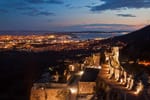
Fortress of Klis Must see
Medieval fortress on a rocky pass above Split with sweeping views, also a Game of Thrones filming location.
Day 6
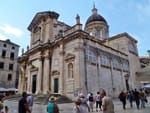
Dubrovnik Cathedral Must see
The Baroque Cathedral of the Assumption, rebuilt after the 1667 earthquake, with a treasury of gold and silver reliquaries.
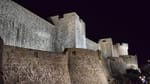
Walls of Dubrovnik Must see
Nearly 2 km of medieval walls around the Old Town; the walk on top gives views over the roofs and the sea.
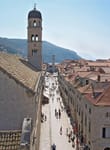
Stradun Must see
The Old Town's limestone-paved main street, running from the Pile Gate to the Old Port.
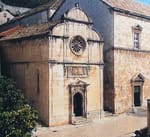
St. Saviour Church, Dubrovnik Must see
A small Renaissance votive church by the Pile Gate, built in the 1520s and spared by the 1667 earthquake.
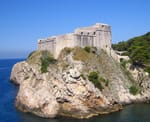
Lovrijenac Must see
A fortress on a sea cliff just outside the western walls, nicknamed Dubrovnik's Gibraltar and used as an open-air theatre.
Day 7
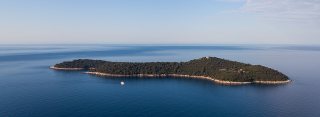
Lokrum Must see
A wooded island a short boat ride from the Old Town, with a former Benedictine monastery, a botanical garden and peacocks.
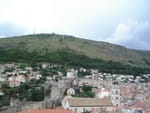
Srđ Must see
The hill behind the Old Town, reached by cable car or a hiking path, with Fort Imperial at the top.
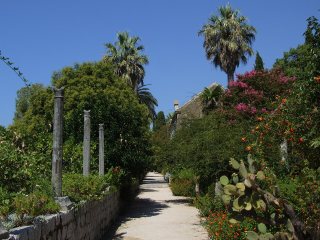
Trsteno Arboretum Must see
The gardens of a Renaissance summer villa north-west of Dubrovnik, with old plane trees and a Neptune fountain.
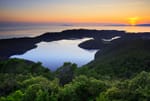
Mljet Must see
A long, green island north-west of Dubrovnik whose national park has two saltwater lakes and a monastery on an islet.
Open this 7-day plan, freeChange this trip in the Trip BuilderChange it in the app
Croatia in 10 days
Day 1
Croatian National Theatre in Zagreb Must see
Neo-baroque theatre of 1895 by Fellner and Helmer on Republic of Croatia Square, home to the national opera, ballet and drama.
Nikola Šubic Zrinski Square Must see
Park square in the Lower Town with a music pavilion, fountains and plane trees, part of the green Lenuci Horseshoe.
Ban Jelačić Square
Zagreb's main square, with the equestrian statue of Ban Josip Jelačić, a meeting point between the Upper Town and the lower city.
Dolac Market
Main farmers' market of Zagreb above Ban Jelačić Square, with red-umbrella stalls of fruit and vegetables outside and a covered hall below.
Zagreb Cathedral Must see
Gothic cathedral on Kaptol with twin spires, the tallest church building in Croatia and the seat of the archbishop of Zagreb.
Tkalčićeva Street
Lively pedestrian street running north from Ban Jelačić Square below the Upper Town, lined with cafes, bars and restaurants.
St. Mark's Church
Medieval parish church of the Upper Town, known for its colourful tiled roof showing the coats of arms of Croatia and Zagreb.
Lotrščak Tower and the funicular
13th-century tower that guarded the Gradec gate, where a cannon fires at noon, next to one of the shortest funiculars in the world.
Museum of Broken Relationships Must see
Upper Town museum of objects donated by people around the world, each with the story of a relationship that ended.
Day 2
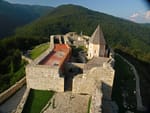
Medvedgrad Must see
Restored 13th-century fortress on the slopes of Mount Medvednica, with the Altar of the Homeland and views over Zagreb.

Mirogoj Cemetery
Park cemetery north of the centre with long arcades, domes and green walks, holding graves of all faiths and many notable Croatians.

Zagreb Zoo Must see
City zoo inside Maksimir Park, Zagreb's largest historic park, with over 2,000 animals and woodland walks nearby.
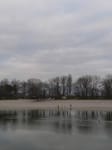
Bundek Must see
Lake and park in Novi Zagreb south of the Sava, with paths, playgrounds and summer swimming.
Day 3
Plitvice Lakes Entrance 1
The northern entrance, near the Lower Lakes, with ticket office, car park and bus stop, and an early view down over the waterfalls.
Veliki Slap (Great Waterfall)
The tallest waterfall in Croatia, dropping into the canyon at the end of the Lower Lakes, seen close up from a short path.
Lower Lakes boardwalks (Gavanovac and Kaluđerovac)
Wooden walkways running just above clear turquoise water in the canyon of the Lower Lakes, past small cascades and caves in the cliffs.
Electric boat across Kozjak Lake
Quiet ride on the park's electric boat across Kozjak, the largest of the lakes, linking the Lower and Upper Lakes.
Upper Lakes and Galovac
Boardwalks climbing through beech woods past Galovac and a chain of terraced lakes joined by many small waterfalls.
Day 4

Land Gate
Venetian Renaissance gate of 1543 with the winged lion of St. Mark, the main entrance to the old town.

Chest of Saint Simeon
Silver-gilt casket of the 14th century in the Church of St. Simeon, with scenes from the saint's life.

Church of Saint Chrysogonus, Zadar
Twelfth-century Romanesque church named for the city's patron saint, with frescoes and a Baroque altar.

Roman Forum
Remains of the Roman forum beside St. Donatus, the largest on the eastern Adriatic, with a column once used as a pillar of shame.

Church of St. Donatus
Round ninth-century pre-Romanesque church on the Roman Forum, the symbol of Zadar and used for concerts.

Zadar Cathedral
Romanesque cathedral of St. Anastasia, the largest church in Dalmatia, with a bell tower to climb.

St. Mary's Church, Zadar
Benedictine convent founded in 1066 with a church and a treasury of gold and silver church art.

Archaeological Museum Zadar
Museum on the Forum with finds from prehistoric, Roman and early medieval Zadar and northern Dalmatia.

Sea organ
Marble steps on the waterfront with pipes beneath that play sounds made by the waves.

Monument to the Sun
A large glass solar panel circle on the waterfront that lights up in patterns after dark.
Day 5
Šolta Must see
Quiet island about an hour by ferry from Split, with olive groves, small fishing villages and clear water for swimming.
Diocletian's Palace Must see
Roman emperor Diocletian's palace from around 300 AD, now the living heart of Split's old town and a UNESCO site.
Peristyle
Columned central square of Diocletian's Palace, with the cathedral, an Egyptian sphinx and the entrance to the emperor's quarters.
Riva
Palm-lined waterfront promenade along the front of Diocletian's Palace, lined with cafes and the place for an evening stroll.
Day 6
Hvar Must see
Lavender-scented island with a Venetian old town, a hilltop fortress, lively harbour and the Pakleni islands offshore.
Day 7

Fortica (Hvar Fortress) Must see
16th-century Venetian fortress on the hill above town, with views over the harbour roofs and the Pakleni Islands.

St Stephen's Square and Hvar Cathedral
One of Dalmatia's largest squares, lined with cafes and closed by the Renaissance cathedral and its slender bell tower.

Franciscan Monastery, Hvar
15th-century monastery by the sea with a cloister, an old cypress garden and a museum holding a large Last Supper painting.

Pakleni Islands Must see
Wooded islands just off Hvar Town with pebbly coves, clear water for swimming and snorkelling, and beach restaurants and bars.
Day 8

Land Gate and Revelin Tower
The main gate of the walled old town, reached by a broad stairway, with the Revelin Tower above it looking over the walls.
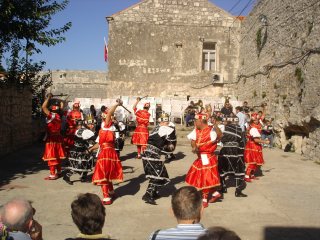
Korcula Old City Must see
Walled medieval town on a small peninsula, with streets in a fishbone pattern, towers and Venetian stone houses.
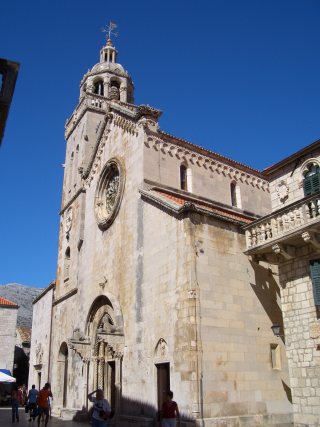
Korčula Cathedral
St Mark's Cathedral, a Gothic and Renaissance church at the top of the old town, with a bell tower to climb.

Korčula Town Museum
Museum in a Renaissance palace facing the cathedral, covering the town's history, stonemasonry, shipbuilding and everyday life.
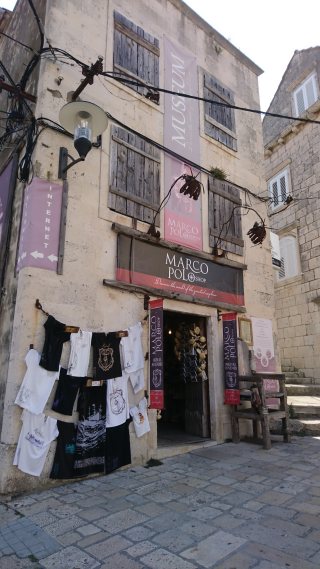
Marco Polo House
House and tower that local tradition links with the family of Marco Polo, with a small exhibition about the traveller.
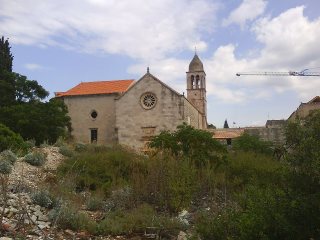
Badija
Wooded island a short boat ride from Korčula town, with a Franciscan monastery, quiet beaches and tame deer.
Day 9
Dubrovnik Cathedral Must see
The Baroque Cathedral of the Assumption, rebuilt after the 1667 earthquake, with a treasury of gold and silver reliquaries.
Walls of Dubrovnik Must see
Nearly 2 km of medieval walls around the Old Town; the walk on top gives views over the roofs and the sea.
Stradun Must see
The Old Town's limestone-paved main street, running from the Pile Gate to the Old Port.
St. Saviour Church, Dubrovnik Must see
A small Renaissance votive church by the Pile Gate, built in the 1520s and spared by the 1667 earthquake.
Lovrijenac Must see
A fortress on a sea cliff just outside the western walls, nicknamed Dubrovnik's Gibraltar and used as an open-air theatre.
Day 10
Lokrum Must see
A wooded island a short boat ride from the Old Town, with a former Benedictine monastery, a botanical garden and peacocks.
Srđ Must see
The hill behind the Old Town, reached by cable car or a hiking path, with Fort Imperial at the top.
Trsteno Arboretum Must see
The gardens of a Renaissance summer villa north-west of Dubrovnik, with old plane trees and a Neptune fountain.
Mljet Must see
A long, green island north-west of Dubrovnik whose national park has two saltwater lakes and a monastery on an islet.
Open this 10-day plan, freeChange this trip in the Trip BuilderChange it in the app
When to go to Croatia
May, June and September are the best months: warm sea, open ferries and fewer crowds. July and August are hot and very busy on the coast. From October to April many island ferries run less often and some seaside hotels close, though Zagreb and Plitvice are lovely in autumn.
Plan the rest of your trip
- Where to stay: hotels in Croatia on Booking.com or Trip.com
- Skip-the-line tickets: museums and sights in Croatia on Tiqets
- Tours and day trips: things to do in Croatia on GetYourGuide or on Viator
- Data on arrival: an eSIM for Croatia from Airalo
Some of these are affiliate links: we may earn a small commission at no extra cost to you.
Tips for Croatia
- Croatia uses the euro.
- In July and August book Plitvice tickets ahead (entry is by time slot) and ferry seats early.
- Go to Dubrovnik's city walls early in the morning or late in the day, before and after the cruise-ship crowds.
- Many beaches are pebbly: water shoes help.
- Every place here has its own ready-made guide with more days, if you want to stay longer in one place.
Make it your own
Open the guide in Andiamo Places to see every stop on a map with walking directions, move places between days, check opening hours for your dates, and add your own finds. After the trip, your photos become a journal and, if you like, a printed photo book.



Guides are made with the help of AI and public sources such as Wikipedia, and may contain errors. Opening hours and prices change, so check before you go. Spotted a wrong photo, a pin in the wrong place, a missing stop or a better one? Write to hello@andiamoplaces.com: the e-mail opens with this guide filled in.
Photo credits
- Archaeological Museum Zadar: AnatolyPm, CC BY-SA 3.0
- Badija: Anto ( talk ) 07:46, 7 August 2009 (UTC), CC BY-SA 3.0
- Ban Jelačić Square: Roberta F., CC BY-SA 3.0
- Bačvice: Airin, CC BY-SA 1.0
- Bundek: Daniel Nikolić, CC BY-SA 4.0
- Cathedral of Saint Domnius: Beyond silence, Public domain
- Chest of Saint Simeon: Silverije, CC BY-SA 3.0
- Church of Saint Chrysogonus, Zadar: VitVit, CC BY-SA 4.0
- Church of St. Donatus: Pudelek (Marcin Szala), CC BY-SA 3.0
- Croatian National Theatre in Zagreb: Stryn, CC BY-SA 4.0
- Diocletian's Palace: Dennis G. Jarvis, CC BY-SA 2.0
- Dolac Market: Rilegator, CC BY-SA 4.0
- Dubrovnik Cathedral: JoJan, CC BY 3.0
- Fortica (Hvar Fortress): Bernard Gagnon, CC BY-SA 4.0
- Fortress of Klis: Ballota, CC BY-SA 4.0
- Franciscan Monastery, Hvar: Bernard Gagnon, CC BY-SA 4.0
- Hvar: Bernard Gagnon, CC BY-SA 4.0
- Ivan Meštrovic Gallery: SchiDD, CC BY-SA 4.0
- Korcula Old City: Luka Jačov, Public domain
- Korčula Cathedral: The original uploader was Adriano at Italian Wikipedia ., CC BY-SA 3.0
- Korčula Town Museum: Martin Brož, CC BY 3.0
- Land Gate: lienyuan lee, CC BY 3.0
- Land Gate and Revelin Tower: lienyuan lee, CC BY 3.0
- Lokrum: Diego Delso, CC BY-SA 3.0
- Lotrščak Tower and the funicular: Diego Delso, CC BY-SA 3.0
- Lovrijenac: Pufacz, Public domain
- Medvedgrad: Miroslav.vajdic, CC BY-SA 4.0
- Mimara Museum: Bernard Gagnon, CC BY-SA 4.0
- Mirogoj Cemetery: Fred Romero from Paris, France, CC BY 2.0
- Mljet: Jaganjac, CC BY-SA 3.0
- Monument to the Sun: Hajotthu, CC BY-SA 3.0
- Museum of Broken Relationships: Waerfelu, CC BY 3.0
- Nikola Šubic Zrinski Square: unknown author, GPL
- Pakleni Islands: User: Stop_The_Lies, Public domain
- Peristyle: Dennis G. Jarvis, CC BY-SA 2.0
- Plitvice Lakes Entrance 1: Zysko serhii, CC BY-SA 4.0
- Riva: MZarkovic, Public domain
- Roman Forum: lienyuan lee, CC BY 3.0
- Salona: Bernard Gagnon, CC BY-SA 4.0
- Sea organ: Ben Snooks, CC BY-SA 2.0
- Split Science Museum and Zoo: Smooth_O ( talk · contribs ), CC BY-SA 3.0
- Srđ: unknown author, CC BY-SA 3.0
- St Stephen's Square and Hvar Cathedral: Alex Proimos from Sydney, Australia, CC BY 2.0
- St. Mark's Church: Jorge Franganillo, CC BY 2.0
- St. Mary's Church, Zadar: Bernard Gagnon, CC BY-SA 4.0
- St. Saviour Church, Dubrovnik: MrPanyGoff, CC BY-SA 3.0
- Stradun: László Szalai (Beyond silence), CC BY-SA 3.0
- Tkalčićeva Street: Sharon Hahn Darlin, CC BY 2.0
- Trsteno Arboretum: Pudelek (Marcin Szala), CC BY-SA 3.0
- Walls of Dubrovnik: Miroslav.vajdic, CC BY-SA 4.0
- Zadar Cathedral: H.Helmlechner, CC BY-SA 4.0
- Zagreb Cathedral: Jorge Láscar from Australia, CC BY 2.0
- Zagreb Zoo: Vojtěch Dočkal, CC BY-SA 4.0
- Šolta: Joadl, CC BY-SA 3.0 at
Opening hours change; check before you go. Map data © OpenStreetMap contributors.