 Andiamo Places

Chile itinerary: 7, 10 or 14 days
Chile in 7, 10 or 14 days: Santiago and the painted hills of Valparaíso, the salt lagoons and geysers of the Atacama Desert, the volcanoes and lakes around Puerto Varas, and in Patagonia the penguins of Punta Arenas and the granite towers of Torres del Paine. Chile is more than 4,000 km long, so the regions are linked by flights through Santiago. Every day comes from our checked city guides, with the journey between them.
How long do you have?
Map: 14 days
Chile in 7 days
Day 1

Mercado Central de Santiago
Cast-iron market hall of 1872 near the Mapocho River, known for its fish stalls and seafood restaurants.
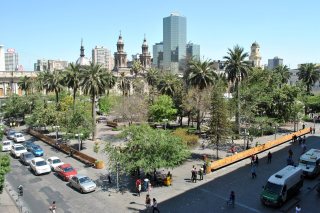
Plaza de Armas
Santiago's main square, founded in 1541, with palm trees, chess players and street artists, ringed by the cathedral and old buildings.
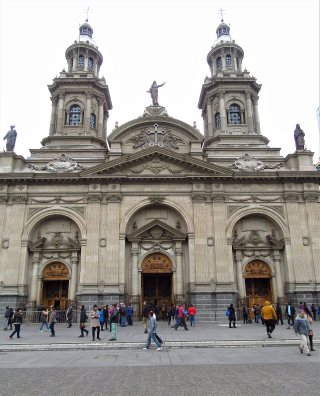
Santiago Metropolitan Cathedral
Neoclassical cathedral on the Plaza de Armas, seat of the Archbishop of Santiago, with a richly decorated interior.
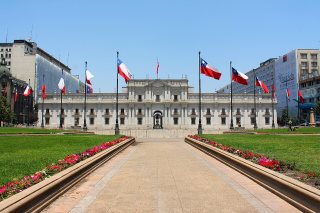
La Moneda Palace
Neoclassical seat of the Chilean president, bombed in the 1973 coup, with a cultural centre underneath and a changing of the guard.
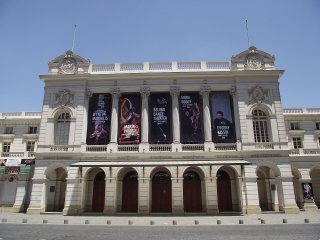
Municipal Theatre of Santiago
The city's grand 19th-century opera house and home of Chile's national opera and ballet; best visited for a performance or tour.

Santa Lucía Hill
Small hill in the centre where the city was founded, with terraces, fountains, stairways and a fort at the top for views.
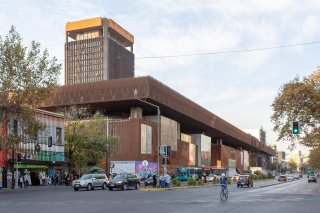
Centro Cultural Gabriela Mistral
Cultural centre named after the Nobel poet, with theatre, music, free exhibitions and cafes on the Alameda.

Barrio Lastarria
Small historic neighbourhood of cobbled streets near Santa Lucía Hill, with cafes, bookshops, galleries and restaurants.
Day 2
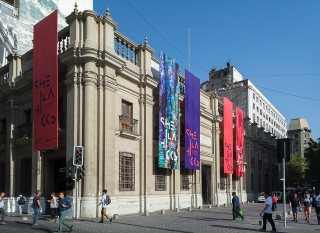
Museo Chileno de Arte Precolombino
Museum of pre-Columbian art from across the Americas, with textiles, ceramics and Andean objects, a block from the Plaza de Armas.
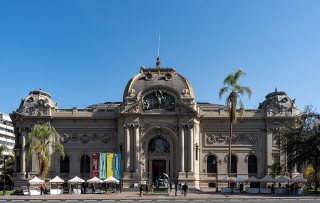
Chilean National Museum of Fine Arts
Chile's main art museum, in an elegant 1910 building in Forestal Park, with Chilean painting and sculpture.
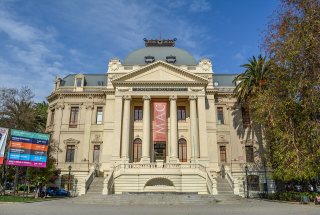
Santiago Museum of Contemporary Art
Contemporary art museum in the Palace of Fine Arts by Forestal Park, run by the University of Chile.

La Chascona
Pablo Neruda's quirky house in Bellavista, built for his lover Matilde Urrutia and filled with his collections.

Barrio Bellavista
Bohemian neighbourhood at the foot of San Cristóbal Hill, with colourful street art, restaurants, bars and Neruda's house.

San Cristóbal Hill
Hill rising above the city, reached by funicular or cable car, with a statue of the Virgin Mary and views of the Andes.
Day 3

Plaza Sotomayor
The city's main square by the port, with the Monument to the Heroes of Iquique and the blue Navy headquarters building.

Muelle Prat harbour boats
Pier beside the square where small launches take passengers on short tours of the bay, past navy ships, cranes and sea lions.

Palacio Baburizza
Art Nouveau mansion of 1916 on Cerro Alegre, once home of a Croatian businessman and now the city's fine arts museum.

Cerro Alegre and Cerro Concepción
Two neighbouring hills of painted houses, murals, stairways and old funiculars, with cafes and viewpoints such as Paseo Gervasoni and Paseo Atkinson.

La Sebastiana
Pablo Neruda's tall, narrow house on the hillside, full of his collections, with views over the bay from every floor.

Museo a Cielo Abierto
Open-air museum of about twenty murals by Chilean artists, painted in the 1990s on walls and stairways of Cerro Bellavista.
Day 4

Church of San Pedro de Atacama
Whitewashed adobe church on the main square, from colonial times, with a roof of cactus wood and algarrobo beams tied with leather.

Pukará de Quitor
Stone hillside fortress of the Atacameño people, 3 km from town, taken by the Spanish in 1540; paths climb to viewpoints over the valley.

Valle de la Luna
Salt-crusted ridges, sand dunes and wind-carved rock in the Cordillera de la Sal, 13 km west of town, best in the colours of sunset.
Day 5
Laguna Cejar
Very salty lagoons in the Salar de Atacama south of town, where bathers float in the water with the Andes volcanoes behind.

Valle del Arcoíris (Rainbow Valley)
Dry ravine above 3,000 m with hills banded in red, green and white rock, usually visited with the nearby Yerbas Buenas petroglyphs.
Day 6

El Tatio geysers
Geyser field at 4,320 m, the largest in the Southern Hemisphere, where columns of steam rise highest in the freezing air at sunrise.

Termas de Puritama
Eight warm spring pools at the bottom of a canyon at 3,475 m, linked by wooden walkways, 30 km north-east of town.
Day 7

Laguna Chaxa
Shallow lagoon in the Salar de Atacama, part of Los Flamencos National Reserve, where flamingos feed close to the walking path.

Toconao
Quiet village south of San Pedro built of white volcanic stone, with a separate bell tower of 1750 on its square.

Lagunas Miscanti and Miñiques
Two deep-blue lakes above 4,000 m on the altiplano, ringed by white salt shores and volcanoes; cold and very windy.

Piedras Rojas
Red volcanic rocks at the edge of a pale turquoise salt lake at about 4,000 m, the farthest stop on the high lagoons road.
Open this 7-day plan, freeChange this trip in the Trip BuilderChange it in the app
Chile in 10 days
Day 1
Mercado Central de Santiago
Cast-iron market hall of 1872 near the Mapocho River, known for its fish stalls and seafood restaurants.
Plaza de Armas
Santiago's main square, founded in 1541, with palm trees, chess players and street artists, ringed by the cathedral and old buildings.
Santiago Metropolitan Cathedral
Neoclassical cathedral on the Plaza de Armas, seat of the Archbishop of Santiago, with a richly decorated interior.
La Moneda Palace
Neoclassical seat of the Chilean president, bombed in the 1973 coup, with a cultural centre underneath and a changing of the guard.
Municipal Theatre of Santiago
The city's grand 19th-century opera house and home of Chile's national opera and ballet; best visited for a performance or tour.
Santa Lucía Hill
Small hill in the centre where the city was founded, with terraces, fountains, stairways and a fort at the top for views.
Centro Cultural Gabriela Mistral
Cultural centre named after the Nobel poet, with theatre, music, free exhibitions and cafes on the Alameda.
Barrio Lastarria
Small historic neighbourhood of cobbled streets near Santa Lucía Hill, with cafes, bookshops, galleries and restaurants.
Day 2
Museo Chileno de Arte Precolombino
Museum of pre-Columbian art from across the Americas, with textiles, ceramics and Andean objects, a block from the Plaza de Armas.
Chilean National Museum of Fine Arts
Chile's main art museum, in an elegant 1910 building in Forestal Park, with Chilean painting and sculpture.
Santiago Museum of Contemporary Art
Contemporary art museum in the Palace of Fine Arts by Forestal Park, run by the University of Chile.
La Chascona
Pablo Neruda's quirky house in Bellavista, built for his lover Matilde Urrutia and filled with his collections.
Barrio Bellavista
Bohemian neighbourhood at the foot of San Cristóbal Hill, with colourful street art, restaurants, bars and Neruda's house.
San Cristóbal Hill
Hill rising above the city, reached by funicular or cable car, with a statue of the Virgin Mary and views of the Andes.
Day 3
Plaza Sotomayor
The city's main square by the port, with the Monument to the Heroes of Iquique and the blue Navy headquarters building.
Muelle Prat harbour boats
Pier beside the square where small launches take passengers on short tours of the bay, past navy ships, cranes and sea lions.
Palacio Baburizza
Art Nouveau mansion of 1916 on Cerro Alegre, once home of a Croatian businessman and now the city's fine arts museum.
Cerro Alegre and Cerro Concepción
Two neighbouring hills of painted houses, murals, stairways and old funiculars, with cafes and viewpoints such as Paseo Gervasoni and Paseo Atkinson.
La Sebastiana
Pablo Neruda's tall, narrow house on the hillside, full of his collections, with views over the bay from every floor.
Museo a Cielo Abierto
Open-air museum of about twenty murals by Chilean artists, painted in the 1990s on walls and stairways of Cerro Bellavista.
Day 4
Church of San Pedro de Atacama
Whitewashed adobe church on the main square, from colonial times, with a roof of cactus wood and algarrobo beams tied with leather.
Pukará de Quitor
Stone hillside fortress of the Atacameño people, 3 km from town, taken by the Spanish in 1540; paths climb to viewpoints over the valley.
Valle de la Luna
Salt-crusted ridges, sand dunes and wind-carved rock in the Cordillera de la Sal, 13 km west of town, best in the colours of sunset.
Day 5
Laguna Cejar
Very salty lagoons in the Salar de Atacama south of town, where bathers float in the water with the Andes volcanoes behind.
Valle del Arcoíris (Rainbow Valley)
Dry ravine above 3,000 m with hills banded in red, green and white rock, usually visited with the nearby Yerbas Buenas petroglyphs.
Day 6
El Tatio geysers
Geyser field at 4,320 m, the largest in the Southern Hemisphere, where columns of steam rise highest in the freezing air at sunrise.
Termas de Puritama
Eight warm spring pools at the bottom of a canyon at 3,475 m, linked by wooden walkways, 30 km north-east of town.
Day 7

Isla Magdalena penguins
Island in the Strait of Magellan with a colony of tens of thousands of Magellanic penguins; a roped path leads up to the lighthouse.

Punta Arenas Municipal Cemetery
Cemetery known for its avenues of clipped cypress trees and the grand family tombs of the wool barons who built the city.
Museo Maggiorino Borgatello
Museum founded by Salesian missionaries, on the indigenous peoples, wildlife and early history of Patagonia and Tierra del Fuego.

Plaza Muñoz Gamero
Tree-shaded main square with the bronze monument to Ferdinand Magellan, ringed by the mansions of the wool-boom years.

Mirador Cerro de la Cruz
Hilltop viewpoint a few blocks above the square, looking over the coloured roofs to the Strait of Magellan and Tierra del Fuego.

Costanera del Estrecho
Waterfront promenade along the Strait of Magellan, with monuments, old piers crowded with cormorants and wide views of the water.
Day 8

Cueva del Milodón
Huge cave 24 km from Puerto Natales where remains of the mylodon, an extinct giant ground sloth, were found in the 1890s.
Laguna Amarga
Salty lagoon by the park's eastern entrance, with guanacos on the shore and, on a clear day, a first view of the three towers.

Salto Grande
Powerful waterfall where the Paine River drops from Lake Nordenskjöld towards Lake Pehoé, a short and often very windy walk from the car park.

Mirador Cuernos
Easy trail of about an hour each way from Salto Grande to a viewpoint facing the Cuernos del Paine across Lake Nordenskjöld.

Lake Pehoé viewpoint
Roadside viewpoint over the turquoise water of Lake Pehoé, with the dark horns of the Cuernos del Paine rising behind it.

Grey Lake
Walk over a hanging bridge and through forest to a long pebble beach, where blue icebergs from the Grey Glacier drift ashore.
Day 9

Base de las Torres hike
The park's best-known hike, a long day up the Ascencio valley to the lagoon below the three granite towers.
Day 10

Grey Glacier boat trip
Boat from Hotel Lago Grey across the lake to the blue ice wall of the Grey Glacier, part of the Southern Patagonian Ice Field.

Puerto Natales waterfront
Promenade along the Última Esperanza Sound in Puerto Natales, with old pier posts, black-necked swans and mountains across the water.
Open this 10-day plan, freeChange this trip in the Trip BuilderChange it in the app
Chile in 14 days
Day 1
Mercado Central de Santiago
Cast-iron market hall of 1872 near the Mapocho River, known for its fish stalls and seafood restaurants.
Plaza de Armas
Santiago's main square, founded in 1541, with palm trees, chess players and street artists, ringed by the cathedral and old buildings.
Santiago Metropolitan Cathedral
Neoclassical cathedral on the Plaza de Armas, seat of the Archbishop of Santiago, with a richly decorated interior.
La Moneda Palace
Neoclassical seat of the Chilean president, bombed in the 1973 coup, with a cultural centre underneath and a changing of the guard.
Municipal Theatre of Santiago
The city's grand 19th-century opera house and home of Chile's national opera and ballet; best visited for a performance or tour.
Santa Lucía Hill
Small hill in the centre where the city was founded, with terraces, fountains, stairways and a fort at the top for views.
Centro Cultural Gabriela Mistral
Cultural centre named after the Nobel poet, with theatre, music, free exhibitions and cafes on the Alameda.
Barrio Lastarria
Small historic neighbourhood of cobbled streets near Santa Lucía Hill, with cafes, bookshops, galleries and restaurants.
Day 2
Museo Chileno de Arte Precolombino
Museum of pre-Columbian art from across the Americas, with textiles, ceramics and Andean objects, a block from the Plaza de Armas.
Chilean National Museum of Fine Arts
Chile's main art museum, in an elegant 1910 building in Forestal Park, with Chilean painting and sculpture.
Santiago Museum of Contemporary Art
Contemporary art museum in the Palace of Fine Arts by Forestal Park, run by the University of Chile.
La Chascona
Pablo Neruda's quirky house in Bellavista, built for his lover Matilde Urrutia and filled with his collections.
Barrio Bellavista
Bohemian neighbourhood at the foot of San Cristóbal Hill, with colourful street art, restaurants, bars and Neruda's house.
San Cristóbal Hill
Hill rising above the city, reached by funicular or cable car, with a statue of the Virgin Mary and views of the Andes.
Day 3
Plaza Sotomayor
The city's main square by the port, with the Monument to the Heroes of Iquique and the blue Navy headquarters building.
Muelle Prat harbour boats
Pier beside the square where small launches take passengers on short tours of the bay, past navy ships, cranes and sea lions.
Palacio Baburizza
Art Nouveau mansion of 1916 on Cerro Alegre, once home of a Croatian businessman and now the city's fine arts museum.
Cerro Alegre and Cerro Concepción
Two neighbouring hills of painted houses, murals, stairways and old funiculars, with cafes and viewpoints such as Paseo Gervasoni and Paseo Atkinson.
La Sebastiana
Pablo Neruda's tall, narrow house on the hillside, full of his collections, with views over the bay from every floor.
Museo a Cielo Abierto
Open-air museum of about twenty murals by Chilean artists, painted in the 1990s on walls and stairways of Cerro Bellavista.
Day 4
Church of San Pedro de Atacama
Whitewashed adobe church on the main square, from colonial times, with a roof of cactus wood and algarrobo beams tied with leather.
Pukará de Quitor
Stone hillside fortress of the Atacameño people, 3 km from town, taken by the Spanish in 1540; paths climb to viewpoints over the valley.
Valle de la Luna
Salt-crusted ridges, sand dunes and wind-carved rock in the Cordillera de la Sal, 13 km west of town, best in the colours of sunset.
Day 5
Laguna Cejar
Very salty lagoons in the Salar de Atacama south of town, where bathers float in the water with the Andes volcanoes behind.
Valle del Arcoíris (Rainbow Valley)
Dry ravine above 3,000 m with hills banded in red, green and white rock, usually visited with the nearby Yerbas Buenas petroglyphs.
Day 6
El Tatio geysers
Geyser field at 4,320 m, the largest in the Southern Hemisphere, where columns of steam rise highest in the freezing air at sunrise.
Termas de Puritama
Eight warm spring pools at the bottom of a canyon at 3,475 m, linked by wooden walkways, 30 km north-east of town.
Day 7
Laguna Chaxa
Shallow lagoon in the Salar de Atacama, part of Los Flamencos National Reserve, where flamingos feed close to the walking path.
Toconao
Quiet village south of San Pedro built of white volcanic stone, with a separate bell tower of 1750 on its square.
Lagunas Miscanti and Miñiques
Two deep-blue lakes above 4,000 m on the altiplano, ringed by white salt shores and volcanoes; cold and very windy.
Piedras Rojas
Red volcanic rocks at the edge of a pale turquoise salt lake at about 4,000 m, the farthest stop on the high lagoons road.
Day 8

Cerro Philippi viewpoint
Wooded hill park a short climb above the centre, with a viewpoint over the town, Lake Llanquihue and the Osorno volcano.
Museo Colonial Alemán, Frutillar
Open-air museum in gardens above the lake, with a water mill, a smithy and a farmhouse of the German settlers of the 1850s.

Teatro del Lago
Concert hall of wood and copper built out over Lake Llanquihue in Frutillar, home of the summer music weeks; seen on guided tours.
Puerto Varas lakefront
Promenade and beach along Lake Llanquihue, with the cones of the Osorno and Calbuco volcanoes across the water on clear evenings.
Sacred Heart Church, Puerto Varas
Red-roofed wooden church of 1918 on a hill above the centre, modelled on a church in Germany's Black Forest; a national monument.
Day 9

Petrohué Waterfalls
The green Petrohué River forced through channels of black lava, seen from walkways with the Osorno volcano behind.

Lake Todos los Santos boat from Petrohué
Boat trip from the pier at Petrohué on an emerald-green lake ringed by forest, with the Osorno and other volcanoes above.

Osorno Volcano ski centre
A winding road up the snow-capped cone to the ski centre, with chairlifts and wide views over Lake Llanquihue.
Day 10
Isla Magdalena penguins
Island in the Strait of Magellan with a colony of tens of thousands of Magellanic penguins; a roped path leads up to the lighthouse.
Punta Arenas Municipal Cemetery
Cemetery known for its avenues of clipped cypress trees and the grand family tombs of the wool barons who built the city.
Museo Maggiorino Borgatello
Museum founded by Salesian missionaries, on the indigenous peoples, wildlife and early history of Patagonia and Tierra del Fuego.
Plaza Muñoz Gamero
Tree-shaded main square with the bronze monument to Ferdinand Magellan, ringed by the mansions of the wool-boom years.
Mirador Cerro de la Cruz
Hilltop viewpoint a few blocks above the square, looking over the coloured roofs to the Strait of Magellan and Tierra del Fuego.
Costanera del Estrecho
Waterfront promenade along the Strait of Magellan, with monuments, old piers crowded with cormorants and wide views of the water.
Day 11
Cueva del Milodón
Huge cave 24 km from Puerto Natales where remains of the mylodon, an extinct giant ground sloth, were found in the 1890s.
Laguna Amarga
Salty lagoon by the park's eastern entrance, with guanacos on the shore and, on a clear day, a first view of the three towers.
Salto Grande
Powerful waterfall where the Paine River drops from Lake Nordenskjöld towards Lake Pehoé, a short and often very windy walk from the car park.
Mirador Cuernos
Easy trail of about an hour each way from Salto Grande to a viewpoint facing the Cuernos del Paine across Lake Nordenskjöld.
Lake Pehoé viewpoint
Roadside viewpoint over the turquoise water of Lake Pehoé, with the dark horns of the Cuernos del Paine rising behind it.
Grey Lake
Walk over a hanging bridge and through forest to a long pebble beach, where blue icebergs from the Grey Glacier drift ashore.
Day 12
Base de las Torres hike
The park's best-known hike, a long day up the Ascencio valley to the lagoon below the three granite towers.
Day 13
Pehoé catamaran (Pudeto to Paine Grande)
A 30-minute boat crossing of Lake Pehoé from Pudeto to Paine Grande, the start of the trail to the Valle del Francés.
Valle del Francés hike
Day hike from Paine Grande into a valley between the Cuernos and Paine Grande, with hanging glaciers and the sound of falling ice.
Day 14
Grey Glacier boat trip
Boat from Hotel Lago Grey across the lake to the blue ice wall of the Grey Glacier, part of the Southern Patagonian Ice Field.
Puerto Natales waterfront
Promenade along the Última Esperanza Sound in Puerto Natales, with old pier posts, black-necked swans and mountains across the water.
Open this 14-day plan, freeChange this trip in the Trip BuilderChange it in the app
When to go to Chile
Chile's summer, December to early March, is high season and the best time for Patagonia (October to April; public buses to Torres del Paine run only then, and the Magdalena Island penguins are there from mid-October to March). The Atacama Desert can be visited all year, with very cold nights at the geysers in June–August. The Lake District is greenest and driest from December to March.
Plan the rest of your trip
- Where to stay: hotels in Chile on Booking.com or Trip.com
- Skip-the-line tickets: museums and sights in Chile on Tiqets
- Tours and day trips: things to do in Chile on GetYourGuide
- Data on arrival: an eSIM for Chile from Airalo
Some of these are affiliate links: we may earn a small commission at no extra cost to you.
Tips for Chile
- Entry rules depend on your passport — check the current rules before you travel. Keep the tourist card you get on arrival (paper or digital): hotels ask for it to waive the 19% tax for foreign visitors.
- Chile's customs are strict about food: declare all fruit, meat, honey and other animal or plant products.
- San Pedro de Atacama is at about 2,400 m and the geysers and high lagoons above 4,000 m: take the first days easy. If you have heart or lung problems, ask your doctor before you go.
- Torres del Paine tickets are sold online only (pasesparques.cl) — none at the park gates.
- Every place here has its own ready-made guide with more days, if you want to stay longer in one place.
Make it your own
Open the guide in Andiamo Places to see every stop on a map with walking directions, move places between days, check opening hours for your dates, and add your own finds. After the trip, your photos become a journal and, if you like, a printed photo book.



Guides are made with the help of AI and public sources such as Wikipedia, and may contain errors. Opening hours and prices change, so check before you go. Spotted a wrong photo, a pin in the wrong place, a missing stop or a better one? Write to hello@andiamoplaces.com: the e-mail opens with this guide filled in.
Photo credits
- Barrio Bellavista: Alejandro.rogers, Public domain
- Barrio Lastarria: OpenStreetMap contributors, CC BY-SA 4.0
- Base de las Torres hike: Marco Nürnberger from Nuremberg, Germany, CC BY 2.0
- Centro Cultural Gabriela Mistral: Carlos yo, CC BY-SA 4.0
- Cerro Alegre and Cerro Concepción: Gillermo Adolfo, CC BY 3.0
- Cerro Philippi viewpoint: Manxuc, CC BY-SA 4.0
- Chilean National Museum of Fine Arts: Iswzo, CC BY-SA 4.0
- Church of San Pedro de Atacama: Vessna, CC BY-SA 3.0
- Costanera del Estrecho: Marco Nürnberger from Nuremberg, Germany, CC BY 2.0
- Cueva del Milodón: Deensel, CC BY 2.0
- El Tatio geysers: Diego Delso, CC BY-SA 4.0
- Grey Glacier boat trip: welsh boy from London, U.K., CC BY-SA 2.0
- Grey Lake: Stch2022, CC0
- Isla Magdalena penguins: Kfbs06, CC BY-SA 3.0
- La Chascona: Marcelo Ois Lagarde, CC BY-SA 3.0
- La Moneda Palace: Miguel hernandez, CC BY-SA 2.0
- La Sebastiana: Marcelo Ois Lagarde, CC BY-SA 3.0
- Laguna Chaxa: Christer T Johansson, CC BY 3.0
- Lagunas Miscanti and Miñiques: Godot13, CC BY-SA 4.0
- Lake Pehoé viewpoint: Liam Quinn from Canada, CC BY-SA 2.0
- Lake Todos los Santos boat from Petrohué: CARLOS TEIXIDOR CADENAS, CC BY 4.0
- Mercado Central de Santiago: Carlos Figueroa Rojas, CC BY-SA 4.0
- Mirador Cerro de la Cruz: David Stanley from Nanaimo, Canada, CC BY 2.0
- Mirador Cuernos: Jan Balaguer, CC BY-SA 4.0
- Muelle Prat harbour boats: Dario Alpern, CC BY-SA 3.0
- Municipal Theatre of Santiago: Sfs90, CC BY-SA 4.0
- Museo Chileno de Arte Precolombino: Carlos Figueroa, CC BY-SA 4.0
- Museo a Cielo Abierto: Roferbia, CC BY-SA 3.0
- Osorno Volcano ski centre: Jorge Morales Piderit, CC BY-SA 4.0
- Palacio Baburizza: Ana Soto Castro, CC BY-SA 3.0
- Petrohué Waterfalls: Alexmrz, CC BY-SA 4.0
- Piedras Rojas: Renato Tomaz, CC BY 2.0
- Plaza Muñoz Gamero: Sculpture: Guillermo Córdova; photo: Martin St-Amant (S23678), CC BY-SA 3.0
- Plaza Sotomayor: simenon simenon from Chile, CC BY-SA 2.0
- Plaza de Armas: Apincheira, CC BY-SA 3.0
- Puerto Natales waterfront: ravas51, CC BY-SA 2.0
- Pukará de Quitor: bitacoreta, CC BY 2.0
- Punta Arenas Municipal Cemetery: Maclemo, CC BY-SA 3.0
- Salto Grande: Thomas Fuhrmann, CC BY-SA 4.0
- San Cristóbal Hill: Carlos yo, CC BY-SA 4.0
- Santa Lucía Hill: Dario Alpern, CC BY-SA 3.0
- Santiago Metropolitan Cathedral: Felipe Restrepo Acosta, CC BY-SA 4.0
- Santiago Museum of Contemporary Art: Carlos Figueroa, CC BY-SA 4.0
- Teatro del Lago: Carlos Figueroa Rojas, CC BY-SA 4.0
- Termas de Puritama: Negrorodrigo, CC BY-SA 3.0
- Toconao: Clem & Adri Bacri-Normier (wingsforscience.com)/ESO, CC BY 4.0
- Valle de la Luna: Davide guallini, CC BY-SA 3.0
- Valle del Arcoíris (Rainbow Valley): Otávio Nogueira from Fortaleza, BR, CC BY 2.0
Opening hours change; check before you go. Map data © OpenStreetMap contributors.