 Andiamo Places

Cambodia itinerary: 4 to 5 days
Cambodia in 4 or 5 days: sunrise at Angkor Wat and the temples around Siem Reap, then Phnom Penh's Royal Palace, riverside and moving genocide memorials. Every day comes from our checked city guides, with the journey between them.
How long do you have?
Map: 5 days
Cambodia in 4 days
Day 1

Bayon
Late 12th-century temple at the centre of Angkor Thom, known for its many towers carved with serene smiling stone faces.

Baphuon
Eleventh-century temple-mountain beside the Bayon, rebuilt stone by stone by restorers, with a vast reclining Buddha on its west side.

Terrace of the Elephants
Long royal viewing platform in Angkor Thom, carved with life-size elephants and garudas.

Preah Khan
Twelfth-century temple of long corridors, doorways and trees growing over the ruins, quieter than Ta Prohm and as atmospheric.

Neak Pean
Small temple on a round island in a former reservoir, reached by a causeway, with pools once believed to have healing water.

Angkor National Museum
Modern museum in Siem Reap introducing Khmer history and religion, a good first stop before the temples.

Old Market and Pub Street
Siem Reap's old covered market of food, silk and souvenirs, and the street of bars and restaurants beside it, liveliest after dark.
Day 2

Angkor Wat
The world's largest religious monument, a 12th-century Khmer temple with long bas-relief galleries and five lotus towers.

Banteay Srei
10th-century temple of pink sandstone with the most delicate carving at Angkor, about 35 km from town.

Banteay Kdei and Srah Srang
A rambling Buddhist temple of courtyards and corridors, facing the large royal bathing pool of Srah Srang across the road.

Ta Prohm
Angkor temple left partly to the jungle, with huge silk-cotton and fig tree roots growing over its walls and galleries.

Pre Rup
Tenth-century temple-mountain of brick and laterite, a classic place to watch the sunset over the rice fields and palms from its top.
Day 3
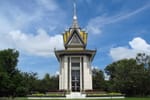
Choeung Ek Must see
Former orchard 15 km south of the city where the Khmer Rouge executed thousands, with a memorial stupa of skulls and an audio guide.
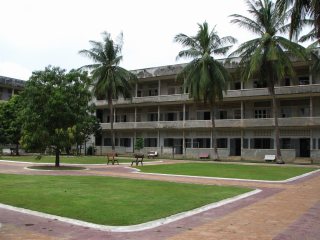
Tuol Sleng Genocide Museum Must see
Former high school turned into the Khmer Rouge's Security Prison 21 (S-21), now a museum to its victims.
Independence Monument
Lotus-shaped tower of 1958 by Vann Molyvann marking independence from France, lit up at night.
Day 4
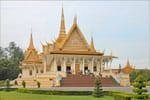
Royal Palace, Phnom Penh Must see
The king's residence, built from 1866, with the Throne Hall and Silver Pagoda open to visitors; cover shoulders and knees.
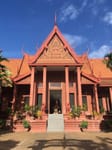
National Museum of Cambodia
Red terracotta building of 1920 holding the world's largest collection of Khmer sculpture, including Angkor-era pieces.
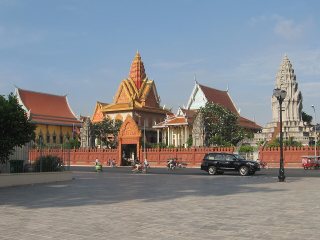
Wat Ounalom Must see
Seat of Cambodian Buddhism, founded in the 15th century, facing the river near the Royal Palace.
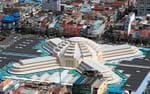
Central Market, Phnom Penh Must see
Art deco domed market hall of 1937, selling jewellery, clothes, souvenirs and street food.
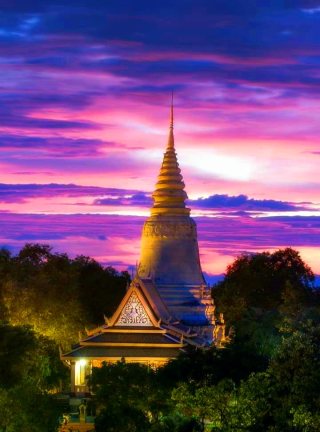
Wat Phnom Must see
Hilltop pagoda marking the legendary founding of Phnom Penh by Lady Penh, in a small shaded park.
Open this 4-day plan, freeChange this trip in the Trip BuilderChange it in the app
Cambodia in 5 days
Day 1
Bayon
Late 12th-century temple at the centre of Angkor Thom, known for its many towers carved with serene smiling stone faces.
Baphuon
Eleventh-century temple-mountain beside the Bayon, rebuilt stone by stone by restorers, with a vast reclining Buddha on its west side.
Terrace of the Elephants
Long royal viewing platform in Angkor Thom, carved with life-size elephants and garudas.
Preah Khan
Twelfth-century temple of long corridors, doorways and trees growing over the ruins, quieter than Ta Prohm and as atmospheric.
Neak Pean
Small temple on a round island in a former reservoir, reached by a causeway, with pools once believed to have healing water.
Angkor National Museum
Modern museum in Siem Reap introducing Khmer history and religion, a good first stop before the temples.
Old Market and Pub Street
Siem Reap's old covered market of food, silk and souvenirs, and the street of bars and restaurants beside it, liveliest after dark.
Day 2
Angkor Wat
The world's largest religious monument, a 12th-century Khmer temple with long bas-relief galleries and five lotus towers.
Banteay Srei
10th-century temple of pink sandstone with the most delicate carving at Angkor, about 35 km from town.
Banteay Kdei and Srah Srang
A rambling Buddhist temple of courtyards and corridors, facing the large royal bathing pool of Srah Srang across the road.
Ta Prohm
Angkor temple left partly to the jungle, with huge silk-cotton and fig tree roots growing over its walls and galleries.
Pre Rup
Tenth-century temple-mountain of brick and laterite, a classic place to watch the sunset over the rice fields and palms from its top.
Day 3
Choeung Ek Must see
Former orchard 15 km south of the city where the Khmer Rouge executed thousands, with a memorial stupa of skulls and an audio guide.
Tuol Sleng Genocide Museum Must see
Former high school turned into the Khmer Rouge's Security Prison 21 (S-21), now a museum to its victims.
Independence Monument
Lotus-shaped tower of 1958 by Vann Molyvann marking independence from France, lit up at night.
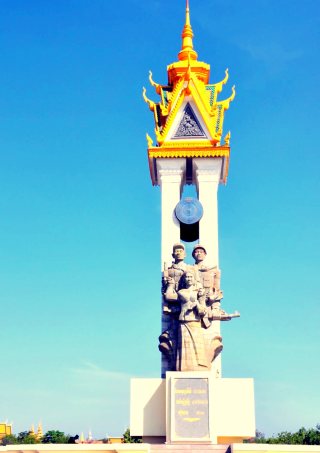
CambodiaVietnam Friendship Monument
Monument in the park by Wat Botum commemorating the Vietnamese forces that ended Khmer Rouge rule in 1979.
Day 4
Royal Palace, Phnom Penh Must see
The king's residence, built from 1866, with the Throne Hall and Silver Pagoda open to visitors; cover shoulders and knees.
National Museum of Cambodia
Red terracotta building of 1920 holding the world's largest collection of Khmer sculpture, including Angkor-era pieces.
Wat Ounalom Must see
Seat of Cambodian Buddhism, founded in the 15th century, facing the river near the Royal Palace.
Day 5
Central Market, Phnom Penh Must see
Art deco domed market hall of 1937, selling jewellery, clothes, souvenirs and street food.
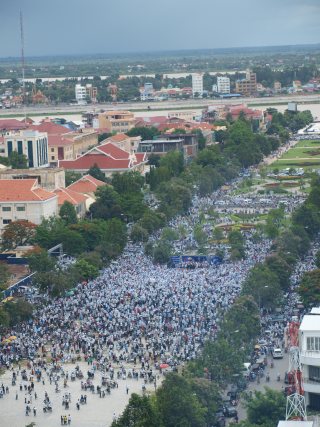
Freedom Park Must see
Large park in the Dilworth area with a lake, walking paths, public art and playing fields, near the Nature Museum.
Wat Phnom Must see
Hilltop pagoda marking the legendary founding of Phnom Penh by Lady Penh, in a small shaded park.
Open this 5-day plan, freeChange this trip in the Trip BuilderChange it in the app
When to go to Cambodia
November to February is cool and dry — the best time, and the busiest. March to May is very hot. The rainy season runs from about May to October, with green landscapes, short heavy downpours and fewer visitors.
Plan the rest of your trip
- Where to stay: hotels in Cambodia on Booking.com or Trip.com
- Skip-the-line tickets: museums and sights in Cambodia on Tiqets
- Tours and day trips: things to do in Cambodia on GetYourGuide or on Viator
- Data on arrival: an eSIM for Cambodia from Airalo
Some of these are affiliate links: we may earn a small commission at no extra cost to you.
Tips for Cambodia
- The Angkor temples need an Angkor Pass (1, 3 or 7 days); cover shoulders and knees, or you can't climb to Angkor Wat's upper level.
- US dollars are used alongside riel almost everywhere; small notes are handy.
- Start temple visits at sunrise to avoid the midday heat.
- Entry rules depend on your passport — check the current rules before you travel.
- Every place here has its own ready-made guide with more days, if you want to stay longer in one place.
Make it your own
Open the guide in Andiamo Places to see every stop on a map with walking directions, move places between days, check opening hours for your dates, and add your own finds. After the trip, your photos become a journal and, if you like, a printed photo book.



Guides are made with the help of AI and public sources such as Wikipedia, and may contain errors. Opening hours and prices change, so check before you go. Spotted a wrong photo, a pin in the wrong place, a missing stop or a better one? Write to hello@andiamoplaces.com: the e-mail opens with this guide filled in.
Photo credits
- Angkor National Museum: This Photo was taken by Supanut Arunoprayote. Feel free to use any of my images, but please mention me as the author and may send me a message. (สามารถใช้ภาพได้อิสระ แต่กรุณาใส่เครดิตผู้ถ่ายและอาจส่งข้อความบอกกล่าวด้วย) Please do not upload an updated image here without consultation with the Author. The author would like to make corrections only at his own source. This ensures that the changes are preserved.Please if you think that any changes should be required, please inform the author.Otherwise you can upload a new image with a new name. Please use one of the templates derivative or extract., CC BY 4.0
- Angkor Wat: Bjørn Christian Tørrissen, CC BY-SA 4.0
- Banteay Kdei and Srah Srang: Diego Delso, CC BY-SA 3.0
- Banteay Srei: Tsui, CC BY-SA 3.0
- Baphuon: Marcin Konsek, CC BY-SA 4.0
- Bayon: Diego Delso, CC BY-SA 3.0
- CambodiaVietnam Friendship Monument: Tung Duong, Public domain
- Central Market, Phnom Penh: Rik Schuiling / TropCrop-TCS, CC BY-SA 4.0
- Choeung Ek: Timgray200, CC BY-SA 3.0
- Freedom Park: crchim, CC BY-SA 3.0
- Independence Monument: Sven Ruediger, CC-BY-3.0
- National Museum of Cambodia: Christophe95, CC BY-SA 4.0
- Neak Pean: Wetstew, CC BY-SA 4.0
- Old Market and Pub Street: Peazapata, CC BY-SA 4.0
- Pre Rup: Diego Delso, CC BY-SA 3.0
- Preah Khan: Diego Delso, CC BY-SA 3.0
- Royal Palace, Phnom Penh: Jean-Pierre Dalbéra from Paris, France, CC BY 2.0
- Ta Prohm: This Photo was taken by Supanut Arunoprayote . Feel free to use any of my images, but please mention me as the author and may send me a message. (สามารถใช้ภาพได, CC BY 4.0
- Terrace of the Elephants: Diego Delso, CC BY-SA 3.0
- Tuol Sleng Genocide Museum: Michael Gruijters at Dutch Wikipedia, CC BY-SA 3.0
- Wat Ounalom: VCTBR, CC BY 3.0
- Wat Phnom: Khmerloy9, CC BY-SA 4.0
Opening hours change; check before you go. Map data © OpenStreetMap contributors.